


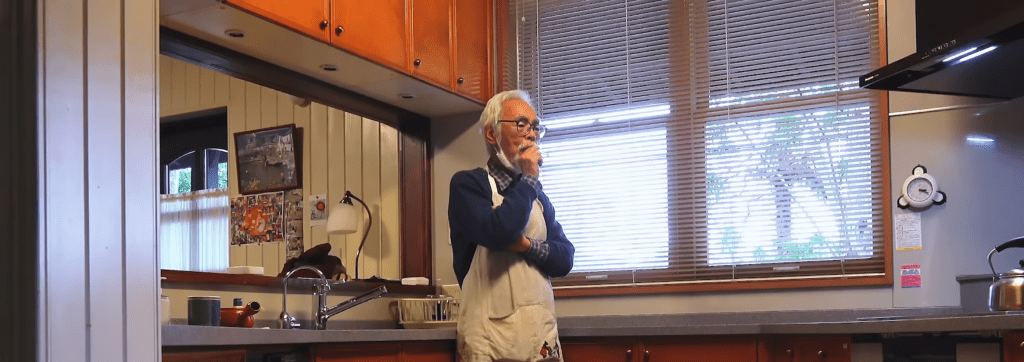
This two-hour documentary follows Miyazaki as he makes The Boy and the Heron. Besides behind-the-scenes material from his latest film production, we see a lot of older footage of Miyazaki, as well as short clips from his movies. These clips are edited together thematically, based on whatever Miyazaki is pondering at a given moment, which he does quite a lot of throughout the documentary! Tragically, while he was working on the film, several of his colleagues passed away, and others fought battles with cancer. The loss that seems to have affected him the most was the death of his long-time friend and fellow Ghibli director Isao Takahata. He reveals that The Boy and the Heron is largely about Takahata. Death is the most prominent theme in this documentary, as we see Miyazaki reflect on his own mortality as well. The Miyazaki in this documentary seems more tired and confused than we’ve seen in previous specials, but also more considerate, so that those who’ve seen him harshly criticize the work of his animators before might be surprised at the almost total absence of this side of him here. He seems to have mellowed with age, appearing less tense and more willing to delegate work to others, while also being determined to keep working on his films. After each of his projects since Princess Mononoke, Miyazaki has announced his retirement. But this time, he almost immediately started working on a new project. It’s wonderful to see that he is more resolved than ever before!

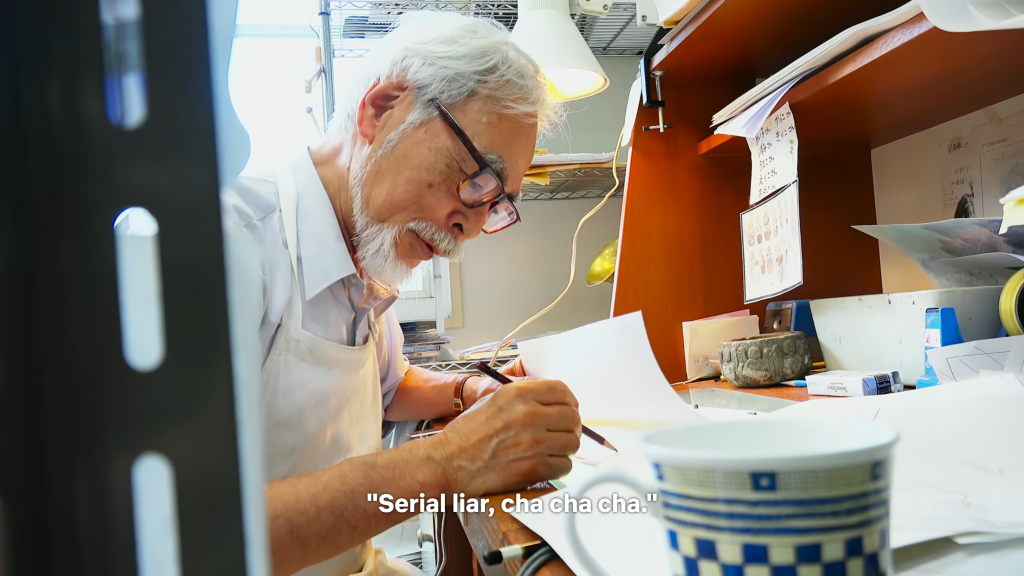
Intimate, inspiring, emotional. This is how Netflix characterizes the documentary, and I think that’s accurate. The documentary on the production of The Wind Rises: The Kingdom of Dreams and Madness felt personal too, but this one features a more vulnerable Miyazaki. This becomes clear early on when we see him react to Takahata’s passing. I knew that Takahata’s death must have had an impact on him, but I underestimated how much Takahata meant to him. I didn’t notice while watching The Boy and the Heron that Miyazaki inserted Takahata, Suzuki, and himself in the movie, but this clearly seems to be his intention, as we see him repeatedly refer to Suzuki as a grey heron, all in good fun of course. Regarding how much this documentary gives us direct insight into the movie, it’s more limited than I had expected. We don’t see him explain the movie in detail like Nolan or Tarantino would. However, I definitely learned a lot about the movie that I otherwise wouldn’t have figured out.
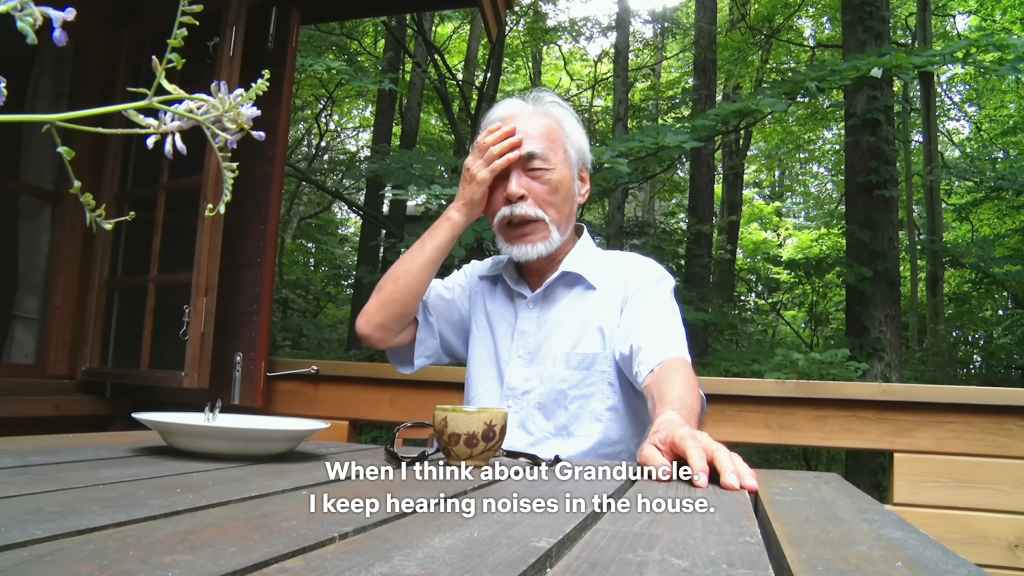
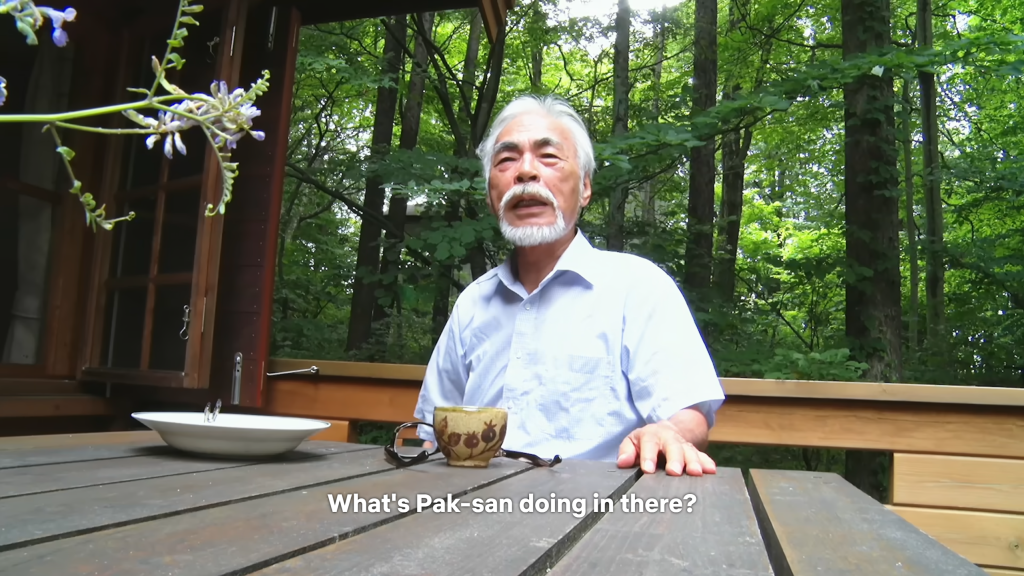
Most of the documentary, though, is about Miyazaki himself: his struggles with animating certain scenes, the dilemma between persevering or leaving the work to others, and his motivation to keep working, which keeps being fueled by the colleagues who are no longer with him. The video and soundtrack clips from his older works had a very nostalgic effect on me, as a fan of all his work. I was happy to see a more optimistic side to Miyazaki as well, especially toward the end of the documentary. Miyazaki seems to be genuinely convinced now that it’s truly worth it to keep working on another film for as long as he can. When he hears about how much of a hit the film is and when he wins the Academy Award, he is relieved and content. The soundtrack Ashitaka and San, my favorite, played during this part. The optimism and positivity of that soundtrack made it easy for me to look forward to Miyazaki’s next work with great eagerness. Anyone interested in Ghibli or Miyazaki should watch this one!
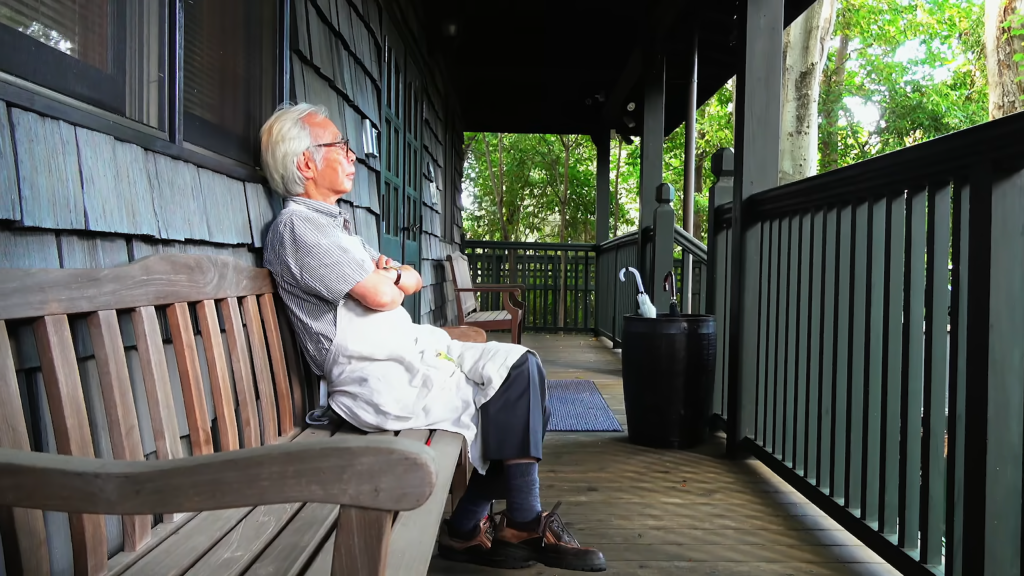
Hayao Miyazaki and the Heron is streaming on Netflix.


- First Impression: Petals of Reincarnation - 04.02.2026
- First Impression: An Adventurer’s Daily Grind at Age 29 - 01.07.2026
- First Impression: Tune in to the Midnight Heart - 01.06.2026