

This is the first post in a biweekly series that I plan on writing about Japanese religion. Most of us are familiar with certain aspects of Japanese religion – Shintoism, the idea of the kami, Buddhism and the importance of nature in it. These posts are meant to dig deeper, as I investigate scholarly sources to discover the deeper meanings and ideas behind Japanese spirituality. For Christians, this will help us understand the Japanese better in terms of differing viewpoints about spirituality, and for all anime fans, we can better appreciate the subtleties of our favorites series.
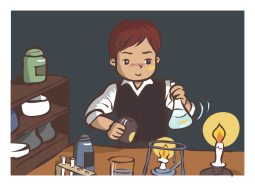
Speaking of common knowledge, most American otaku are familiar with the veneration given the kami (a complicated term, but often referring to sacred entities) and the buddhas. These “beings” are on a higher plane and are often prayed to on various occassions. However, there is another group, less venerated and less “powerful,” but still honored by the Japanese. Professors Ian Reader and George J. Tanabe, Jr. refer to these individuals as wizards. No, they’re not talking Harry Potter or Gandalf – more like Thomas Edison and Heinrich Hertz. These people are clearly human, but their contributions and genius has elevated their positions in Japanese society to that above you and me. And like the kami, these individuals are attributed certain powers.
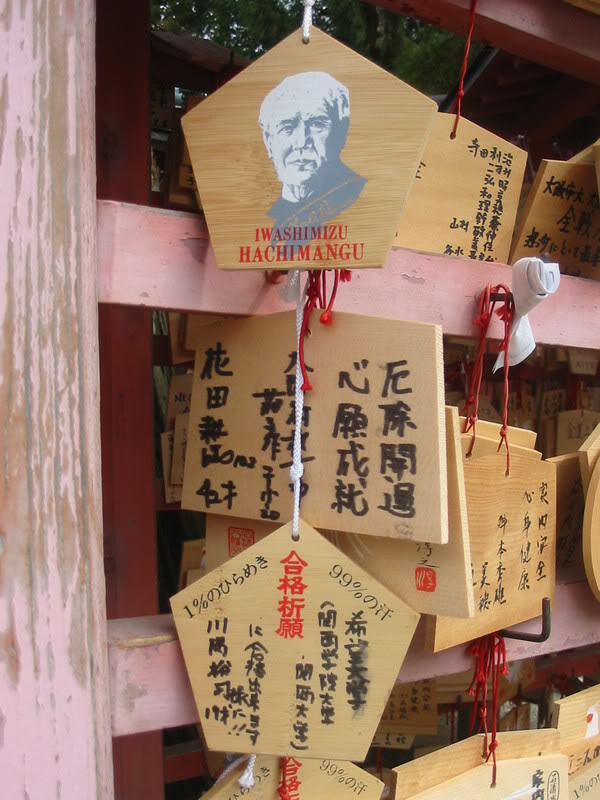
In the city of Yawata, a monument and other pieces exist at the top of the Iwashimizu Hachiman Shrine. They commemorate Thomas Alva Edison, the great American inventor and businessman, whose most important development was the perfection light bulb production. It’s difficult to imagine now, but the light bulb was considered a marvelous invention at the timer. It was greeted with even more enthusiasm in Japan, perhaps, as it also showed how a human could master nature. Even today, Edison is held in high reverence throughout the country; the Japanese ranked him third among historical figures in a 2006 survey.
The connection to the city of Yawata goes further, however. During the 1880s, Edison sought a better material to use in the bristol board vital to filament. After his assistants searched the world, they found a suitable material in bamboo from Yawata. Eidson usedit in bulbs through 1894.
Atop the Iwashimizu Shrine are a stone memorial, an historical marker and several ema (wooden plaques on which prayers are written). The famous Edison quote, “Genius is one percent inspiration and ninety-nine percent perspiration,” is given on the back on one of the ema. Reader and Tanabe draw the obvious conclusion:
The message is clear: ask the wizard for the fulfillment of your wishes and remember that the wizard himself succeeded through the ahrd work of trial-and-error.
How very Japanese.
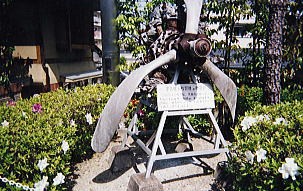
Although the shrine is for a kami, it is Edison who most revered here. Similarly, at the bottom the Hiko Jinja (“Shrine of Flight”), also in Yawata, another “wizard” is honored – this one is home grown. Ninomiya Chuhachi founded the shrine, and his impact in Japan is immense. He is held as a hero in aviation and is indeed an important early leader in the field. Chuchachi flew an unmanned airplane successfull in 1891, 12 years before the Wright Brothers‘ famed flight at Kitty Hawk. As Edison mastered electricity, Chuhachi mastered flight.
In America, we use the phrase “hero worship” when discussing cultural obsession with celebrities and how people, young and old, look up to them. But in Japan, this phrase could be used literally. It’s common in all east Asian countries that dead individuals are revered through what could be called a form of worship, especially when attributed to these “wizards.” In the end, they are a part of a greater system of those that provide benefits for the Japanese when rituals are conducted, which is a significant part of Japanese religion and everyday life.
Source: “Practically Religious: Worldly Benefits and the Common Religion of Japan” by Ian Reader and George J. Tanabe, Jr.


- Anime Takes Center Stage at SXSW 2026 - 03.23.2026
- AniMarch Madness 2026, Final Four: The Road to the Championship! - 03.23.2026
- A Father Like Frieren - 03.20.2026