


Love is patient, love is kind. It does not envy, it does not boast, it is not proud. It does not dishonor others, it is not self-seeking, it is not easily angered, it keeps no record of wrongs. Love does not delight in evil but rejoices with the truth. It always protects, always trusts, always hopes, always perseveres. Love never fails.
– I Corinthians 13:4-8a
In the west, we color love as something that’s giddy and cute; passionate and sexual; cheesy and delightful. And it can be all those things. But love, at its best, is moving and powerful and dynamic. It stirs people to action, to do right, to sacrifice themselves. It can change a country. It can change the world.
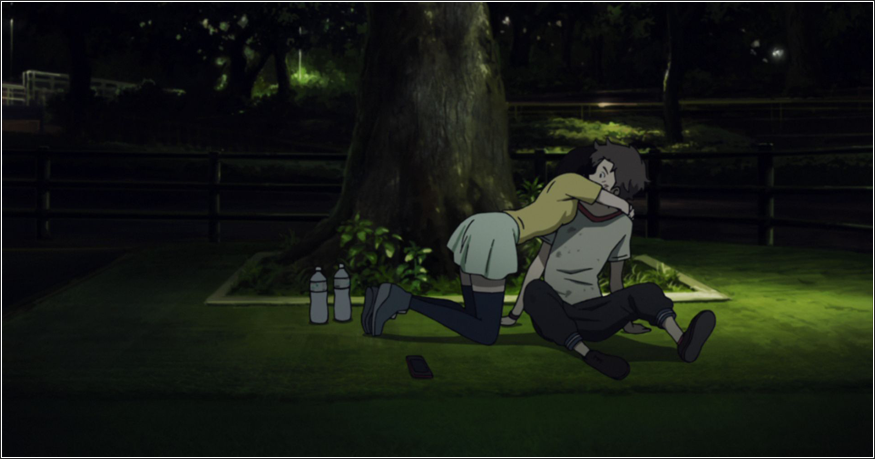
If the final episode of Terror in Resonance (Zankyou no Terror) ended 2/3 of the way through, it would have been merely beautiful, emotional, and almost perfect. I was moved by subtlety and beauty of it all. Nine and Twelve could live, they could survive, they could be happy. Or even if they were arrested, they could still live and eventually be exonerated.
But that wouldn’t have been an ending of integrity. It was an impossible ending.

Nine and Twelve are marked, ultimately, by purity and love. They saved others (Lisa being the face of this saving grace, someone whom Twelve could not let go, and whom Nine would forgive), brought evil to light, and protected the innocent. And thus, they had to die.
A theme pervading Terror in Resonance is that humanity in its selfishness will stoop to horrible evils. And while the people behind the experiments were the worst of all, they weren’t the only ones to demonstrate this theme in show. Cover-ups and conspiracies trumped life and human decency, and ultimately, the heroes were executed for doing what was right. There could not be a good ending for Nine and Twelve because they pushed too deeply into the heart of man, into the evilness of the world, and they won. But winning meant they would have to sacrifice their lives.
There’s an obvious allusion here, and it holds strong. Nine and Twelve came as terrorists, while another came as a revolutionary. He walked the earth a short time, and though He was completely innocent – the only innocent one – he paid the penalty of death, a sacrifice born out of love.
But these two stories also share a common ending. Neither ended with executions – if they had, the tales would be tragedies, but neither are. Lisa related it best, as she told Shibazaki what it was Nine had told her. Ultimately, what Nine and Twelve did would bring clarity to a nation, a change in leadership, and optimism for the future.
And through that other event, some 2000 years ago, Christ brought humanity something it, too, desperately needed, something it couldn’t do without, something that would break down walls and bring good expectations even in the most dire of straights. Christ brought into our cold hearts something that would change them, warm them, and supplant them. In Icelandic, it’s called von (vona).
Christ brought us hope.


- First Impression: The Food Diary of Miss Maid - 03.31.2026
- FINLANDS at SXSW: Fuyuko Shiori’s Relentless Vision - 03.30.2026
- First Impression: Agents of the Four Seasons: Dance of Spring - 03.28.2026