


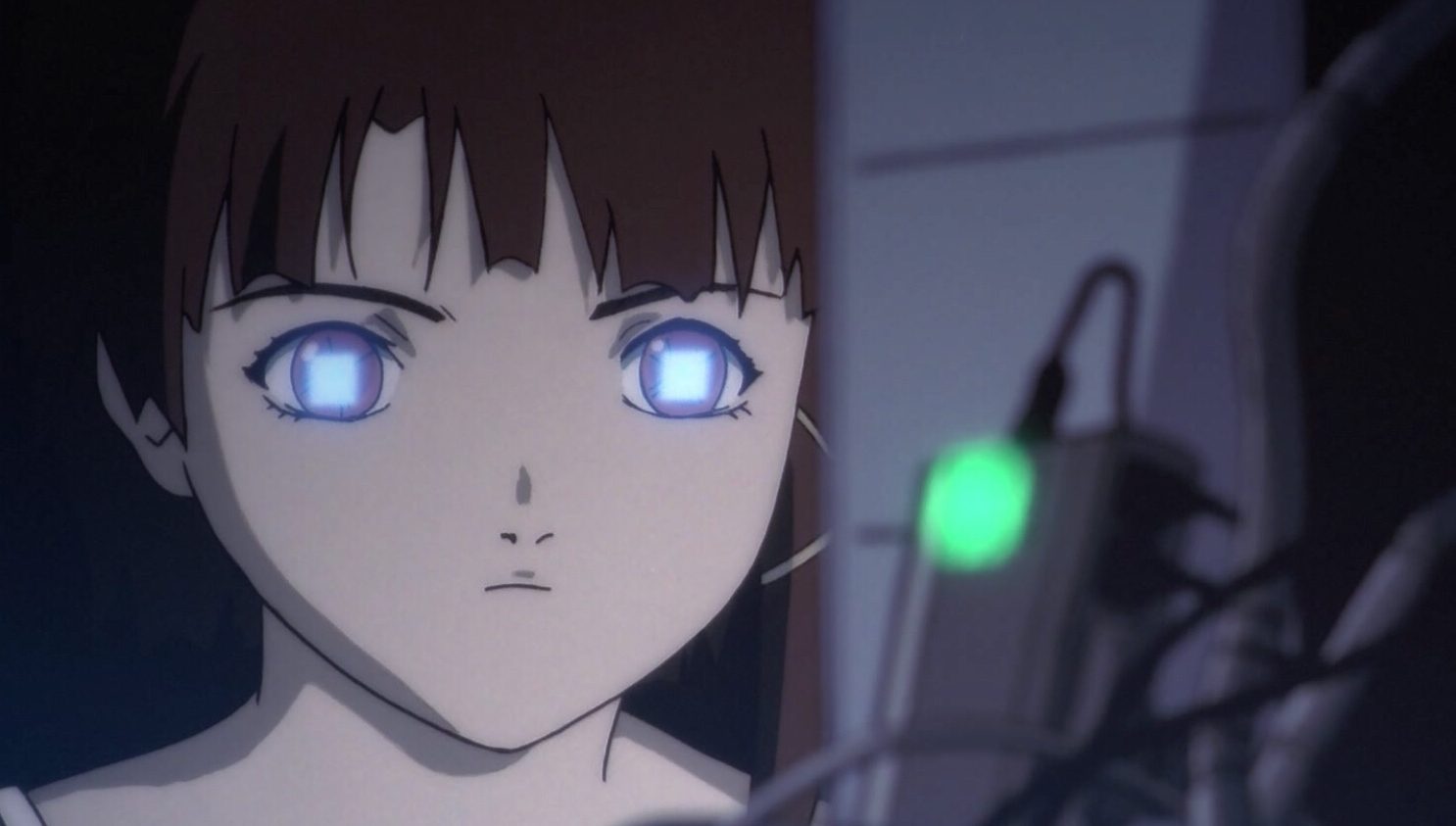
Serial Experiments Lain famously delves into topics like communication, technology, and social constructs, and we’ve seen all those expressed in the first few episodes. But as we continue our dive into Lain for the show’s twentieth anniversary, we’ve hit an episode with another theme that hasn’t yet been explored, and a title that matches. Episode four is entitled “Religion.”
Layer 04
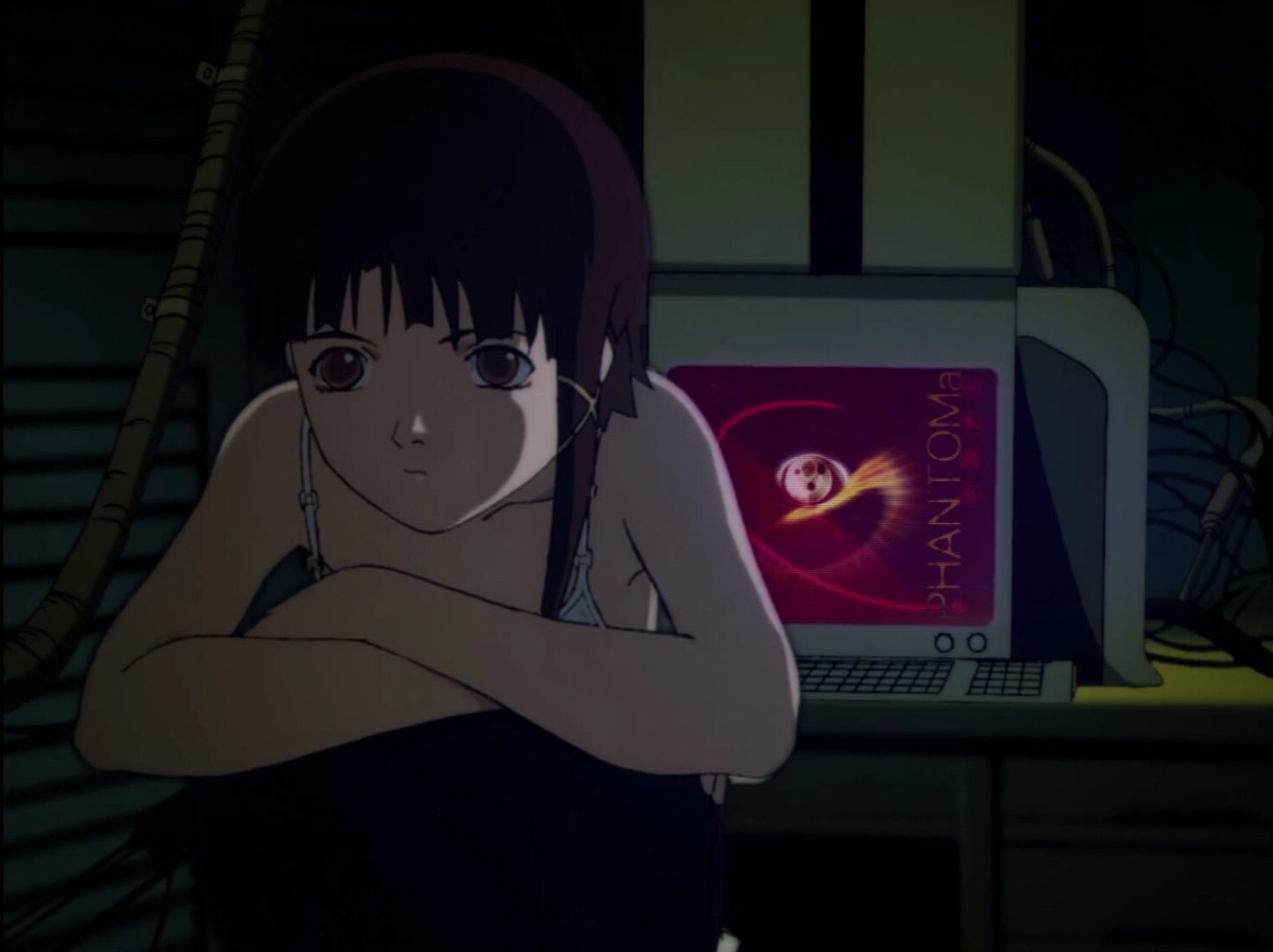
Lain’s turn from tech neophyte to hardware expert hits all new levels; rumors spread that a PC game, PHANTOMa, was played by students before they committed suicide; individuals who may be under the effect of Accela see visions of young people (sometimes Lain) before committing violence, and one PHANTOMa player turns a gun not on himself, but others.

Navi…Loading…
From the very beginning, Lain, as a character, is unsettling. Mika kind of speaks for us when she remarks to her parents that Lain is acting strange lately, even for her. Lain does look a little strange and she acts peculiar—all of this is quite intentional. We as viewers aren’t quite sure what to make of her—is she a heroine? Is she in danger? Do we root for her? Will she become the enemy?
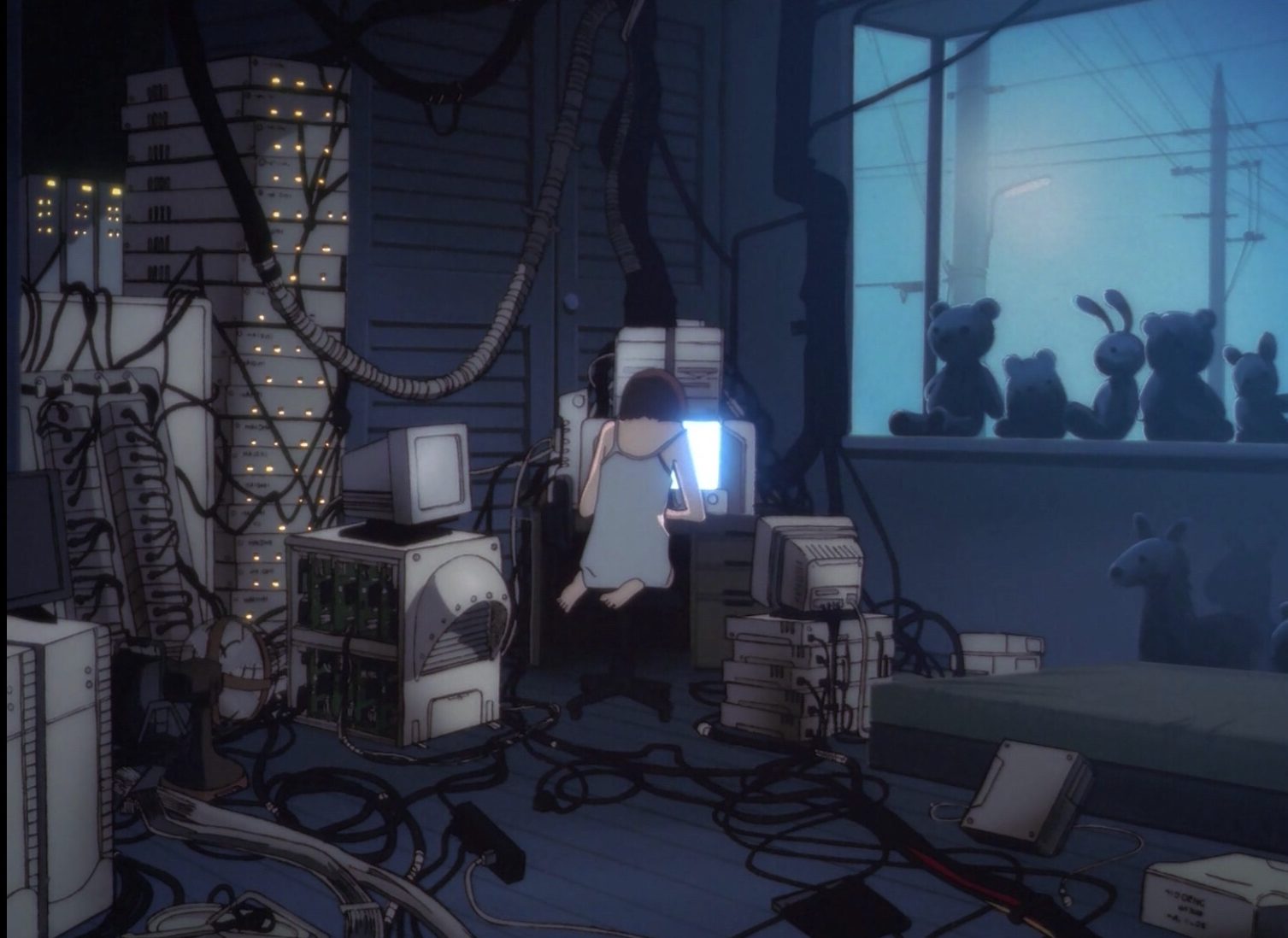
And what is Lain exactly? Although she’s a bit off, most of the information in the initial episodes tell us that Lain is a normal girl in abnormal circumstances. But there are of course signs that there’s something more—the doppelganger that keeps appearing, for instance, and especially expressed in this episode, Lain’s sudden leap from a girl that had no computer experience to hooking up multiple units and becoming quite an expert. What 12-year-old is able to do that?

At the same time, the trope of “becoming a god” has reared its ugly head, except in Lain, it isn’t ugly—its a question that demands exploring. Can we become our own gods? Should we? And how does it happen?
From the beginning, characters (and disembodied voices) express that Lain can become transcendent, surpassing the physical and become a more powerful being by transferring herself into the digital realm. She seems to be buying into it, as shown through a conversation with her dad:
“When its all said and done, the Wired is just a medium for communication and the transfer of information. You mustn’t confuse it for the real world.”
“You’re wrong. The border between the two isn’t all that clear. I’ll be able to enter it soon, in full range, full motion. I’ll translate myself into it.”


Lain’s father concedes that Lain, with Psyche processor in hand, may be able to do just that. But what is the cost of doing so? It may be very high—not just loss of body, as if that isn’t enough, but could the cost also be death to people other than Lain? Others are certainly dying now and there seems to be a connection between their deaths and Lain. But more than that, is she losing something else precious?

Lain’s father tells her the Wired is important for connection, but connection doesn’t really seem to be particularly important to those who have already made it from the physical world to the digital. Instead, they seem cult-like, wanting others to come over without much care for their well-being.
There are other signs, too, that moving to the Wired will lead to breaking of communication. As Lain “matures,” Alice worries about her, perhaps because she’s actually growing more distant. And a voice at the beginning of the episodes declares (could it be Lain’s?) that she “doesn’t need parents.” With parents like Lain’s, you might think the same, but there’s something going on with her dad, some guidance here that’s a little unexpected and strangely sweet. Perhaps he’s more than a frightening hentai after all.
Perhaps he has something vital to tell Lain. Perhaps its something important for us all.
Present Day. Question Time.
- I’ve already harped on this, but man, Lain is way beyond tinkering with her Navi. Like a young virtuoso asking for tips from a mentor she’s already surpassed, Lain seeks confirmation to questions whose answers she already knew, while hooking up so many machines that she now has the ability to speak certain actions—like destruction of creepy Men in Black guys’ goggles—into life.
- People are seeing images of Lain in her nighty, which is what she wears when she works on her computer units. It seems like Lain is already becoming the Lain we see in the opening…but how?


- By the way, speaking of religion, the Lain in the opening seems like a prophet to me, furiously telling people of all kinds some sort of message. What it is, we’ll have to wait and see.
- How do we define religion? The show takes a shot when discussing the Knights: “The Knights do not exist. They are thought itself in the Wired. They can be thought of as a religion that’s spreading through it.”
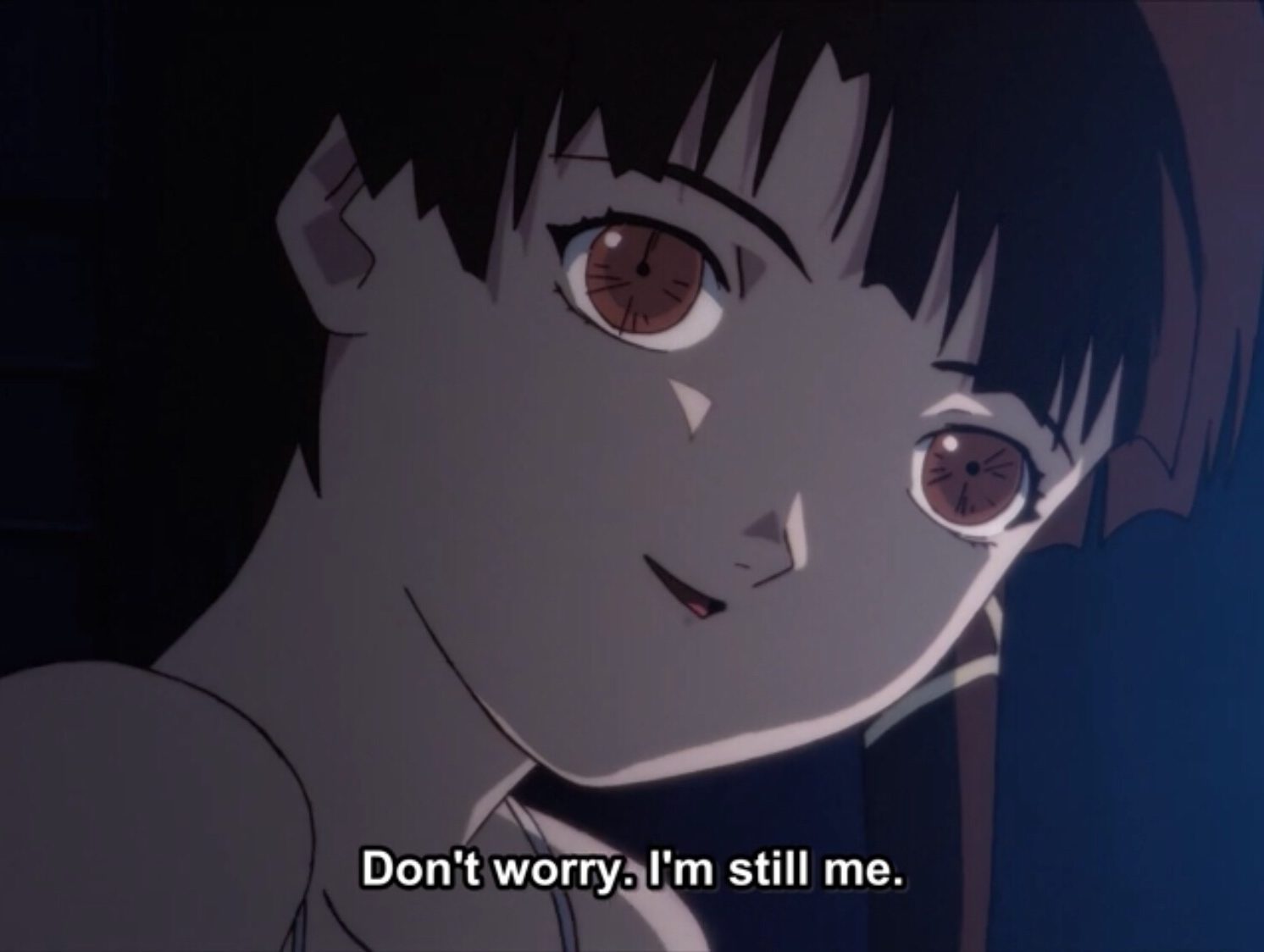
- Lain and her doppelganger are quickly moving toward becoming one, it seems. There’s a scene where a voice calls out to “JJ,” a friend of doppelganger Lain’s at Cyberia—we don’t see Lain when she’s talking, but we’re left to wonder which Lain it is. It could very well be the one we’re familiar with, as she grows stronger and even a little defiant. As I mentioned earlier, Alice is concerned about her, but I wonder how we as the audience feel.
- PHANTOMa looks and plays a whole a lot like Wolfenstein 3D or Doom II, two first-person shooter games which likewise brought about talk of violence in video games.
Let us know your thoughts below! And join us next Friday for the next installment.


- First Impression: SNOWBALL EARTH - 04.03.2026
- First Impression: Kirio Fan Club - 04.03.2026
- The Bridge That Saves: Frieren, Gehen, and the Hope of Good Friday - 04.03.2026