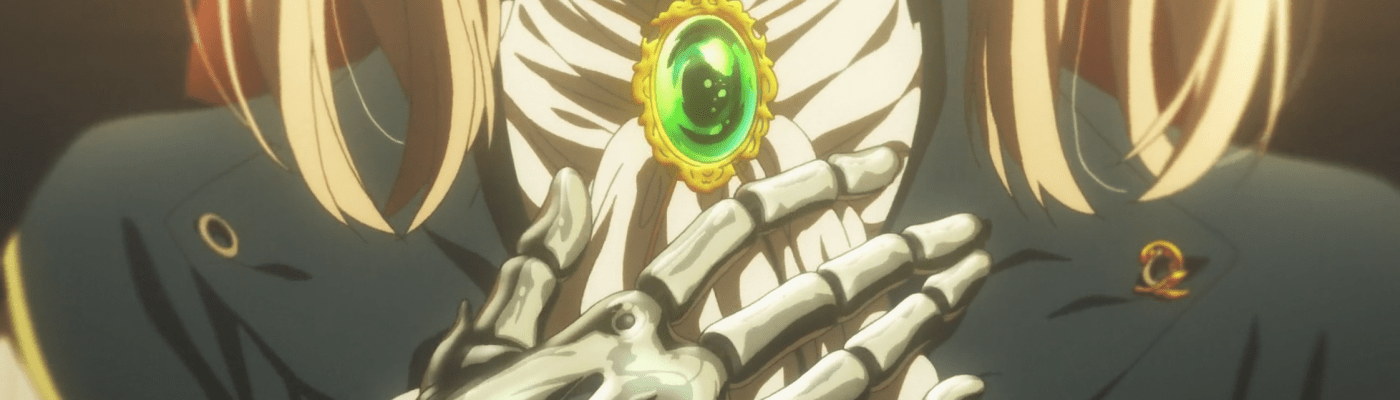
Rewatching Violet Evergarden (the series) recently reminded me why it is still my favorite anime, even after seven years since it first aired and five since its brilliant conclusion. Despite the influx of major shounen action productions during this period, few have matched its impact on me. The storytelling, character depth, and emotional resonance of Violet Evergarden continue to shine, standing the test of time in a way that underscores the power of meaningful narratives.
It all starts when we meet a 14-year-old girl who has lost everything: her arms, her master, and the life she once knew. Yet, despite her losses, she clings to the one mystery her master left behind—the meaning of the words “I love you.” Her journey to understand those simple yet profound words added another layer to my appreciation for how anime explores the complexities of human emotion. Sometimes, we too are tossed by the trials of life, but knowing that we have someone whose “I love you” is always with us can help us keep on forging ahead with the ultimate goal of meeting with Him.

This story, in many ways, parallels one of the greatest love stories in history—the Bible and God’s love. The Bible is, at its heart, a love story between God and humanity. From the Old Testament’s depiction of God’s covenant with Israel to the New Testament’s ultimate sacrifice at the cross, love remains the central theme. Violet’s journey mirrors the biblical narrative of God’s chosen people in several profound ways. Like humanity, she begins in a state of ignorance—unable to grasp the true depth of love. Her life as a soldier represents a world bound by law and duty, much like the Old Testament’s emphasis on commandments and obedience.
During the final battle of the war, Violet has her first encounter with unconditional love. She had been “gifted” to Army Major Gilbert Bougainvillea, who, shocked by seeing such a young girl being used as a war tool, chose to protect and care for her, although he was unable to remove her from military duty during the conflict. At the end of the war, Gilbert is fatally injured, but with his last breath, he tells her, “I love you.” This moment for Violet is much like the moment humanity encounters grace through Christ. Just as Jesus’s sacrifice on the cross redefined love as selfless and redemptive, Gilbert’s final words before his presumed death plant the seed for Violet’s transformation. She spends the series grappling with the meaning of those words while meeting a host of characters with various struggles of their own, hoping to someday understand the meaning of love—which eventually comes to her through the medium of letter writing.
After the war is over, Violet comes under the care of Gilbert’s friend Claudia Hodgins who has founded the CH postal company. Hodgins originally recruited her as a delivery girl, but Violet later requests to become an Auto Memory Doll or ghostwriter for people who do not know how to write or type. Having witnessed a client asking to have a love letter written, and still not fully grasping Gilbert’s parting words, Violet feels that ghostwriting letters would help her to understand the meaning of love. Hodgins gladly accepts Violet’s proposal, recognizing that this is the first time that Violet has spoken for herself instead of blindly following orders.
Each of Violet’s encounters with a client while working as an Auto Memory Doll leads to her growth as a human while also reflecting different aspects of love found in the Bible, the first being the comforting nature of love. In episode 7, Violet’s client is a playwright, Oscar Webster, who struggles to finish his script after losing his daughter, Olivia. While at his house, Violet comes across Olivia’s parasol, which makes Oscar reminisce about the time they were together. Olivia promised her father that one day she would be able to cross the lake in front of their house by using the parasol to catch the wind and walk upon the leaves floating in the lake, which is exactly what the protagonist in Oscar’s latest script was going to do. Violet enacts this scene by attempting to walk on the water, parasol in hand. Although she cannot make it entirely across the lake, the attempt helps Oscar gain closure over his daughter’s hitherto unfulfilled promise, which also helps him complete the script.

Violet’s experience here reflects God’s role as the ultimate Comforter. Violet does not write Oscar’s script for him, but she does provide a scenario that enables him to visualize an ending he could not think about before. Just as Violet helps the playwright find closure and inspiration, so too does God provide comfort and strength to those in mourning. In 2 Corinthians 1:3-4, Paul writes, “Praise be to the God and Father of our Lord Jesus Christ, the Father of compassion and the God of all comfort, who comforts us in all our troubles.” We cannot regain the people we have lost, but God’s comforting love gives us the strength to move forward.
Next, we move on to episode 10, where we encounter the everlasting nature of love. Violet’s client is a mother who clearly is not in the best of shape. Furthermore, several appointments keep her from spending time with her 7-year-old daughter, Anne. Anne feels that Violet and the other adults are taking her mother away from her and cannot understand what can be more important to her mother now than to play with her and spend time with her, especially since she is aware that her mother is not going to be there for much longer. But what Anne doesn’t grasp as an innocent 7-year-old, she grows to understand over time as she experiences her mother’s love even after she is gone, through letters her mother had Violet write, which were delivered every year on Anne’s birthday for the next fifty years.
Often, we, too, wonder why something is the way it is in the moment, but it all makes sense when we accept that God has something better planned for us. The title line of the episode is “A loved one will always watch over you,” which is precisely what God does for us because He truly loves us—His creation—now, in the past, and even in times yet to come.
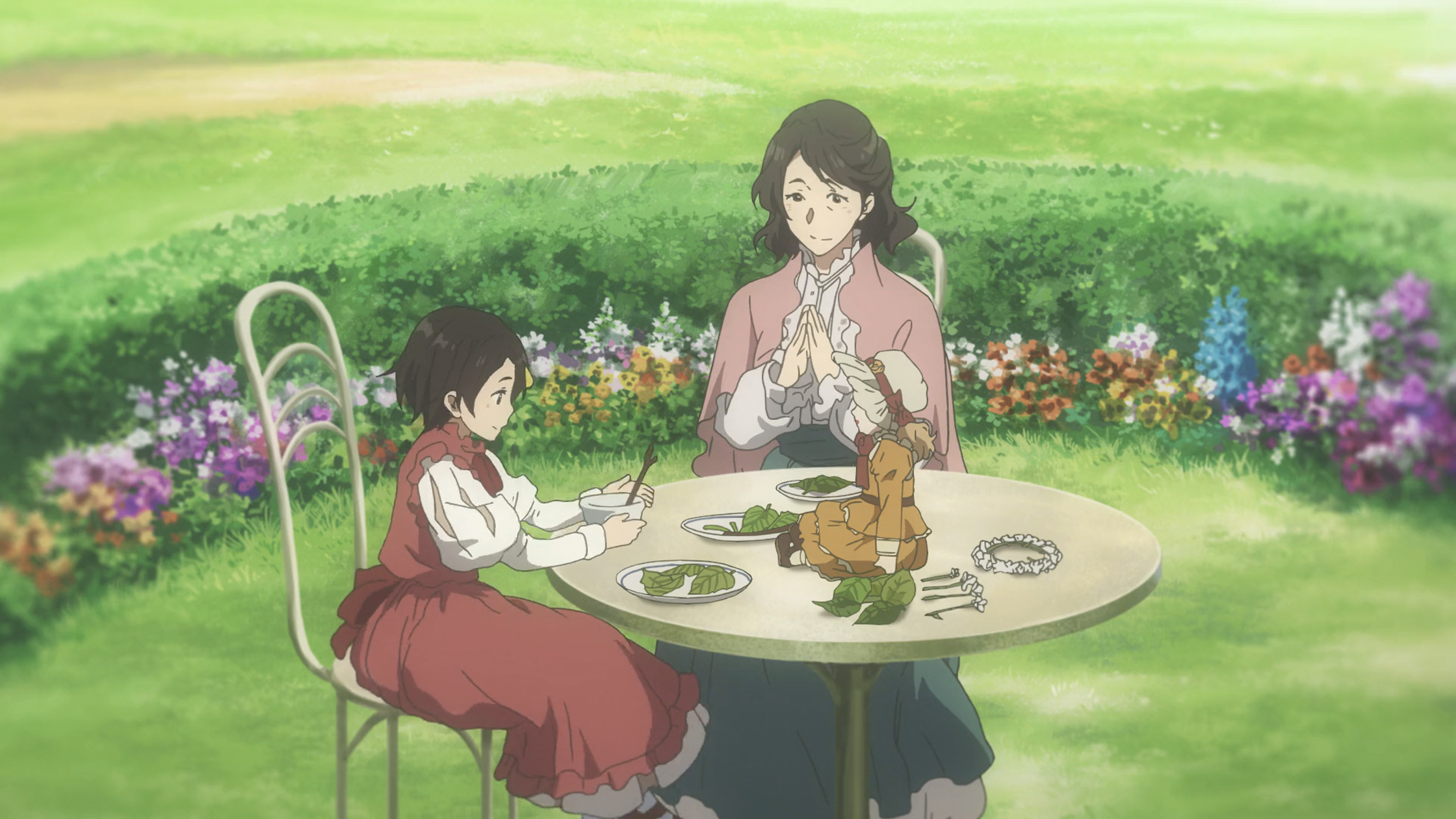
Yet another episode explores love as a form of grace and forgiveness. When Violet is at an Auto Memory Doll school to earn a pin that certifies her as a professional Doll, she is paired with Luculia, whose brother, Spencer, served in the army during the war. The siblings lost their parents during an enemy attack at a location where Spencer was stationed, and he blames himself for being unable to protect them. What he fails to realize is that he still has a sister to live for, who loves him unconditionally. After a few failed attempts, Violet is able to recognize what is in Luculia’s heart and ghostwrites a letter that simply conveys Luculia’s feelings to her brother. Unbeknownst to Luculia, Violet delivers the letter to Spencer, who, upon reading it, is finally able to let go of his regret and live for the love that is with him now.
Violet also struggles with guilt and forgiveness, though at first, she doesn’t realize it. Early in the series, Hodgins tells her that she is burning with the sins of her past, which she initially is quick to dismiss, interpreting “burning up” as physical burns. Navy Captain Dietfried, who had “found” Violet before giving her to his brother, Gilbert, responds with contempt when he learns that the one who killed many of his men is now writing letters that bring people together. This leads Violet to finally realize her burns and blame herself for the destruction she caused during the war. She views herself as nothing more than a war tool, undeserving of love or happiness.
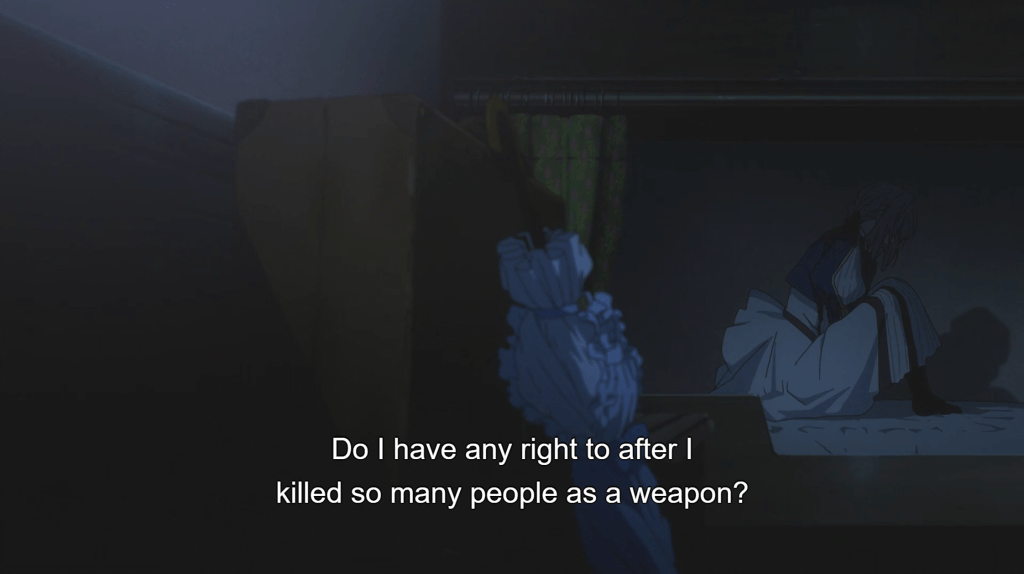
This self-perception parallels how we often see ourselves before encountering God’s grace: defined by past mistakes and unworthy of forgiveness. We find that we have sinned, but are often too ashamed or too proud to admit it. And without realizing it, we end up carrying a massive burden of guilt—fiery “burns”—damaging ourselves, others, and our relationship with God.
Fortunately, conviction of sin is not the end of the story. Violet learns that true love also involves forgiving oneself. She accepts her past as well as the good she has done after the war. This is evident when she receives a request from Spencer to write a reply to Luculia’s letter, giving thanks for her letter, which motivates him to start afresh. Violet realizes that, like Spencer, other clients have also been positively affected by her efforts, and she begins to see herself in a new light. 2 Corinthians 5:17 tells us that the same is true for us too: “Therefore, if anyone is in Christ, the new creation has come: The old has gone, the new is here!”

The culminating moment comes at the end of episode 13, as Violet reflects on her experience as an Auto Memory Doll, and states that she finally understands Gilbert’s “I love you” a little now. The fact that this love is not dependent on her actions or worthiness reflects the core message of Christianity: “But God demonstrates his own love for us in this: While we were still sinners, Christ died for us” (Romans 5:8).
Ultimately, Violet Evergarden doesn’t just tell a story; it invites us as viewers to reflect on our relationships, the words we leave unspoken, and the importance of empathy in a world that often feels disconnected. It’s not just Violet’s journey but the emotional awakening and the understanding of love it inspires in us that make the series truly unforgettable. The series is a testament to anime’s ability to convey profound truths about love, loss, and personal growth, solidifying its place as my all-time favorite.
Contributed by guest writer Clyde_Pereira, who writes:
I’m a 24-year-old Supply Chain grad from Rutgers, NJ, originally from Mumbai, India. I grew up in a Christian family, so faith and values have always been a big part of my life. I’ve been into anime since 2018 and love diving into manga and light novels. Big fan of gaming, soccer, and just staying active whenever I can.

