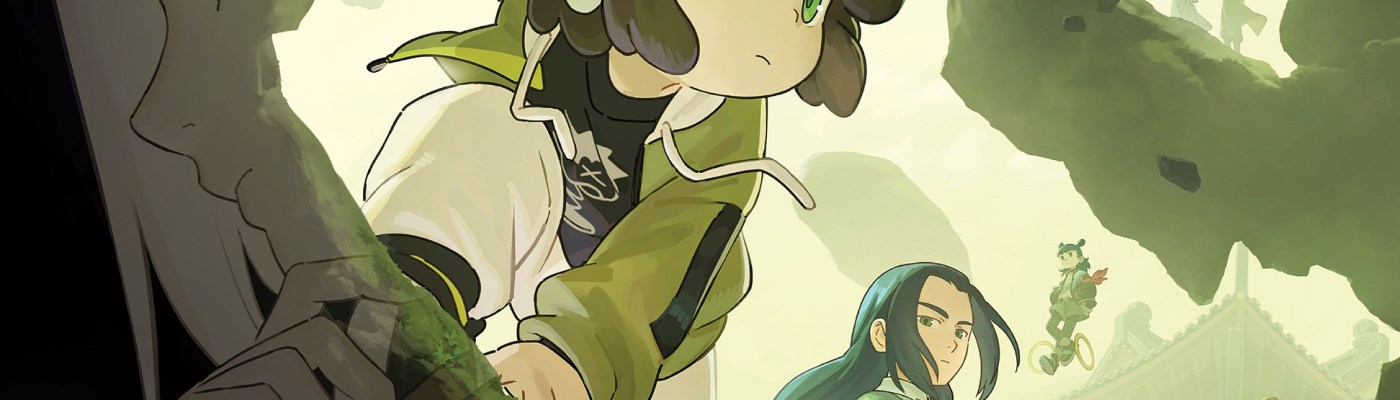
Chinese animation has exploded onto the Western screen in recent years. Along with The Girl Who Stole Time from this summer, we now have The Legend of Hei 2, releasing in America months before the rest of Asia! Now, don’t be afraid of that tiny little 2 at the end of the title—the film was created to stand alone. Whether you’re a longtime fan of the Xiaohei Luo series or not, between its stunning visuals, impressive choreography, and stirring story, The Legend of Hei 2 has something for you.
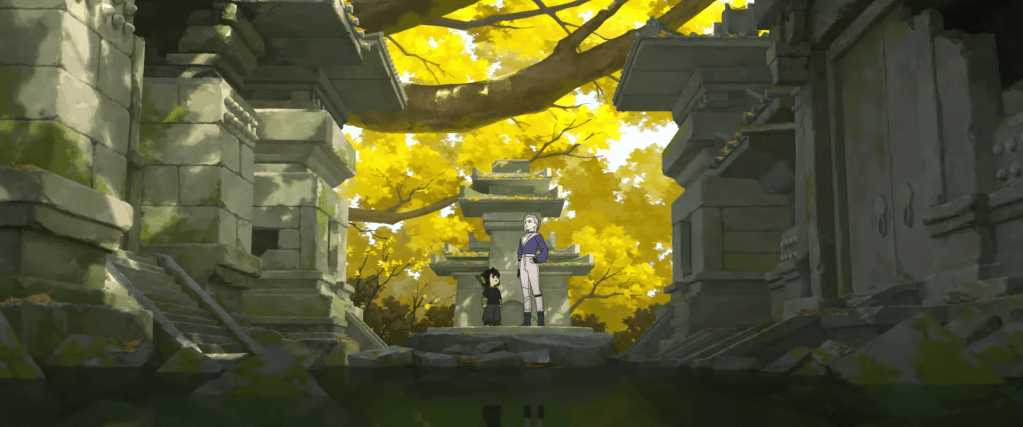
Xiaohei loves his master Wuxian like family, even though spirits like him aren’t really meant to get along with humans. Sure, the food Wuxian makes might not always be the best—though it is getting better by the day—and his grammar lessons are getting a bit tedious, but still, Xiaohei knows Wuxian believes in him, and he trusts his master in return. And so, their days pass by quietly at the Elfin guild.
One day, however, on a routine visit to the Cang Nan guild, Wuxian and Xiaohei find themselves face-to-face with the elders of the spirit realm. A day prior, the Liu Shi guild was mercilessly slaughtered by a regiment of humans and spirits, and security camera footage places Wuxian at the crime scene. Wuxian’s loyalty as a Spirit Enforcer is on the line, so Xiaohei teams up with fellow trainee Luye to track down the real culprit and clear his master’s name. But on the journey, Xiaohei uncovers secrets that place him in the crosshairs of a decades-old conflict between the human and spirit realms. With war on the horizon, which realm will Xiaohei side with, and will he and his master ever reunite at the end of it all?
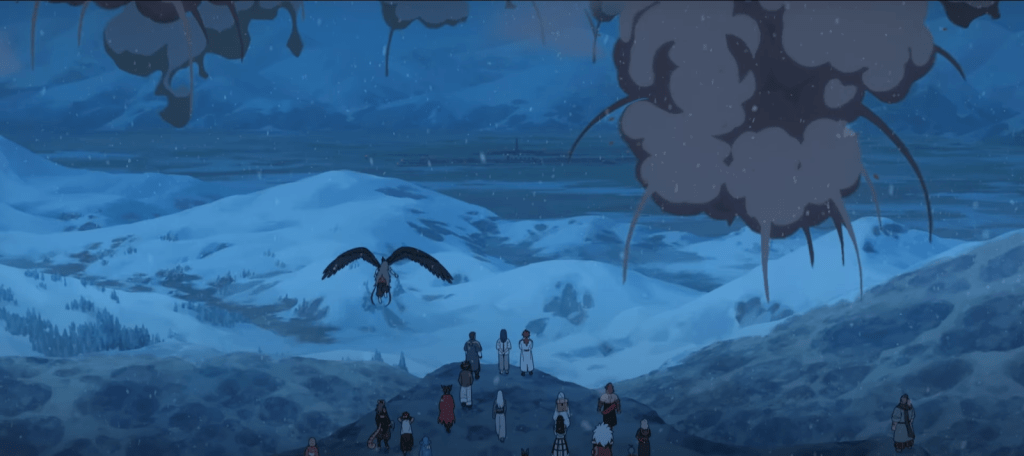
The Legend of Hei 2 is breathtaking in its visual style. The backgrounds burst with lush color and rugged texture, and the contemporary urban settings feel authentic and lively, with the detail creating depth and scale. That sense of scale is augmented by the movie’s dynamic shot composition. The camera hardly ever stays still, sweeping you into the grandeur of a snowy mountain range or immersing you in the hustle and bustle of a city at noontime. The world bursts with life, and it feels like the characters are actually a part of it.
Another standout stylistic feature is the way that it blends seeming opposites: nature and technology and traditional and modern aesthetics weave together in seamless unity. Directors MTJJ and Gu Jie conducted extensive research in order to portray aspects of Chinese tradition and cuisine accurately while integrating them into the futuristic setting. The result is a striking, cyberpunk effect that reminds me of the works of Mamoru Hosoda; it lends a degree of realism to a film where the fantastical features could have otherwise alienated viewers unfamiliar with Chinese folklore.
This blending of opposites also helps convey one of the core themes of The Legend of Hei 2: the uneasy coexistence of humans and spirits. Though the spirits decry the violence and cruelty of humans, they rely on the creature comforts of human technology in their day-to-day life. Case in point: my favorite character in the movie, the nerdy elder Naya, is a spirit whose pastime is playing fighting games on his Switch. By integrating nature and technology, the past and the future, the movie depicts an origin story of humans and spirits caught in perpetual tension with one another, wordlessly setting the stage for the conflict that Xiaohei and the others find themselves in.
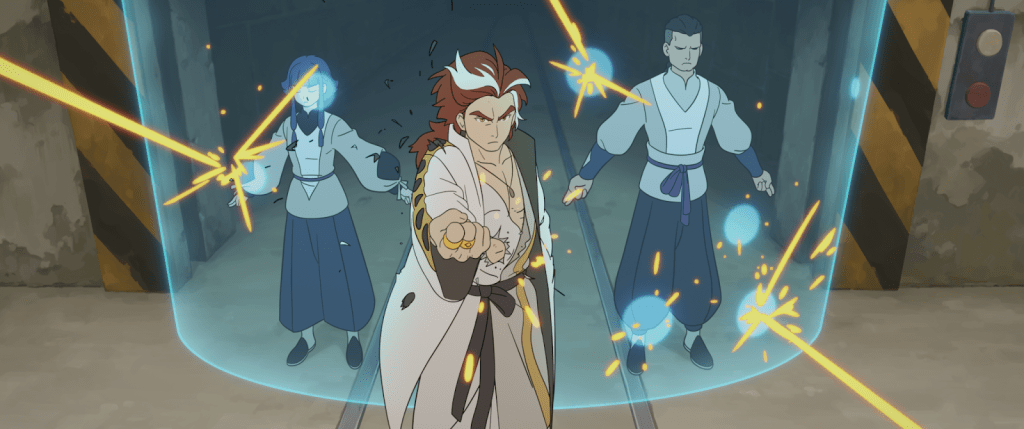
The highlight of the movie, though, is the tightly choreographed fighting scenes. Most animation tends to be animated on the twos, which means that the storyboards depict every other frame of the action. In contrast, directors MTJJ and Gu Jie animated the ten action scenes on the ones, meticulously mapping out every frame of the characters’ movements. As a result, fights that would appear chaotic and disorienting flow smoothly; characters glide effortlessly through the environment, enabling the film to focus on the way that they use their unique physical and magical abilities to their advantage. Granted, I did find that a few of the fighting scenes were too frenetic to follow, but on the whole, the film will satisfy viewers looking for an exhilarating action movie experience.
That being said, The Legend of Hei 2 is fundamentally about “connection, resilience, and identity,” to borrow the words of one of its producers—themes that shine brightly in the movie’s central character arcs. As a spirit raised by a human, Xiaohei embodies the central question of the movie: Can humans and spirits really get along? At first, he answers with a bewildered yes. He gets along with his master, so of course all spirits can get along with humans! Naturally, the movie challenges his idealistic, childlike view, but what emerges is not hopeless resignation to inevitable conflict but rather commitment to kindness and goodness above all else. It’s a hopeful perspective, albeit one that is carefully balanced with the cruel reality of human conflict. For Luye, another of Wuxian’s disciples, the battle between humans and spirits has a personal cost, and though she hopes for an ultimate resolution, she struggles to accept humans throughout the movie.

Ultimately, The Legend of Hei 2 doesn’t provide an answer to the question of whether humans and spirits can coexist. As one character cynically remarks, “You can never tell who’s wrong until the very end.” Instead, the movie advocates for the beauty of everyday kindness, expressed in trusting relationships like that of Xiaohei and Wuxian. Even though peace might not be present on a geopolitical scale, we can create communities of peace in our own lives. As gardeners, we plant seeds of kindness and trust that they will, in time, bear fruit on a scale grander than we ever dreamed of.
The Legend of Hei 2 is distributed in the United States by GKIDS and premiered in theatres on September 5.

- Film Review: Scarlet - 12.19.2025
- Film Review: Virgin Punk, Clockwork Girl - 11.15.2025
- First Impression: The Fragrant Flower Blooms with Dignity - 09.07.2025
