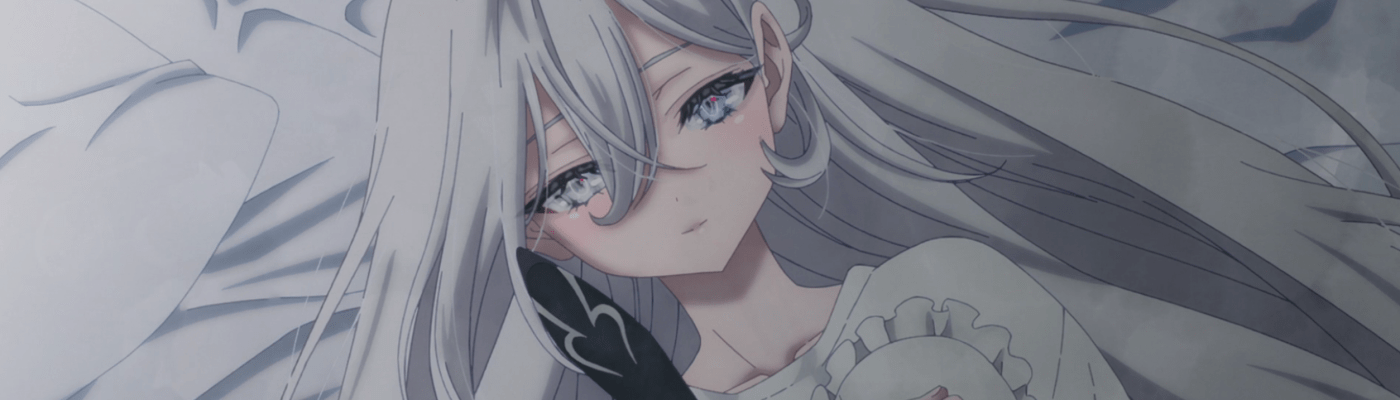
Night has fallen on the highway overpass. There’s a hole in the chain link fence protecting pedestrians from the drop. Car lights flash by, illuminating the lone strand of ivy fighting for life in this dark concrete world, before fading into twin dots of red. The music swells. It is atmospheric. Ominous. It knows something we don’t. Cut to a sleeping girl. Yuki awakens in a richly furnished European-style bedroom, dressed as a Victorian maid. This is her 28th game. When she finds the other five girls, whose emotional states range from panic to false bravado, it is to discover that she is by far the veteran death game player. They are all practically newbs. Yuki calmly explains the situation, her various deductions about the type of game—escape—that lies ahead, and her personal philosophy on gaming: She plays altruistically, since there is safety in numbers and it’s better that people survive. You see, injuries and maiming might be impermanent here, but the deaths are real. There’s no coming back from that. But before the girls can either embrace her or voice any doubts, Yuki continues: She may be lying to them with her every breath. Who is to say?


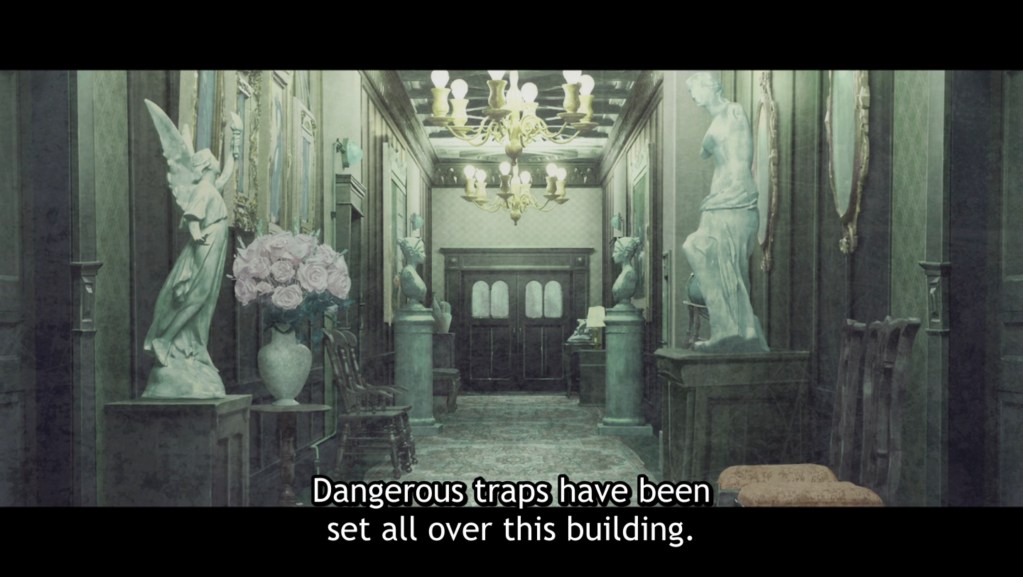
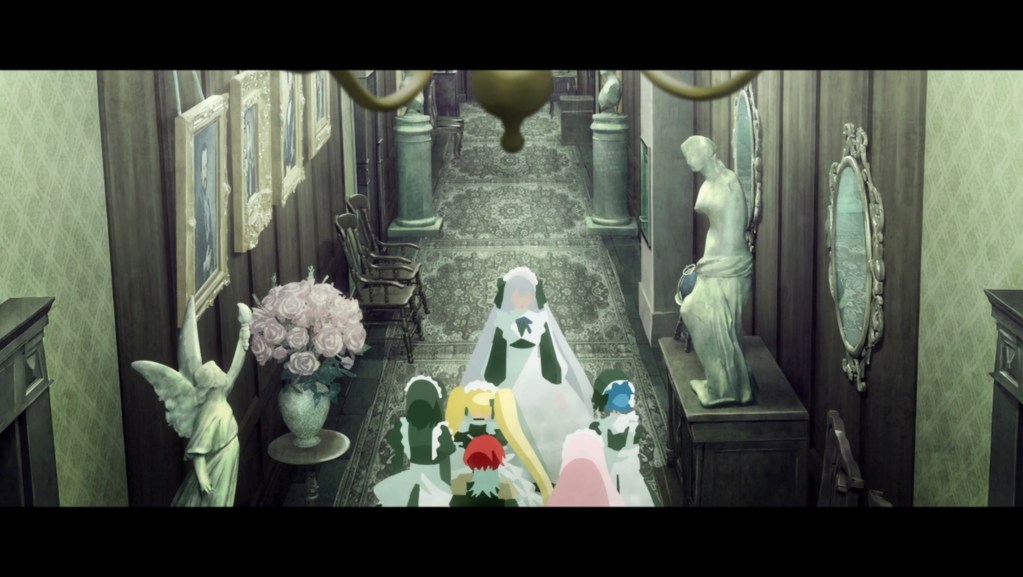
Now that was an interesting premiere! It’s double-length, and very much needs to be, since the extra minutes enable us to complete an entire “game” with Yuki and co. and get a proper sense of what this series is all about. And that is…what else if not psychological trauma? Think Squid Game Season 2 (specifically), where one player knows exactly what’s going on, and is walking that line between savior and survivor—with all the complicated mental and emotional gymnastics (one might say, baggage) that go with it. The first thing that stands out, from the opening sequence all the way through, is the deliberate, patient pacing—not just in the writing, which is really well done for a genre that usually relies on heavy-handed infodumps and lengthy monologues, but in the cinematography too, with the camera seeming almost to slow blink its way from one scene to the next, or even cut to cut. This intensifies the tension effectively. So too does the rather unique artistic decision to switch animation styles between close-ups and mid-to-long shots: Close shots, with one or two characters in the frame, are rendered in highly detailed, traditional anime style, while establishing shots and shots where the characters are further away drop all linework and render characters like a cluster of colored blocks, with the backgrounds all the while being rich and painterly, bursting with classical artwork. Though it may sound strange (I’m struggling to describe it), it’s actually really striking! The contrast recalls the different styles of animation in video games between the gameplay and the cinematic cutscenes, only a bit subtler and better integrated. Anyhow, it’s really cool and I found my eyes really sinking into the animation, which, by the way, is done in widescreen throughout. Great work, Studio Deen!

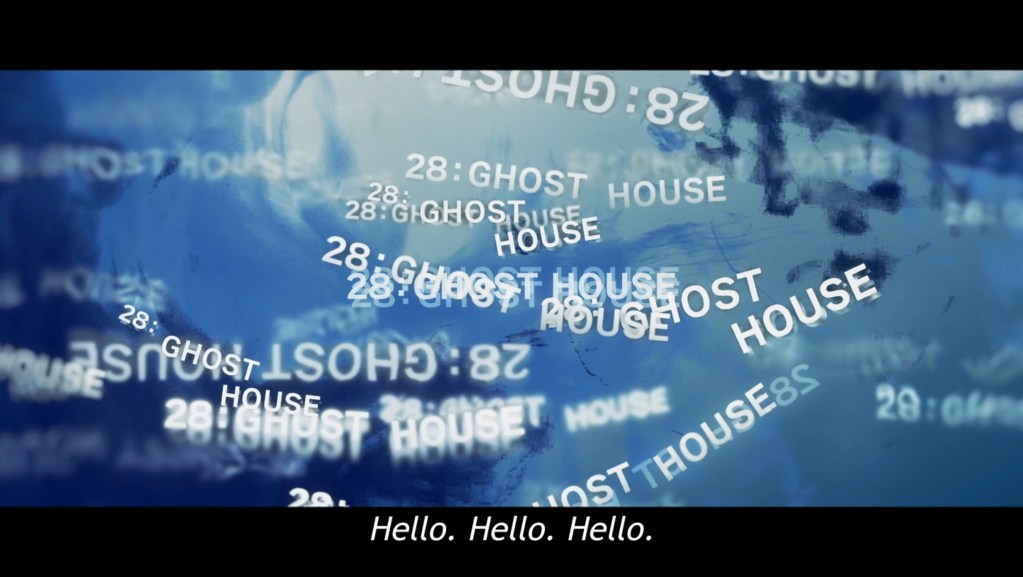
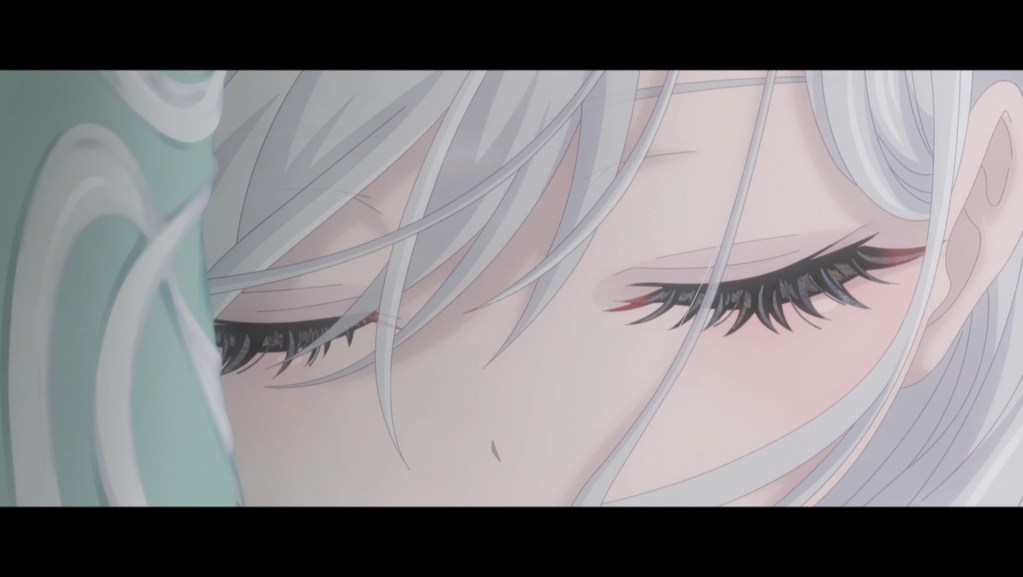
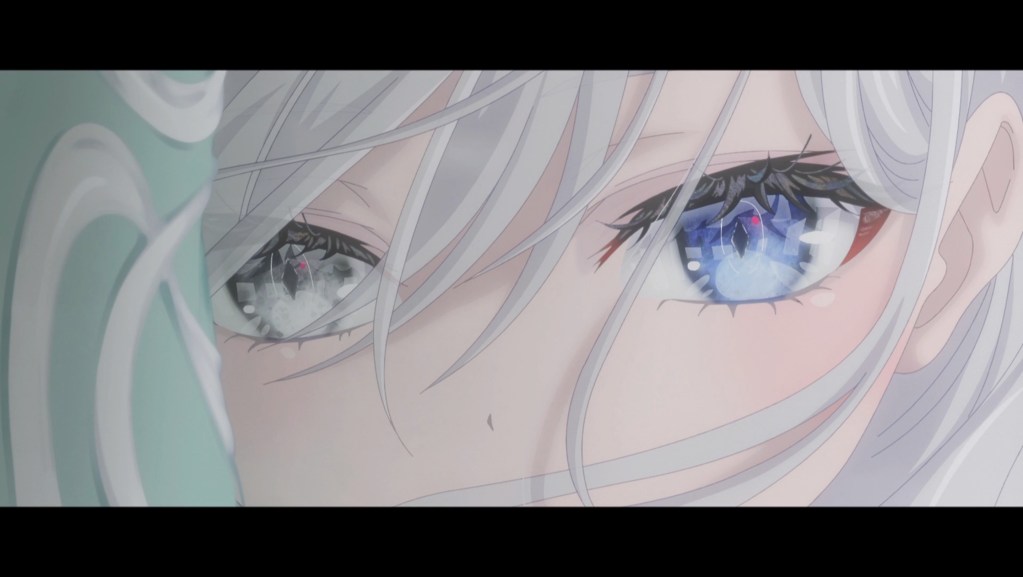
As for the game elements themselves, nothing to write home about, really. But this series is not about the games and puzzles themselves. The focus is wholly on the characters, their interactions, relationships, psychology, and decision-making. And of course, how they live with what they do when fighting to survive. Yuki is an interesting MC—not exactly admirable, she nevertheless commands respect. So far, she’s survived by pushing down all emotion, especially during the game, telling others not to mourn or pray for those who perish. Yet, after the game is done, despite her lack of religious faith, she prays in her own way. So far, this compromise has kept her together. But will it really last for the 99 games she’s determined to conquer? Of course not. Yuki is one hundred percent going to break at some point, and that’s what we’re really here to see. Also, the score is sublime! And that eerie Doris Day song at the end? (Which I’ve never before considered to be eerie…) Wow. So, if you enjoy dark psychological thrillers, or the indomitability of the human spirit in the face of despair, or both, then check this one out. I’ll be sticking with it!
PS – Don’t ask me what happened to Kinko; I still don’t get it. But it was definitely trippy!
PPS – If you wanna spoil yourself, think about the episode title and then check out what anime film is premiering in Japan tomorrow, January 8, and in the US on January 16… 😉 (SO CLEVER!)

Shiboyugi is streaming on Crunchyroll and Netflix.

- Film Review: All You Need Is Kill - 01.15.2026
- First Impression: Kaya-chan isn’t Scary - 01.11.2026
- First Impression: Dead Account - 01.10.2026

[…] Read More […]