On this week’s Reader’s Corner, we feature reviews of the opening volume of a Shonen Jump title, the newest Twisted-Wonderland book, a cute romcom that’ll remind you of Komi Can’t Communicate, and other titles as well—including a Komi “how-to” book!
Akira Falling in Love (Vol. 1) • Campfire Cooking in Another World with My Absurd Skill (Vol. 4) • Demi-Human Sharehouse (Vol. 1) • Disney Twisted-Wonderland: The Manga – Book of Scarabia (Vol. 1) • Ichi the Witch (Vol. 1) • Komi Can’t Communicate: Making Friends and Not Scaring People • Legend of the Far East’s Savior (Vol. 1) • Princess Mononoke Film Comic: All-in-One Edition
Ichi the Witch, Manga Vol. 1
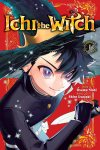
The outline for Ichi the Witch, a shonen series from VIZ that just recently made its debut in physical release here in the West, feels overdone and boring: Witches collect harmful beings known as “majiks,” but this female-only profession is about to be shaken by its first male witch, the incorrigible and self-motivated Ichi. However, the execution in volume one is exceptional. Ichi is one in a long line of shonen heroes who are determined, free-thinking, and easy to root for, but what’s fairly unique to him is his background as a hunter. Ichi has a very specific view of what a hunter should and shouldn’t do, and has mastered hunting through his lifestyle, which he developed from a very early age when he was abandoned. But that’s not all that makes the opening volume compelling—the artwork is amazing. Artist Shiro Usazaki was brought in to do the art for the series, accompanying Osamu Nishi’s writing, and it is epic and detailed. The characters have wonderful designs, especially the witches—like the great witch Desscaras, whose mixture of arrogance and childishness makes for a really fun counter to Ichi’s earnest personality. This is an energetic, creative start to the series, and I’m hoping that Ichi the Witch continues the strong beginning and turns into something special. ~ Twwk
Ichi the Witch is published by VIZ Media.
Princess Mononoke Film Comic: All-in-One Edition, Manga
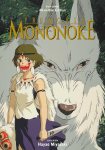
At over 800 pages, the Princess Mononoke Film Comic: All-in-One Edition is filled with the majestic artwork of the Studio Ghibli film, and a true wonder to open, flip through, and pause over and over again as you remember iconic scenes from the classic movie. But something unique and worth owning? Probably not. I’ve repeated it with each of these Ghibli All-in-One editions, but it bears repeating: “Film comics” are adaptations of movies that show stills from the film and add dialogue in bubbles to transform a movie into comic format. A few small additions, like short character profiles and an addendum explaining the hundreds of sounds expressed in the book, are also included. Mostly, however, this work is for collectors only. But if you are someone like me, who loves Princess Mononoke (I’ve watched every Studio Ghibli film, and this is my favorite), the beauty of the scenes contained in this release and the gorgeous hardcover binding would make it worth collecting. All others—I would say go watch the movie. And if you’ve never seen it before, go watch the movie now. ~ Twwk
Princess Mononoke Film Comic: All-in-One Edition, Manga is published by VIZ Media.
Read Studio Ghibli Film Comic Reviews: My Neighbor Totoro // Kiki’s Delivery Service // Spirited Away // Ponyo
Akira Falling in Love, Manga Vol. 1

Komi fans rejoice! Here’s another in a long line of series featuring a beautiful girl and the “average” boy she falls for. Like in Komi Can’t Communicate, Akira is very quiet; she’s held in high esteem by the rest of her classmates for her beauty and excellent grades. But no one likes her as much as Hajime, a childhood friend reunited with her, who used to talk her head off but wonders if she would even notice him now that they’re high schoolers. He’s oblivious to the fact that Akira likes him too. One of the shticks in this series to go along with the usual fare is that Akira is trying a new thing each day to draw closer to Hajime, and has to write the plan down (complete with illustrations). She’s lost without her plan. On the other side, Hajime is a rural type, and there are all these kooky asides related to that. I enjoyed these unique bits, and I loved the artwork too. The characters are drawn crisply—they really stand out despite just all being regular manga kids. Akira is very pretty, with expressive eyes and tones that scream “pastel” even on the black-and-white pages. So while the story doesn’t convey anything new, the execution for volume one of Akira Falling in Love is pretty strong. If this type of romcom is in your wheelhouse, you’d do well to check out this new series. ~ Twwk
Akira Falling in Love is published by VIZ Media.
Legend of the Far East’s Savior, Vol. 1: The Kyushu Grand Offensive
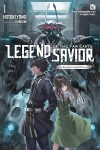
Keita Kawakami is a young Japanese guy who loves games and gets reincarnated—but instead of a generic fantasy world, he ends up in an alternate version of Earth. In this timeline, World War II ended with a demon-summoning that had surprise consequences (which, in hindsight, probably shouldn’t have been so surprising). Now the year is 2055, demons and monsters swarm the world, and humanity relies on mecha to stave off disaster as long as possible. In this apocalyptic setting, Keita finds himself in need of job and life security for him and his sister, Yuna. They have recently been orphaned, and Keita feels his only choice to protect his family from scheming relatives is to join the military, thus bringing the two of them under the latter’s protection. And for reasons he doesn’t fully understand, Keita is assigned to pilot a new kind of mech, one that resembles a centaur (although the story for some reason calls it a “Scylla,” which is an entirely different kind of mythological being). To sum up, most of the elements here are ones we’ve seen before, from fun (mecha! reincarnation!) to the less savory (the little sister wants to be his wife too but it’s okay because they’re not biologically related etc.). So the question is, does Legend of the Far East’s Savior offer more as a package deal of these tropes than its peers? While this isn’t exactly top-quality literature, it’s a pretty good time. Keita is a chronically clueless protagonist, forever misunderstanding why people respond to his outstanding talent the way that they do. Meanwhile, Yuna—presumably the innocent little sister—actually knows far more than Keita about what’s going on and is keeping him in the dark; our forays into her perspective are mostly entertaining (sans the siscon elements). The worldbuilding isn’t bad either: I initially balked at the alternate timeline laid out at the front of the book—did I really need a history lesson to enjoy what was coming?—but found it actually pretty intriguing. So I’d recommend this to fans of mecha or alternate history and those looking for a good time with a protagonist who (like the story itself) is not particularly deep but is delightfully dense. ~ Dr. Steve
Legend of the Far East’s Savior is published by Yen Press.
Komi Can’t Communicate: Making Friends and Not Scaring People, Hardcover
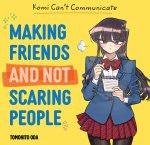
Komi Can’t Communicate features more than thirty volumes about Komi and her classmates learning to become friends, so it feels natural that VIZ would release Making Friends and Not Scaring People, a hardcover guide to friendship using lessons from through Komi’s manga run. This is a really fun book—and a sincere one too, the type I would absolutely have eaten up in my early adolescence. Broken up into sections like “Actual Human Interaction” and “Making Friendships Last,” the book provides mini-lessons to help readers learn how to make and keep friends (and maybe establishing something more). The writing is light and bubbly, and really feels like it hits two sweet spots—the adolescents, as I mentioned earlier, who will find solid advice in the book and also just enjoy how funny it is, and how it intermixes the short lessons with the manga panels that illustrate it (some with touches of color); and fans of Komi, who will find the tone of the writing to match the manga’s optimism. There’s quite a bit of humor in the book too—not only from the selection of panels that made it into the work, but also from some of the guidance, which is just meant to be silly fun, like suggesting that you beware the Library Fan Corps or avoid using particle guns. In short, this is a charming collectible for Komi fans—and could possibly be a treasure with even more meaning for young people trying to find their courage like Komi. ~ Twwk
Komi Can’t Communicate: Making Friends and Not Scaring People is published by VIZ Media.
Demi-Human Sharehouse, Manga Vol. 1

Kei Satou is shy and extremely lonely. His work experience hasn’t resulted in meaningful relationships (including with a “ice queen” senpai who seems to resent him), so he instead seeks out companionship through making friends with flatmates at a sharehouse. But when he arrives, he makes two shocking discoveries: His senpai is one of the residents, and she and all the other residents are actually monsters. Sexy and, in the case of a incubus, sexually-charged monsters. Yep, there’s the rub—this is a very heavily ecchi manga. Volume one features lots of panty shots, nude scenes, characters made to look underage (and then scantily clad or not at all), frequent breast-grabbing, innuendo, and more sexual content. It’s fairly nonstop. I’m not opposed to ecchi series, but when it features characters who are underage or made to look so, I’m out. Or, if there’s not enough redeeming qualities in a series, it’s the same. So, are there any such qualities in Demi-Human Sharehouse? The art is pretty. Kei’s goals of friendship are admirable. And…well, that’s about it, and it’s not nearly enough to make this series worth reading. My suggestion—skip it. ~ Twwk
Demi-Human Sharehouse is published by Yen Press.
Campfire Cooking in Another World with My Absurd Skill, Manga Vol. 4

The trio at the center of Campfire Cooking in Another World—human Mukohda, fenrir Fel, and slime Sui—are such an odd combination, but they work so perfectly well in this story. Their chemistry is a major part of the fun, and comes out very strongly in volume four as the party exits the forest, helps a group of travelers, and makes it to their next human settlement. Mukohda plays the straight man to Fel’s funny “man” with the perfect measure of exhaustion and patience, while Fel’s bravado and half-begging, half-demanding calls for food never get old. Fel really is the centerpiece of course, developed as if a wolf was made OP and given full intelligence. His ferocity and the humor in his character are both shown in a really funny scene involving a robber who tries to kill Mukohda—the result is, well, wild. He’s also one of the better character designs in recent manga, beautifully and boldly drawn. Sui, too, is well-designed; the slime looks so cute and has such an adorable personality (Sui just wants to fight! Pew pew!) that you fully understand why Mukohda frequently hugs and spoils him. Yet “Uncle” Fel is rarely jealous, and treats Sui kindly as well; the relationship between the two monsters is core to the story too. If you’ve somehow missed the Campfire Cooking in Another World light novels or anime, I encourage you to read the manga—Sui, Fel, and Mukohda will warm your heart. ~ Twwk
Read Reviews of Campfire Cooking in Another World with My Absurd Skill: Vol. 1 // Vol. 2 // Vol. 3
Campfire Cooking in Another World with My Absurd Skill is published by Yen Press through the J-Novel Club imprint.
Disney Twisted-Wonderland: The Manga – Book of Scarabia, Manga Vol. 1
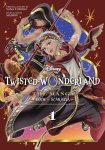
Once again in the Twisted Wonderland series, Yu is enrolled at Dark Raven College, a place where students grow in their magical abilities and studies. That doesn’t sound too bad, except Yu is a gyaru from Japan who has no magic at all! Thankfully, the headmage is looking for a way for her to go back home, but in the meantime, he’s going on vacation while she and her “monstrous” sidekick keep things running back at the academy. However, when they bump into Jamil, the vice housewarden from the Scarabia dorm, what may have started as a fun party and diversion quickly leads to questioning about the real personality of the Scarabia housewarden, Kalim. I think this might be my favorite Twisted Wonderland manga yet! And I had to think hard as to why that was, when I’ve loved all of the manga so far! Ha! It ultimately came down to two reasons, because I feel each manga has adapted the game extremely well (with this series no exception!), and the first one is the art. Now, I have loved the art of the previous series as well, but hear me out: Did anyone else reading this get some shoujo vibes from the art? Because all the characters have such a softness to them that I completely gobbled it up! Throw in Kalim’s megawatt smiles, and my heart felt like it was melting with happiness at another really great adaptation of a game I deeply love! Then there is our sweet Yu! She brings her own kind of energy, andI loved how we got a connection with her early on: hearing her dreams, seeing how she reacts to Crowley’s “generous” help, and observing how close she and Grim are. I’ve enjoyed all the other Yu’s, but I can say that she is easily my favorite, and I enjoyed seeing her on page so much! I am very excited for the next volume! I don’t know when it’s supposed to be released, but I will definitely be picking it up with much enthusiasm and recommending it to fans of these characters and the game! ~ Laura A. Grace
Disney Twisted-Wonderland: The Manga – Book of Scarabia is published by VIZ Media.
“Reader’s Corner” is our way of embracing the wonderful world of manga, light novels, and visual novels, creative works intimately related to anime but with a magic all their own. Each week, our writers provide their thoughts on the works they’re reading—both those recently released as we keep you informed of newly published works, and those older titles that you might find as magical (or in some cases, reprehensible) as we do.