Did Yoko Kanno develop the music for Cowboy Bebop before or after seeing the episodes animated? Did discussions during late-night drinking sessions between Shinichiro Watanabe and his voice actors somehow make their way into the series? Speaking of the seiyuu, were they given the freedom to riff in the roles, like improvised jazz? Three, Two One: Let’s Jam: The Unofficial and Unauthorized Guide to the Original Cowboy Bebop, Satoru Stevenson’s new book that was eight years in the making, answers these questions and far, far many, delving so deep into the classic series that you may never find your way out. And if you’re a fan of Cowboy Bebop, you won’t want to. Stevenson has written an intricately researched and highly readable guide, the one companion book that every Bebop otaku must own.
If you’re looking for a highly illustrated, tablebook-style work like Netflix’s own guide to their misconceived series, though, this is not it. But what it lacks in images, Three, Two One: Let’s Jam more than makes up for (many times over!) by giving readers the most thorough and accurate history of the production of Cowboy Bebop—the series, movie, and extraneous works as well—that has ever been assembled in one place. Until now, analyses and narratives of the series production have been spread across message boards and various sites; Stevenson assembles all these disparate pieces in a highly organized work. But he goes further by gathering hundreds of additional quotes and explanations from materials and interviews that hadn’t previously been translated. Stevenson not only organizes the material already out there but adds important pieces to it.
And indeed, there’s so much to learn. Here’s just a sample of really cool tidbits I picked up from reading this guide:
- Shoji Kawamori, the designer of Optimus Prime, would be critical in developing the sci-fi features and settings of the series
- The “Gang of Five,” the group that was so highly important in developing Cowboy Bebop, gathered at a hot springs to flesh out the series
- The staff’s previous work on Escaflowne is well-known, but key personnel also worked on other now-classic series like Evangelion and Trigun
- Yoko Kanno gave creator Shinichiro Watanabe the runaround for almost six months before accepting his offer to compose the series score; this was in part because she “hated jazz”
- Cowboy Bebop was the first Sunrise series to feature fully-digital TV episodes
- Watanabe “incorporated aspects” of the conversations from weekly late-night drinking sessions between him and the main cast members
- Bruce Lee impacted not only Spike’s character development—feeding into his personal, spiritual, and fighting philosophies—but Watanabe’s own lifestyle and way of directing too, as he attempted to achieve a natural effect with the latter, to “be like water”
- Watanabe’s imprecise direction caused consternation among the staff but was eventually something they embraced as it allowed their strengths to emerge during the creative process
These big drops are but a sample of the incredible amount of history I learned—and they’re just from the initial chapters that set the stage for the anime’s production. If evaluated in terms of length, the opening chapters—the meaty material explaining how the series was created and put into production—are contextual; most of the guide is spent detailing the individual episodes. The opening overview chapters are eminently readable, a history of the show as captivating as any New York Times bestseller deep-diving into some beloved property, while the episode chapters function nicely as a read-along while watching the show, though mega fans will want to devour those chapters as much as the previous ones.
Of particular note in the episode-by-episode breakdowns are Stevenson’s “spotlights” for each installment. Here the author exercises his excellent analytical skills by examining topics in further detail, with a particularly insightful example being when he looks at “Big Shot” in the “wider context of Bebop’s established world,” noting that it expresses “artefacts of generation loss.” Great stuff. Stevenson also guides us through related properties, some of which I was aware of, like “Session XX” and the PlayStation games, and some which were new to me, like Future Blues, the live-action short film produced by Yoko Kanno depicting the final days of the Seatbelts and possibly set within the Cowboy Bebop universe. Wild!
Of interest, as well, are the appendices. Stevenson tracks the various manifold releases of the series and movies. Perhaps more importantly, he has also organized a music index for the show that will serve as a vital resource for fans of Yoko Kanno and modern jazz, as much as Cowboy Bebop.
By this point, you’ve probably guessed that the author’s focus is purely on the original production and what came directly from it. Steveson doesn’t, for instance, analyze the Netflix live-action series, though in one section he does speculate that an adaptation is likely to miss the mark, suggesting that if producers were to be successful, they might need to “reimagine the series from the ground up.” And although Stevenson does talk a bit about international versions of the show, I would have liked to have seen an extended discussion of the English dub, which is how many fans first experienced the series (myself included), and which defined the series for many Westerners. Alas, that would have made an already lengthy book (640 pages) even more so and wouldn’t have fit into its remit. Perhaps some enterprising writer will get to work on that story!
As for this one, I can’t tell you how appreciative I am of it. From explaining the staff members and voice actors’ contributions (Masahiko Minami is no less than a hero!) to placing Watanabe in his proper place as the series creator and director (in ways that demythologize him but properly point toward his significance), Three, Two One: Let’s Jam never fails to impress by simply getting the history right and avoiding falling into the trap of connecting threads in ways that simply aren’t true, and which fans like myself have done over the years. This is a serious and well-written work, a guide that’s entertaining for both aficionados of Cowboy Bebop and serious students of anime. In other words, go get this bounty, space cowboy. It’s worth every penny.
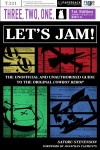
Three, Two, One: Let’s Jam: The Unofficial and Unauthorised Guide to the Original Cowboy Bebop
Written by Satoru Stevenson
636pp. 6×9 format paperback book.
ISBN 978-1-84583-232-2 (p/b)
Available to pre-order from Telos Publishing and Amazon (releases on October 1st)

- Miku Monday: Fanart “With You” on Miku Day - 03.09.2026
- AniMarch Madness 2026, Round Two: The Tournament Arc Continues! - 03.09.2026
- All Rise: The Case Against Higuruma (and Ourselves) - 03.06.2026

It sounds like a great book; I’ve always been curious about what goes on behind the scenes in making great television. I enjoyed the live action version, too; less imaginative but more streamlined, and with a great cliffhanger of an ending; too bad they aren’t making a second season.
It’s a very cool resource, indeed!