
What does it mean to go the extra mile? Is it service with a smile and working late hours? Is it striving toward excellence and ensuring quality? Is it always being the last one to leave, making sure that all is as it should be? These are generally the kinds of things we mean nowadays when we talk about that extra mile, whether in the service industry, the business world, or in church. But Miyo in My Happy Marriage gives us a radically different picture of what going the extra mile really looks like—and one that is far closer to what Jesus was talking about in his Sermon on the Mount than what we often take it to mean two millennia on. So let’s dive in and see what Miyo and her journey over that extra mile can teach us!
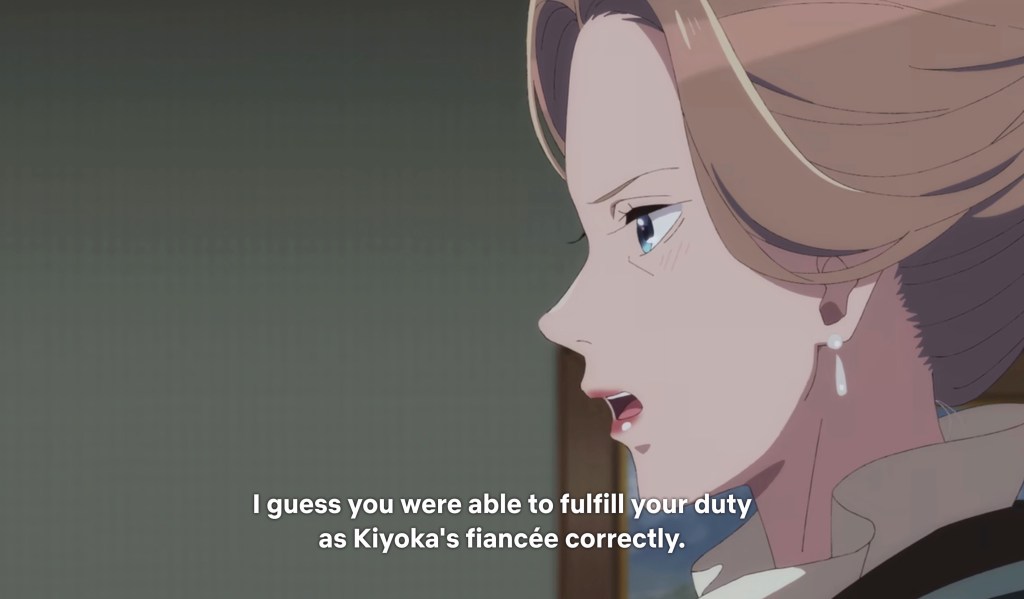
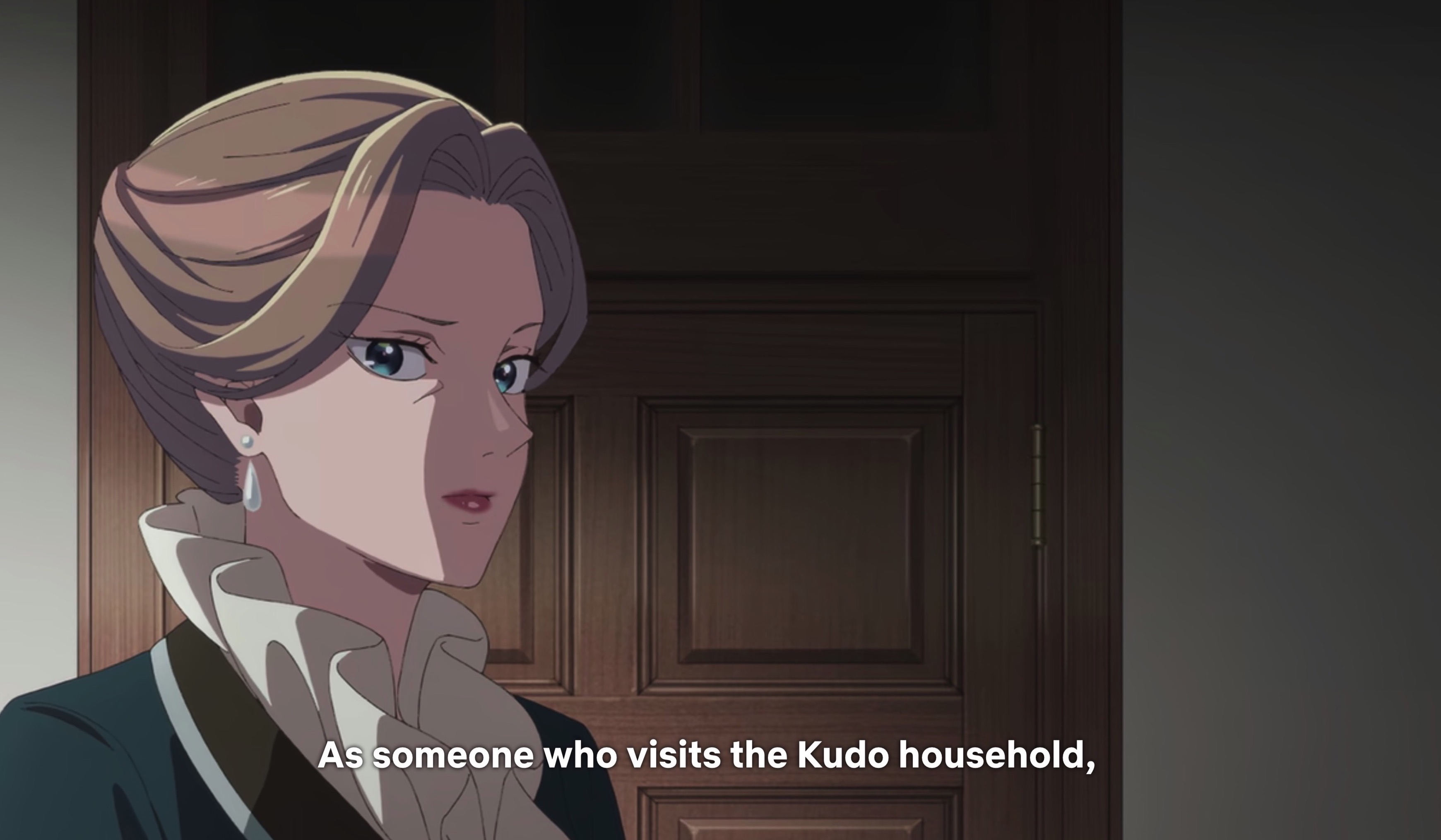
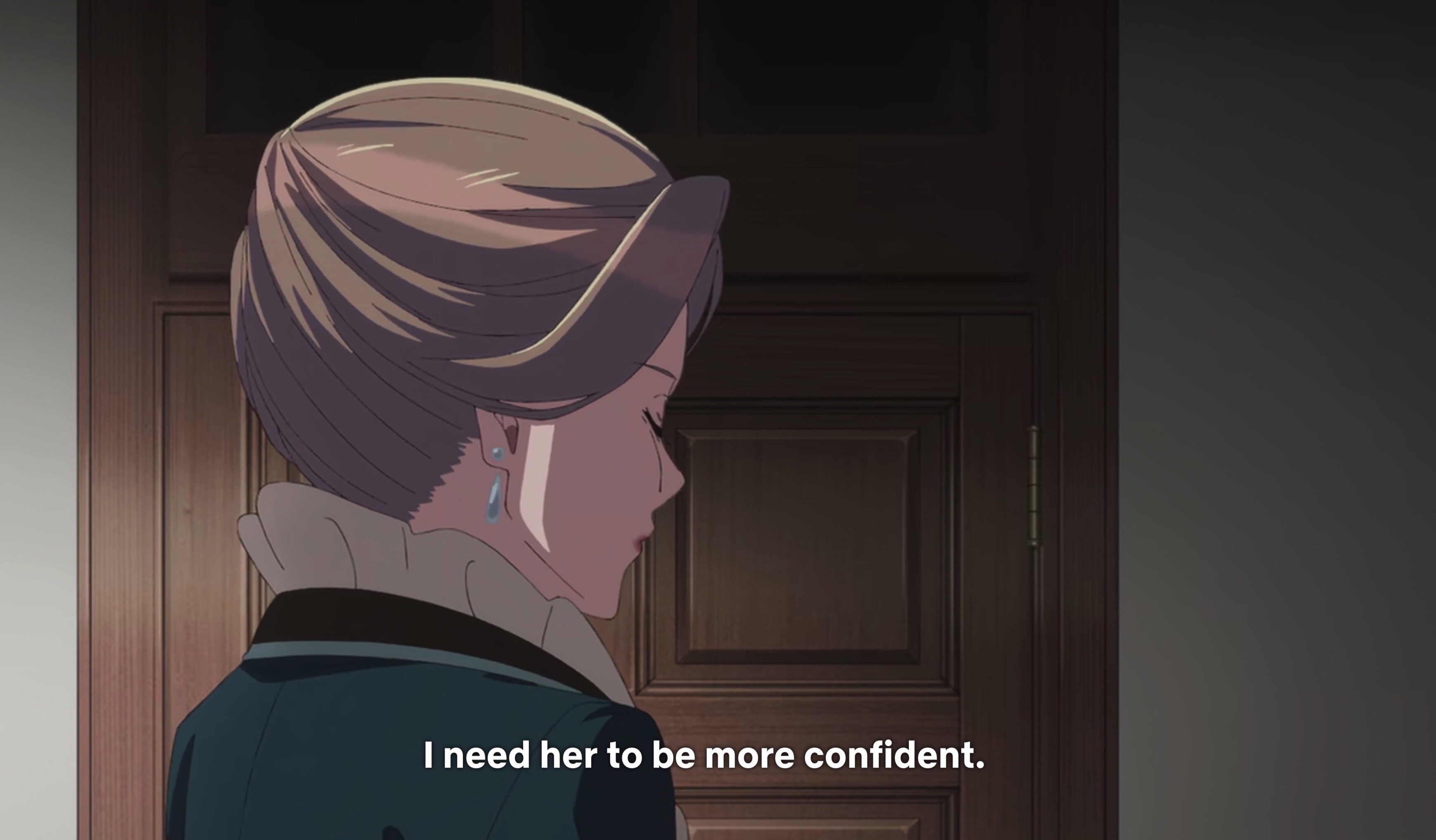
In the premiere episode of the second season, Miyo and her fiancé Kiyoka travel to his family home where his mother, Fuyu, proves to be quite a piece of work. She takes an instant dislike to Miyo, who is the antithesis of her commanding, modern Westernized self, and makes it very clear that she considers our sweet heroine to be unworthy of her son and the Kudo family name. To say she turns up her nose at Miyo would be an understatement.
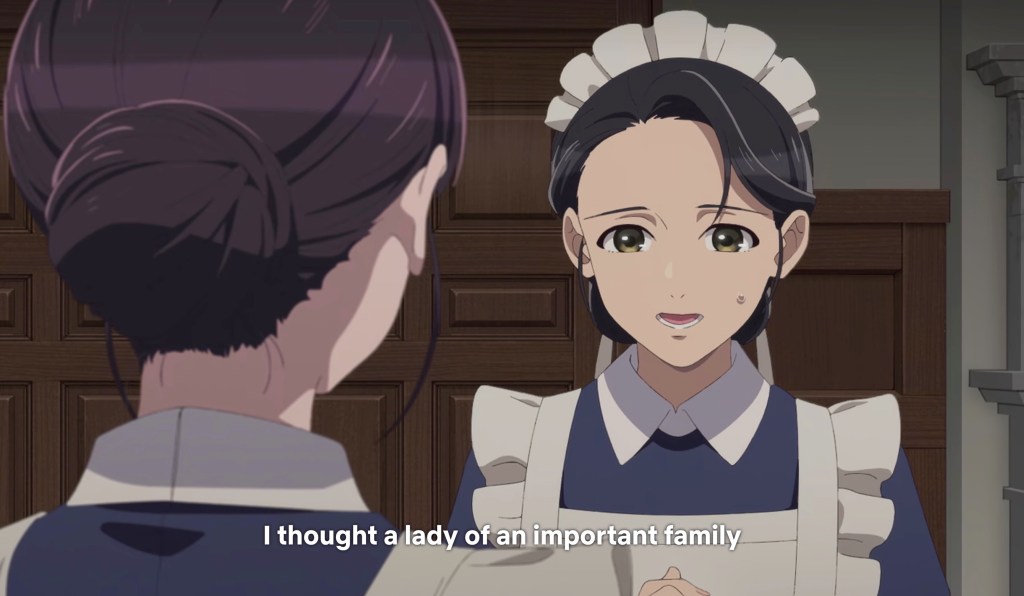
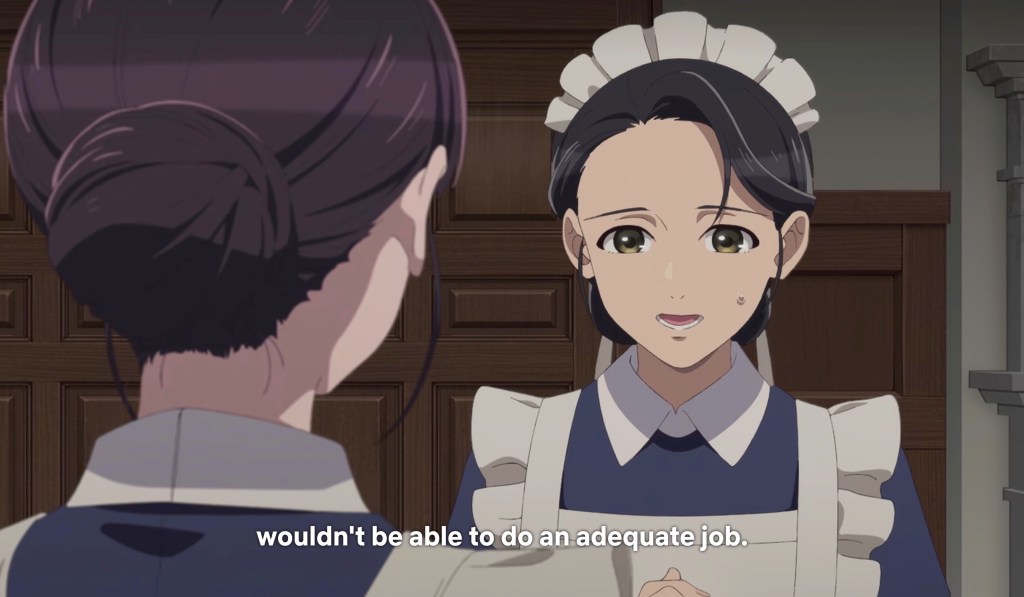
The following episode sees Kiyoka away for work, leaving Miyo to the mercies of Fuyu, who immediately orders the young woman to attend her. She gives her soon-to-be daughter-in-law a glare cool enough to turn her tea to ice and points at a maid’s uniform, “Change into that right now,” she instructs. Miyo must work for her keep. When the elderly housekeeper questions the wisdom of such treatment, Fuyu turns on her too, before Miyo interrupts politely and announces that she would like to help with the cleaning.
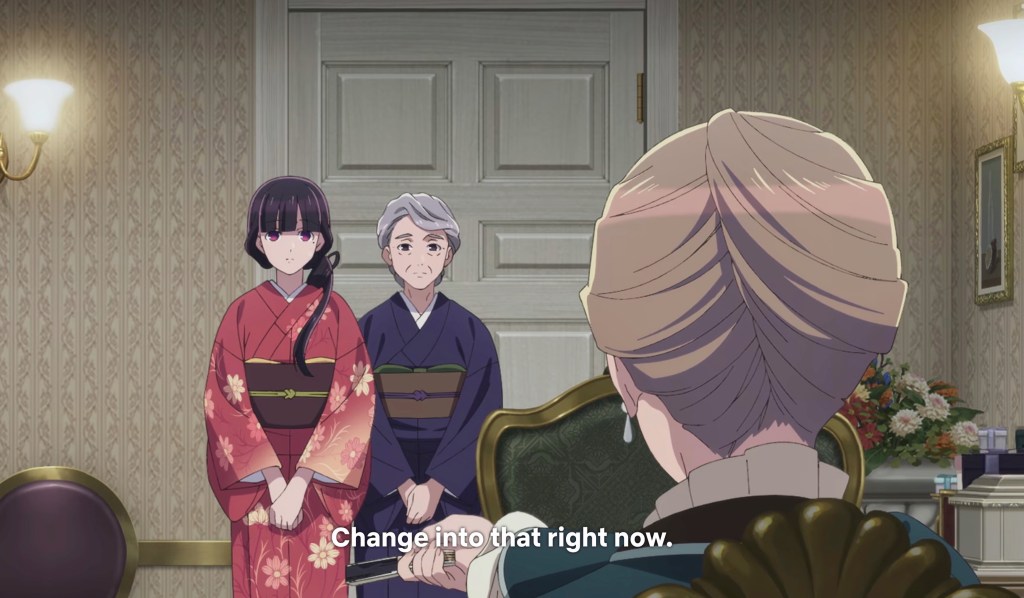


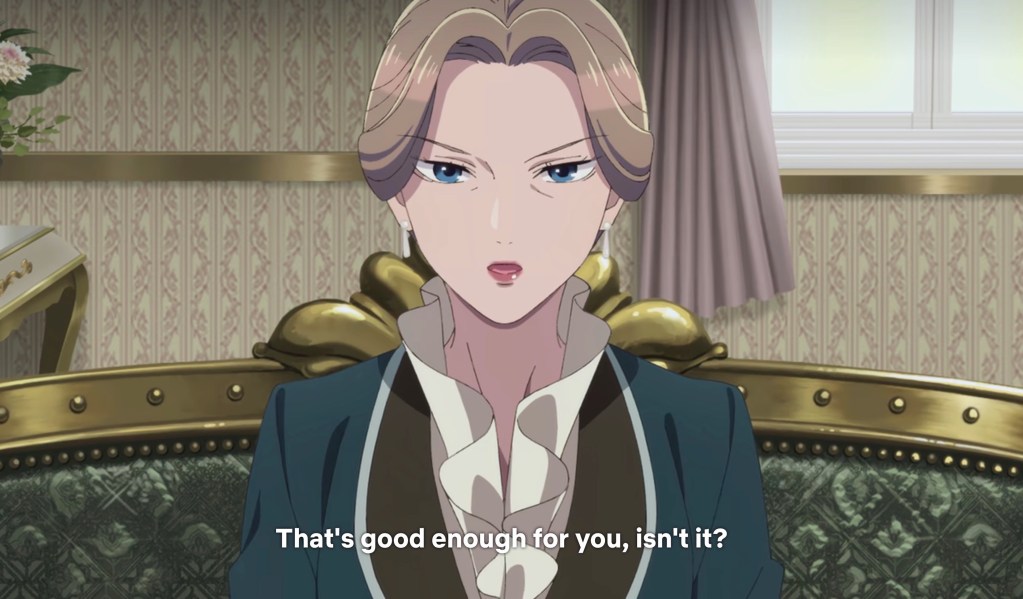
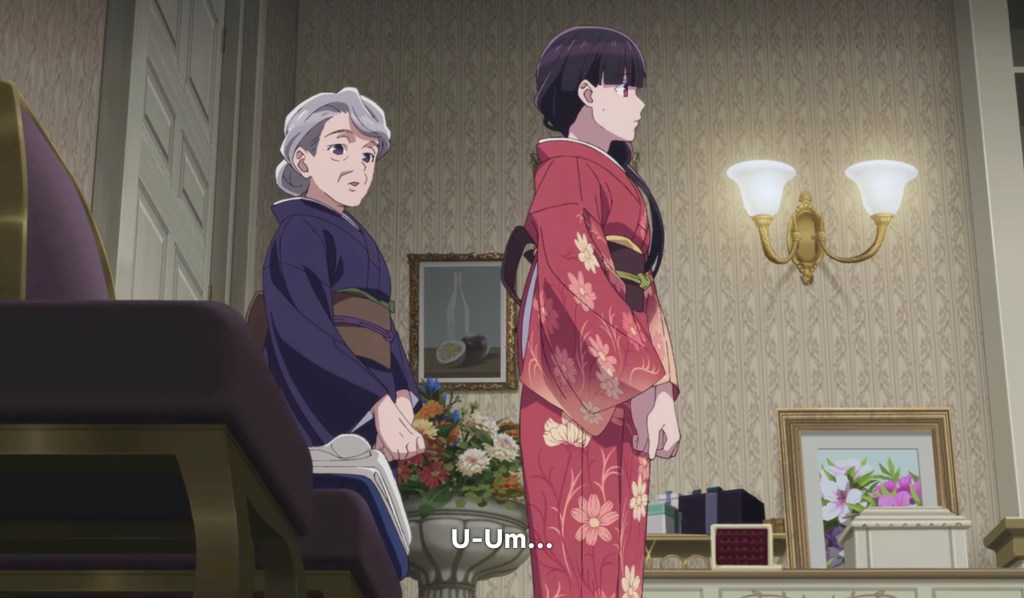
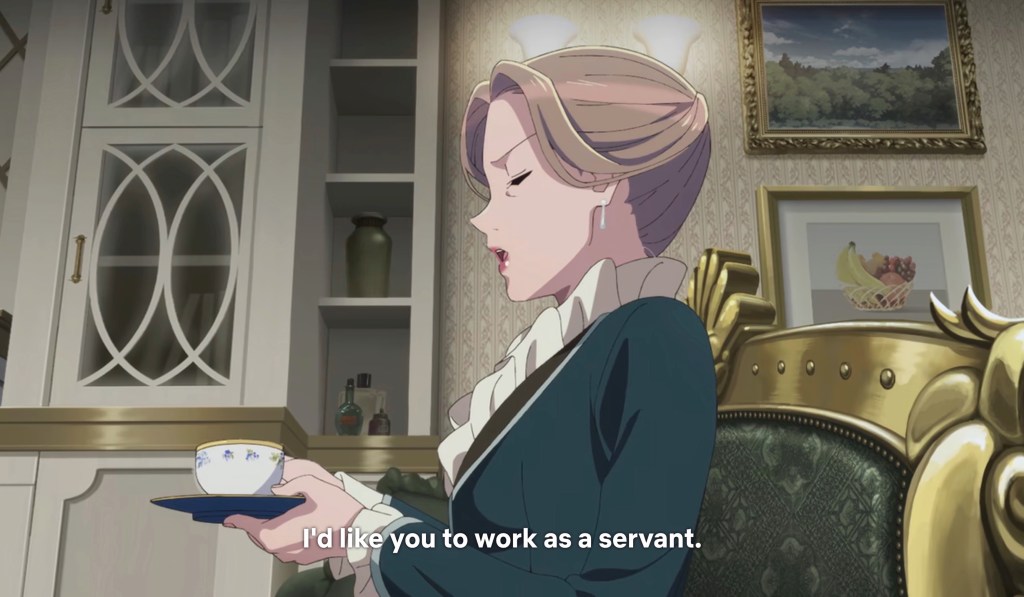

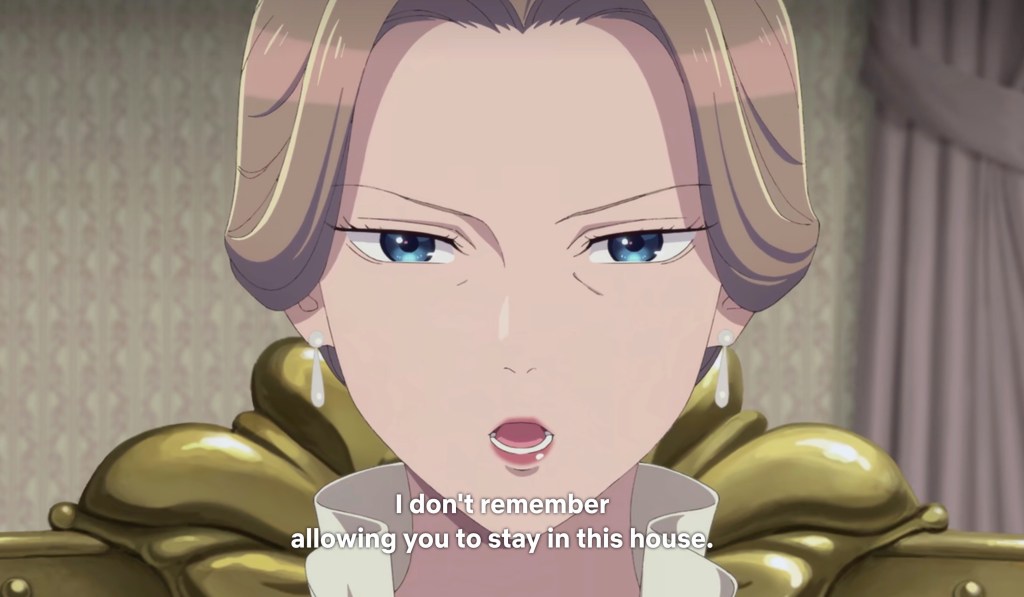

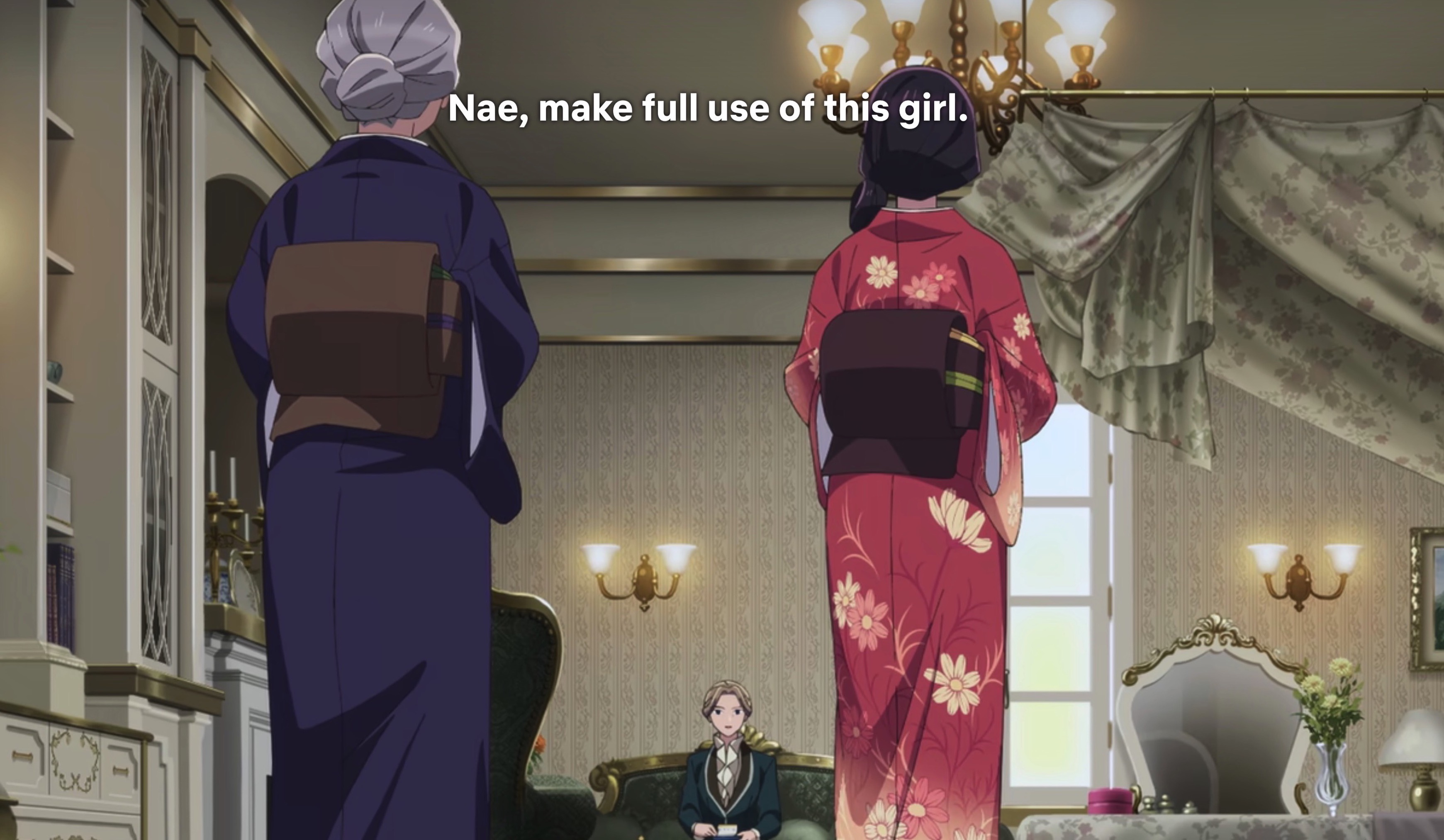
It’s a heart-breaking scene, as Miyo appears to revert back to her cowed, meek self, for whom abusive treatment was normalized. All the progress she has made in building up a modicum of self-confidence and self-worth seem to be swept away in a mere moment.
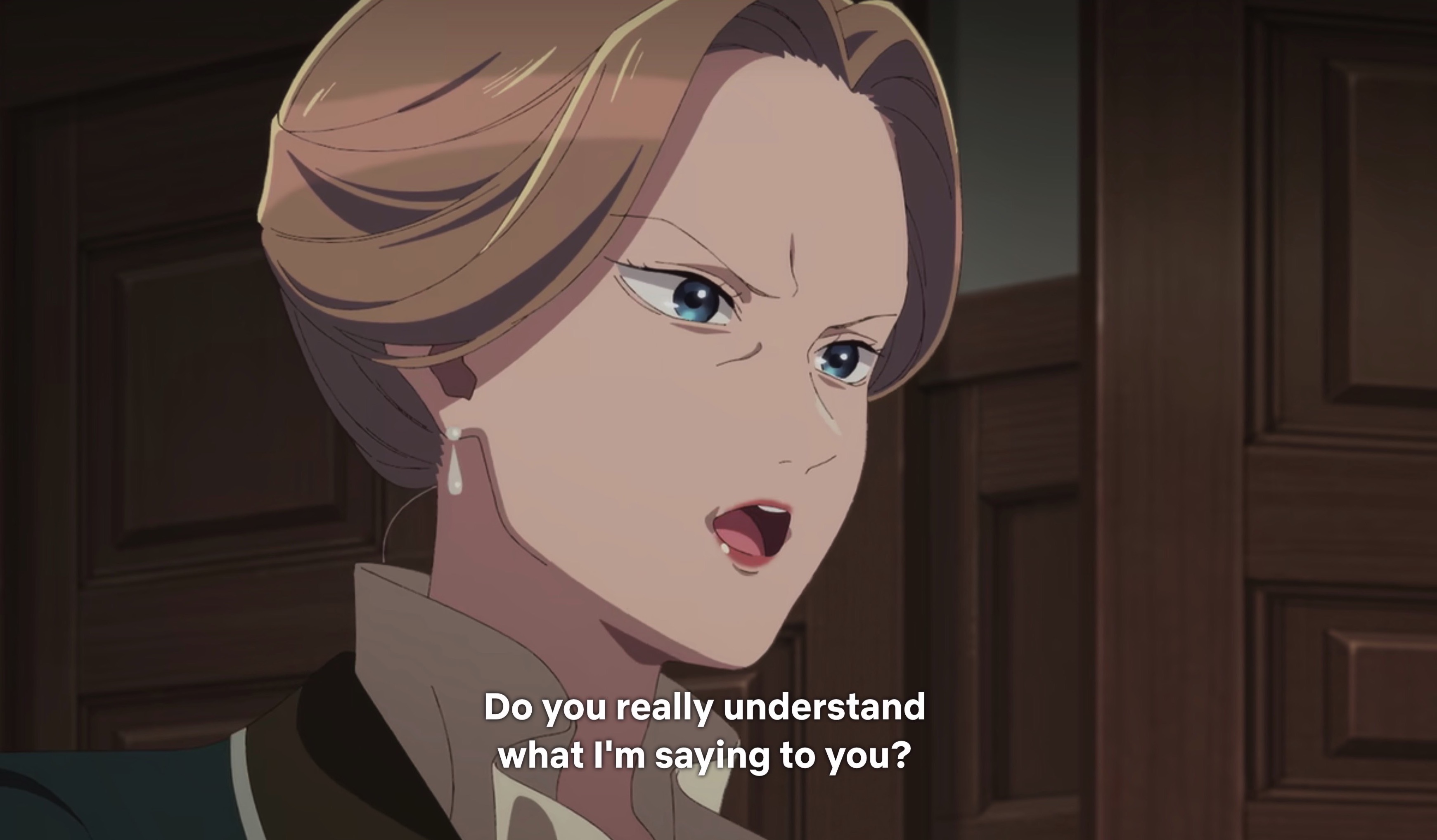
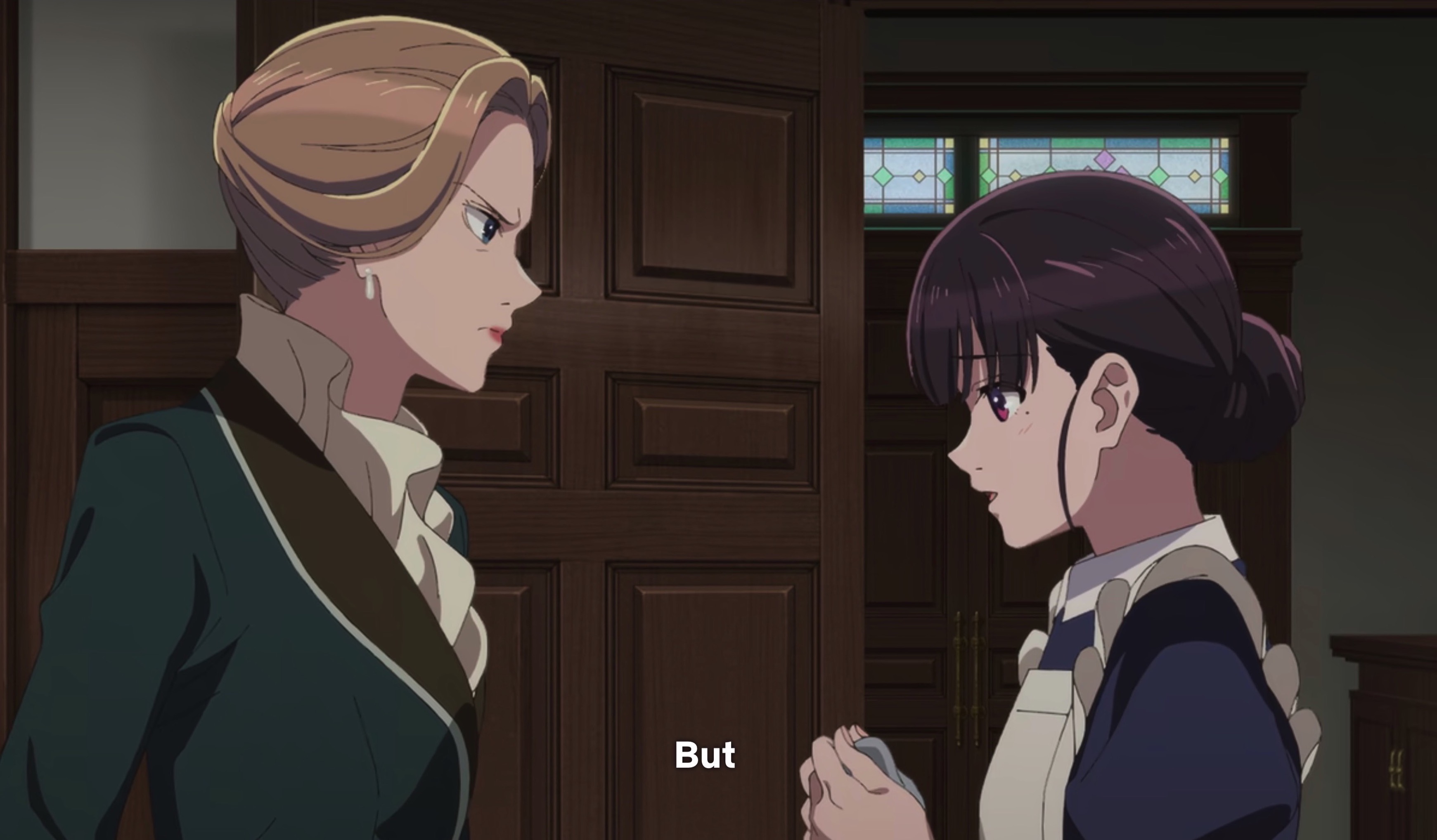
At least, it may seem so, but that’s not quite what is going on here. What is that firmness to Miyo’s tone as she voices her willingness to work? That clarity in her eye? Although Miyo is rushed into her declaration by the heightening tension in the room, she nevertheless retains her agency here and makes the decision to serve of her own free will. She speaks from a place of conviction, not weakness. We know this not only by the clues in her manner during the confrontation itself, but also by the way that she carries out her work throughout the day—with willingness and efficiency. When Fuyu discovers that her ploy to humiliate Miyo into fleeing has failed, the stern woman confronts her, insulting her further and telling her explicitly to leave the house. But Miyo humbly refuses, saying that she will continue to serve for the sake of her fiancé. That evening, Miyo does not breathe a word of the strife to Kiyoka, and instead asks him to continue watching over her from a distance as she faces her own challenges, rather than intervening on her behalf. Miyo makes the decision to serve that day—not just once, but three times.
Miyo goes the extra mile.


She had already gone one mile, as it were, by showing honor in the face of rejection during her first encounter with Fuyu; she goes the extra mile the next day by meeting Fuyu’s intent to exploit and intimidate her with servant heartedness instead. This is so radical that Miyo’s service may even offend our sensibilities as we watch the scene unfold. After all, Fuyu has set herself up as an enemy to Miyo, debasing and even dehumanizing her, telling her that she belongs in the dirt on her hands and knees. “Stand up for yourself, Miyo!” we might be thinking, or “At least tell Kiyoka what’s going on!” If you’re like me, you may have been rather incensed at the whole thing. It was an uncomfortable watch.
But that’s exactly what makes this episode such a powerful and biblical example of going the extra mile. That extra mile? It isn’t undertaken for paying clients, customers, or the church community—folks who at worst, may not appreciate or acknowledge our efforts, but at best, will be grateful. No, Jesus calls us to go the extra mile for our enemies.













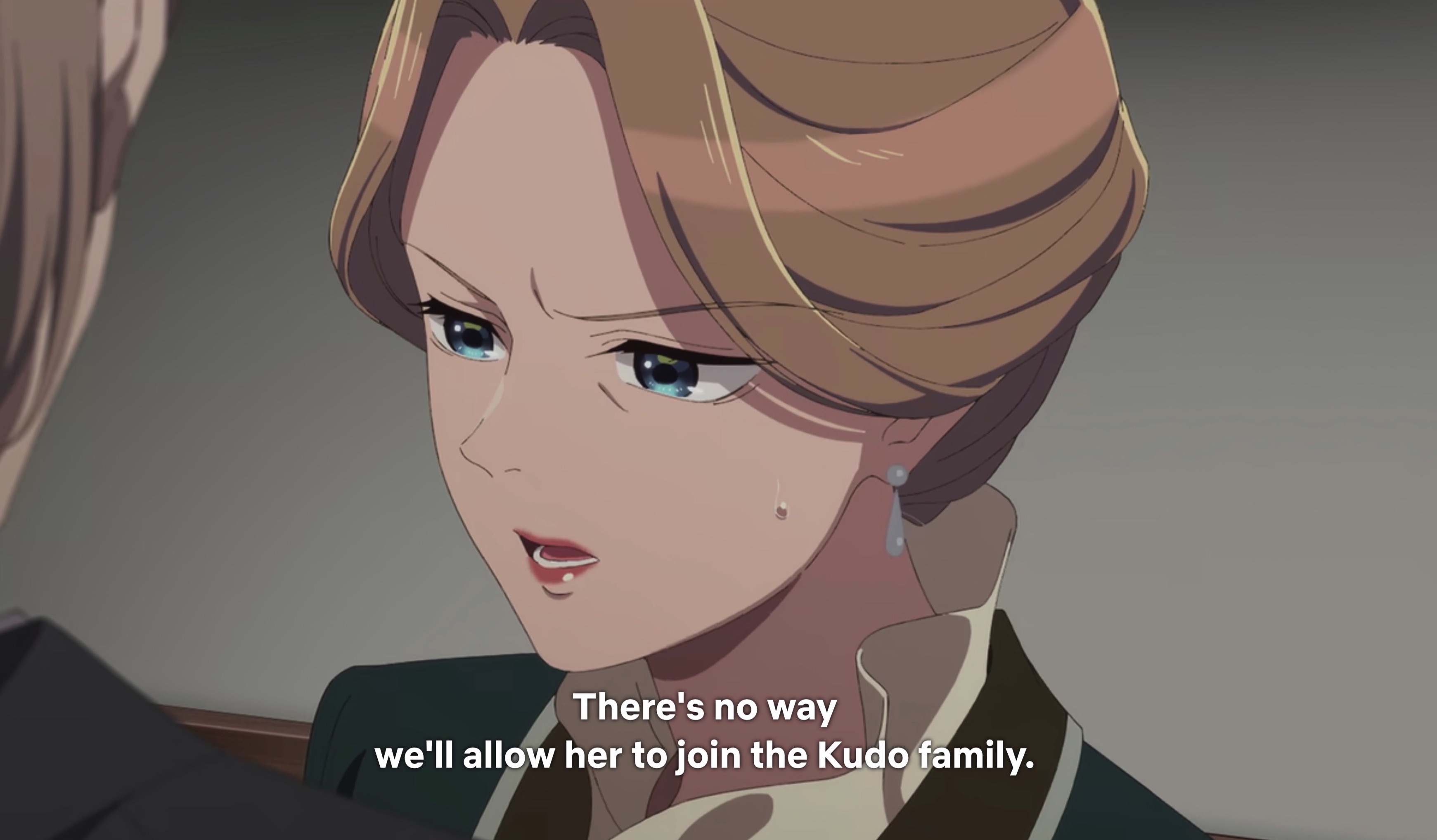
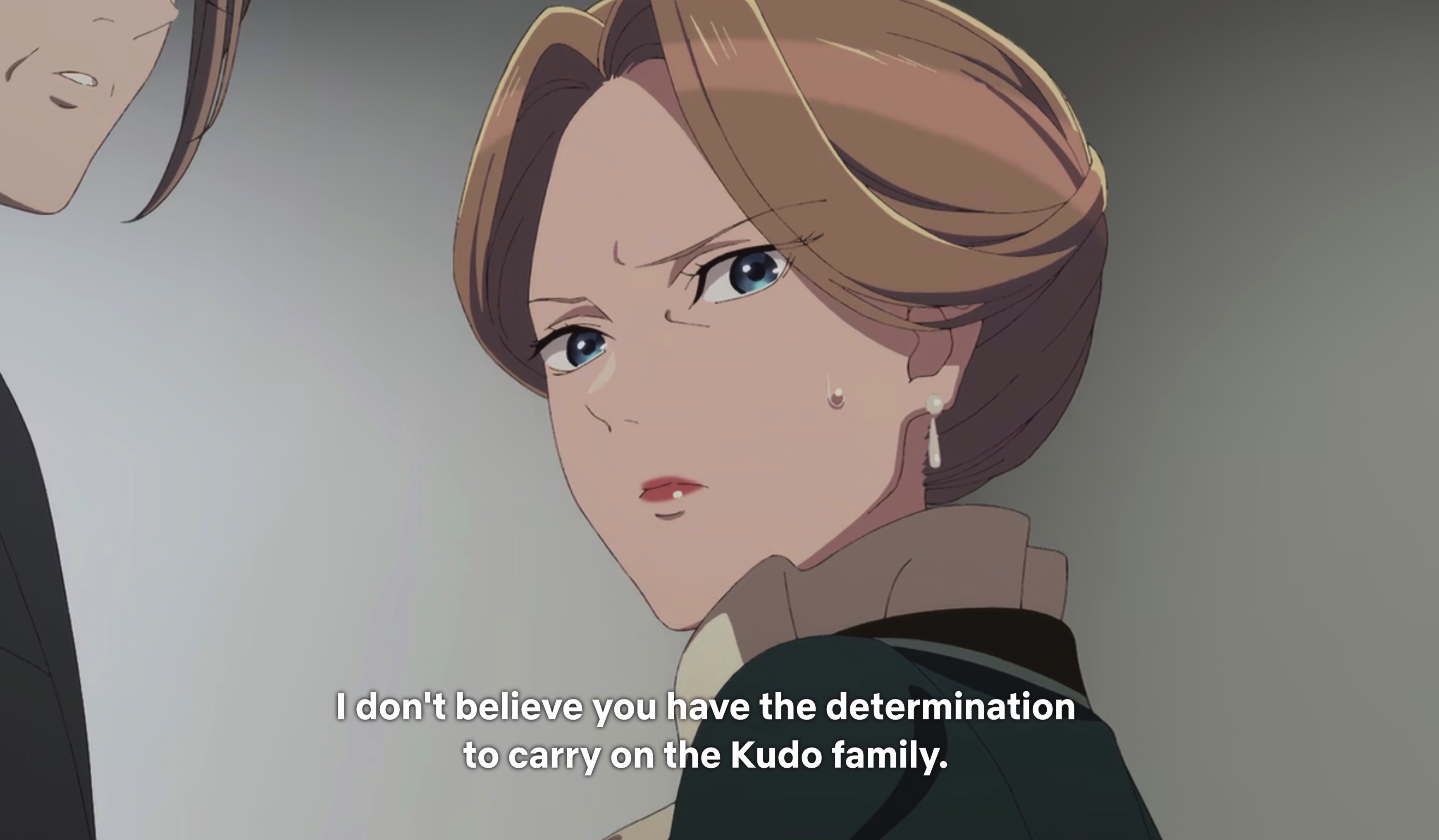

In the Sermon on the Mount, Jesus says to the crowd, “If anyone forces you to go one mile, go with them two miles.” But what we often don’t realize is that this was not a hypothetical scenario he came up with off the top of his head. This was a real life situation that played out over and over again for his Jewish audience under Roman rule. According to the Roman law of impressment, a Roman soldier could demand that any Jew he encountered carry his kit for a thousand paces, or one Roman mile (about half a mile today). This was no light task, as a soldier’s burden could weigh up to 100 lbs. And if the order came on the Sabbath, it would also mean breaking the Sabbath law, which forbade carrying burdens or laboring in any way. What’s more, the soldier was hardly expected to be grateful for such service, and it is fair to assume that the difficult labor was often accompanied by rough treatment as well. Walking that mile was not only hard work, it was also insulting, demeaning, and dehumanizing—and it could even be sinful.
So when Jesus exhorts his audience to go an extra mile in this situation, and not simply complete the mile with a good attitude, what he is calling for is pretty radical—offensive even. The extra mile is walked out in a context of injustice, for the benefit of an enemy, under dehumanizing conditions. It’s not just a matter of putting in the extra time or effort necessary to do something well. The extra mile comes at a cost.



But it is also absolutely necessary, if we are to become more like him.
You see, this verse comes in the middle of a longer passage that serves as the grand finale of the Sermon on the Mount. In these final verses, Jesus calls his listeners to leave behind the Old Testament justice mindset of “an eye for an eye,” and “love your neighbor and hate your enemy,” and pursue instead a grace mindset, loving our enemies, praying for our persecutors, and loving those who will never reward us. All of this works up to the final exhortation: “Be perfect, therefore, as your heavenly Father is perfect.” We go the extra mile for our enemies because that is what God has done.
Jesus’ sermon ends here. But Miyo’s story continues, and it offers a few more insights into the value of going the extra mile, and how it is, exactly, that doing so helps perfect us in godliness.
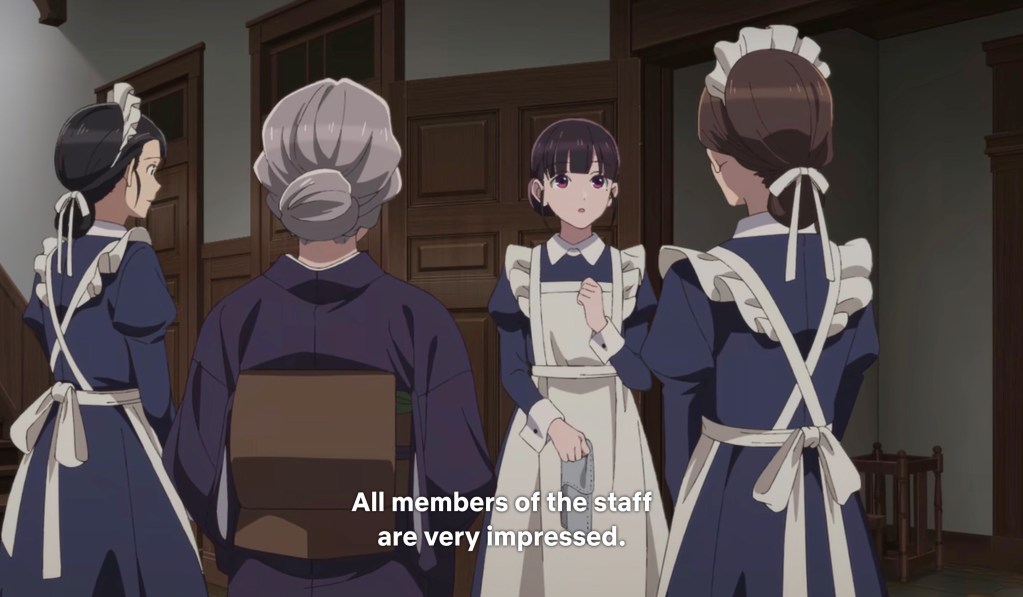
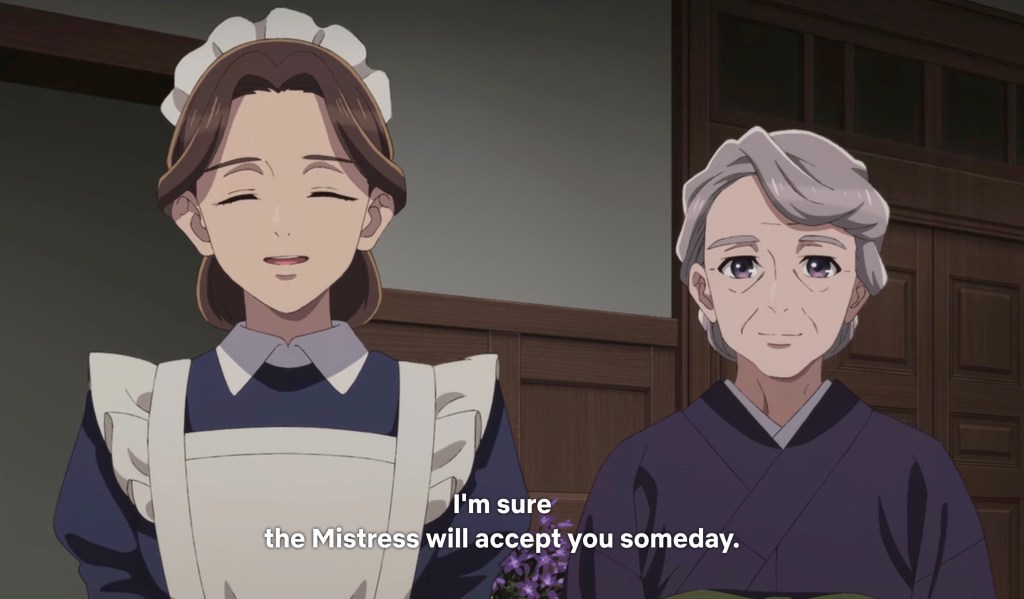
Two things happen when Miyo serves Fuyu: First, she finds community, winning the respect and support of others. The housekeeper, Nae, and the other servant girls watch Miyo closely and see the dedication of her service. Most importantly, they see how she handles Fuyu’s nasty confrontation with honor, and afterward, make their well wishes for her known. They know Fuyu to be a demanding individual, but they respect her, so if Miyo had shown any disrespect, they would not have reached out to her with their encouragement.

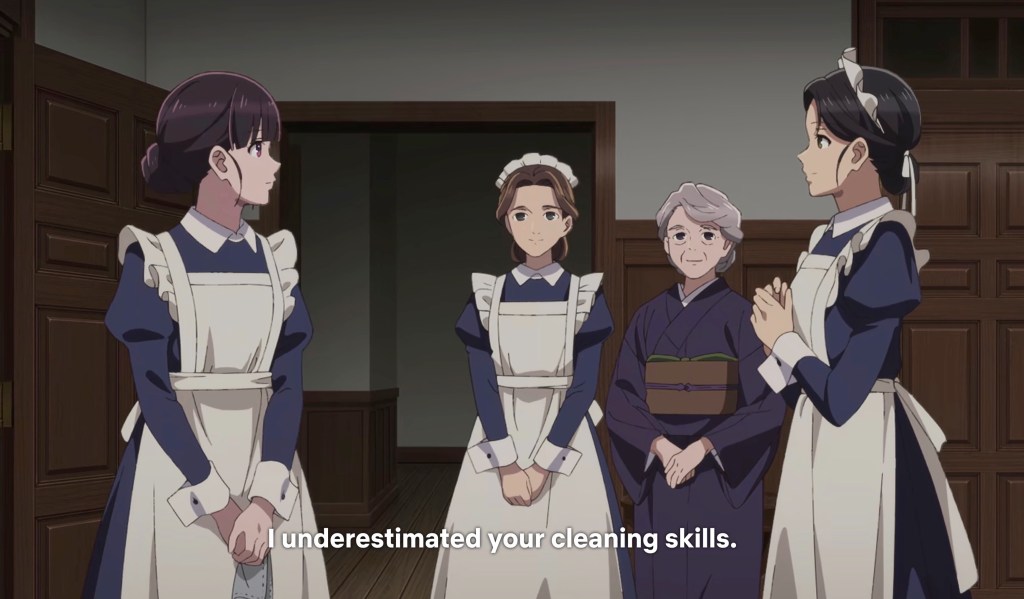
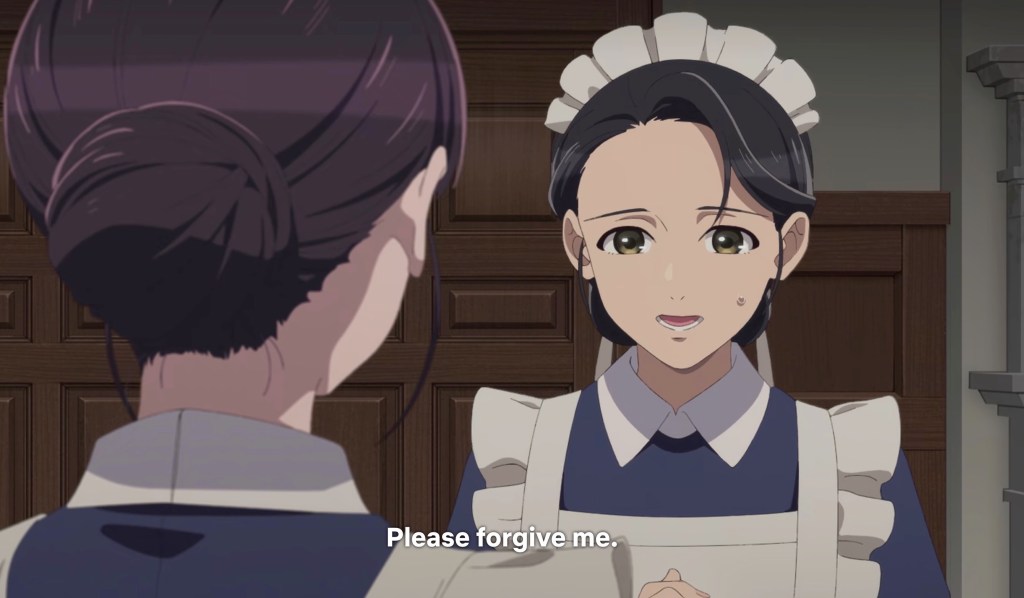
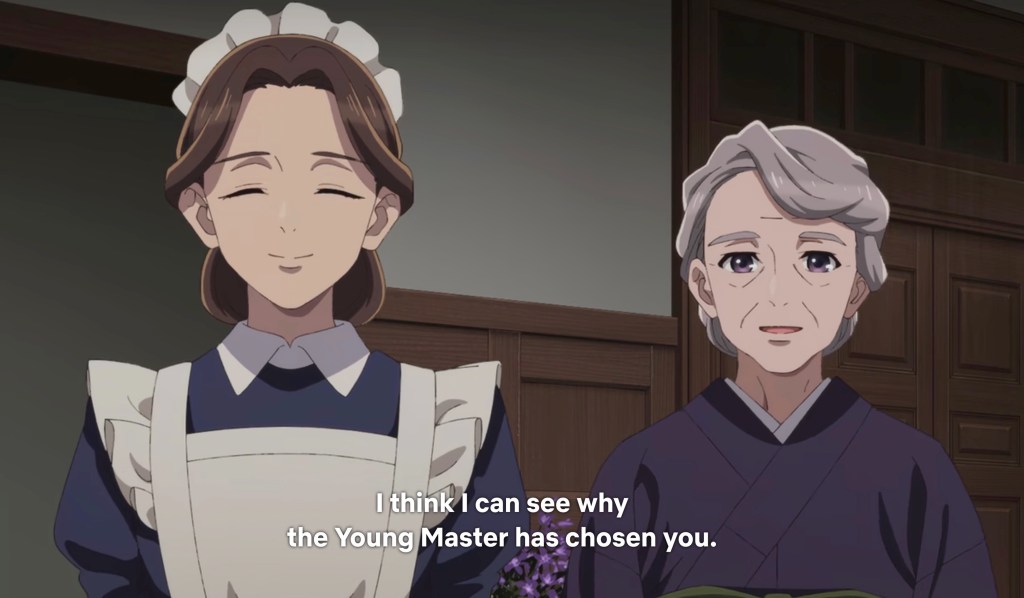

Second, and this is really the key, Miyo gains perspective on Fuyu, seeing her with new eyes. This perspective is so pure-hearted and full of honor that it can only be God’s perspective, that is, the view of the one who sees the heart. Miyo comes to understand the burden that Fuyu is carrying and recognizes her desire for excellence from herself and everyone around her, for the sake of the family. Fuyu’s manner and behavior are hard and demanding, and her obsession with the Kudo family is certainly idolatrous; but Miyo is able to see that Fuyu’s heart is worthy of her admiration, no matter how hard it may be on the outside and toward Miyo personally. Miyo sees past all the sharp edges to the imago dei beneath, and treats her enemy with such humanity, such compassion, that it proves to be transformative—both for Miyo, who is freed from fear of her mother-in-law and from any root of bitterness, and for Fuyu, who finds, to her surprise, that there is something about this uneducated, meek country girl that she is coming to respect.
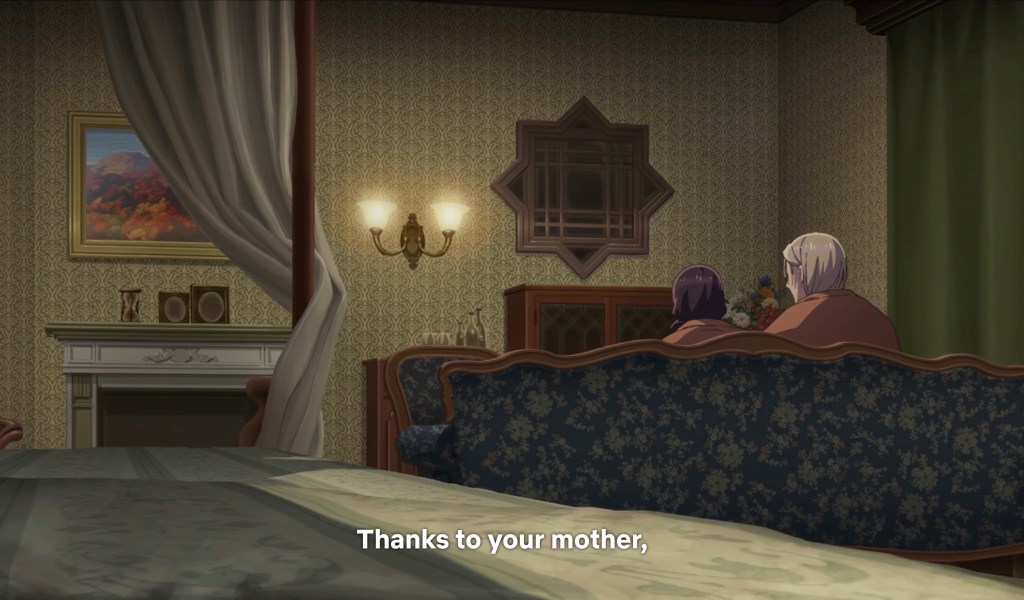
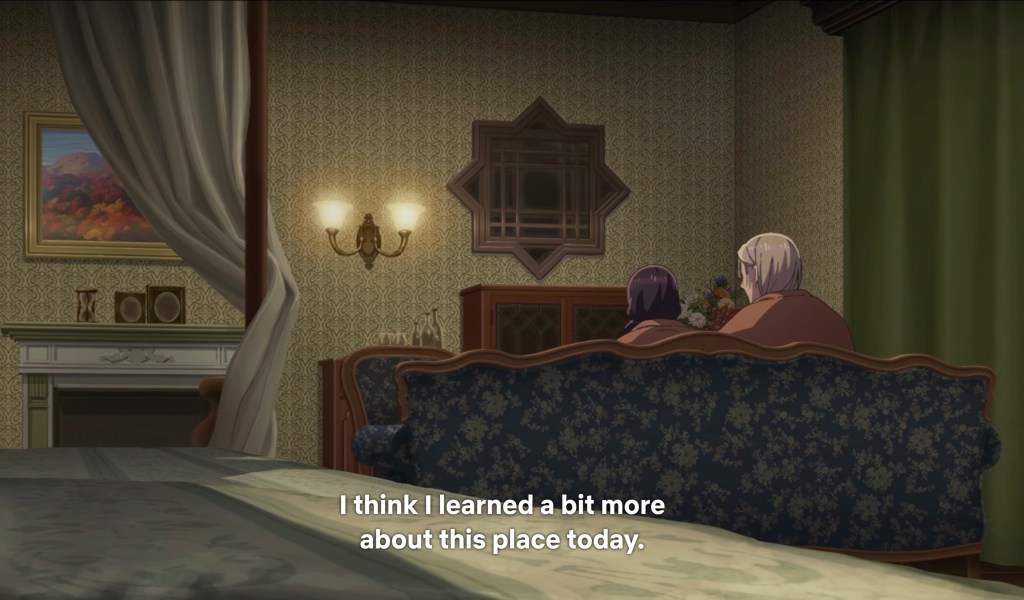
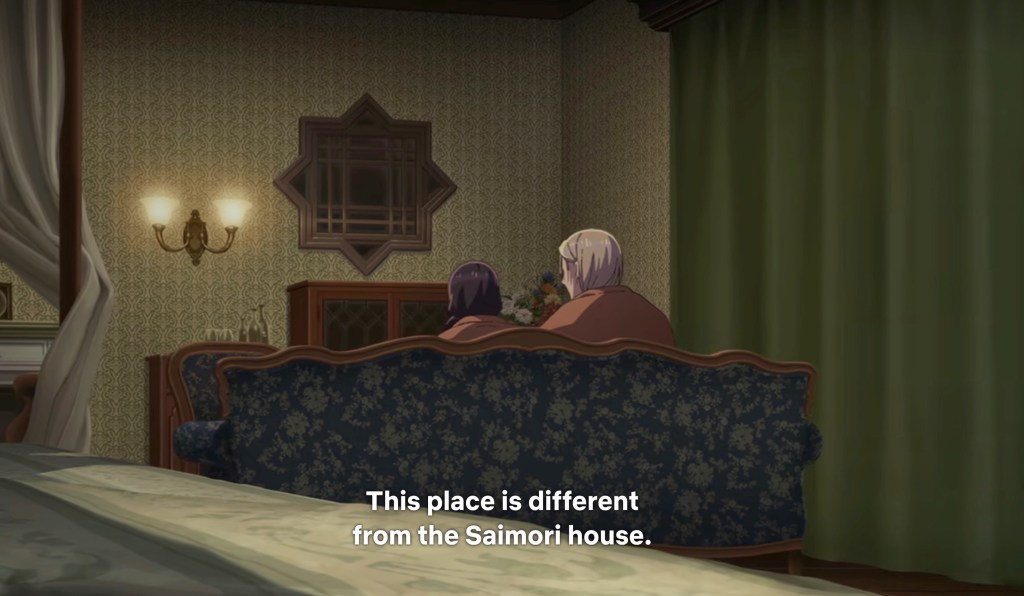
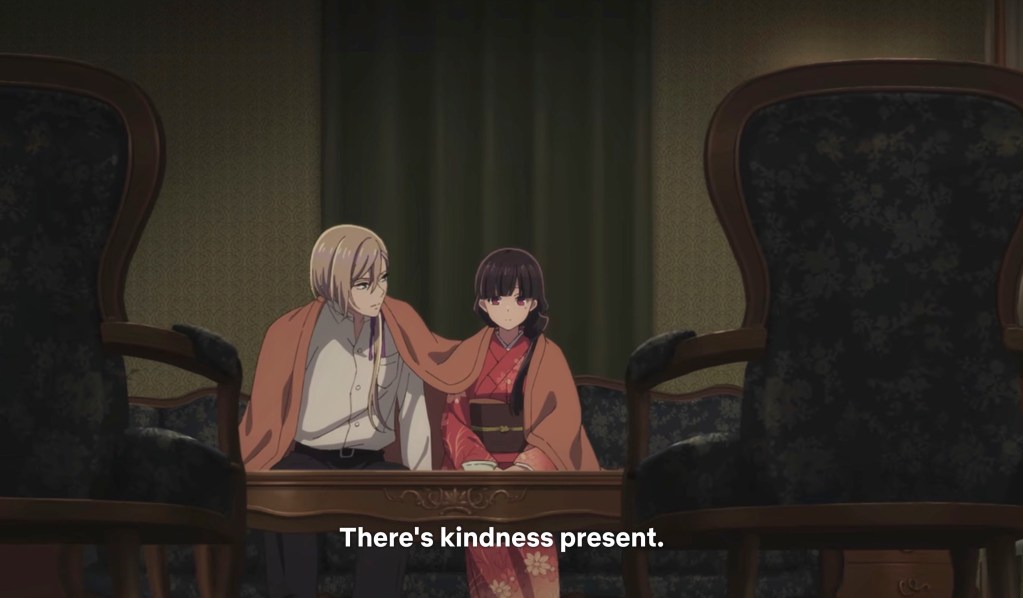
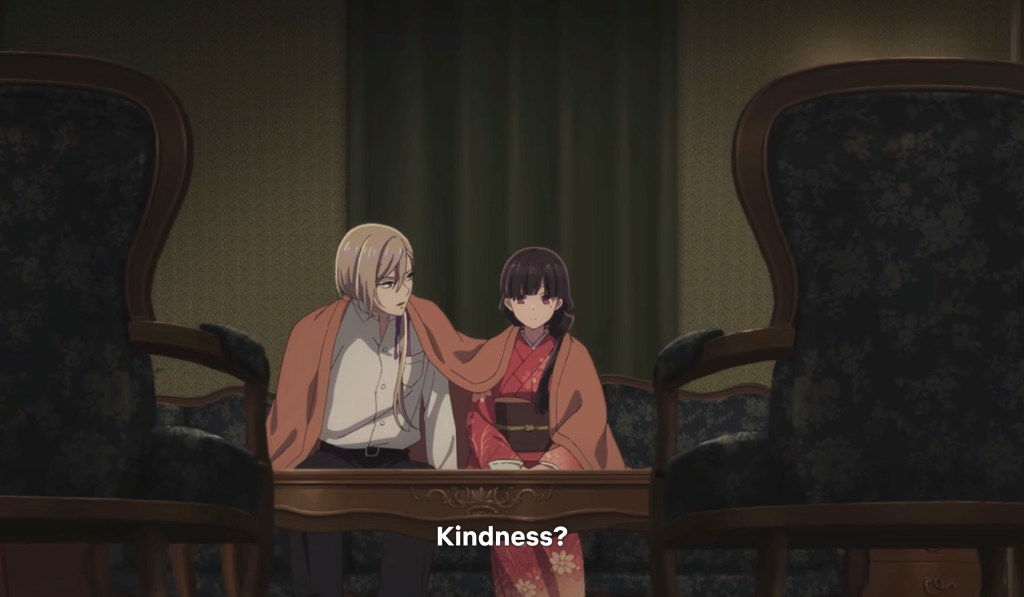
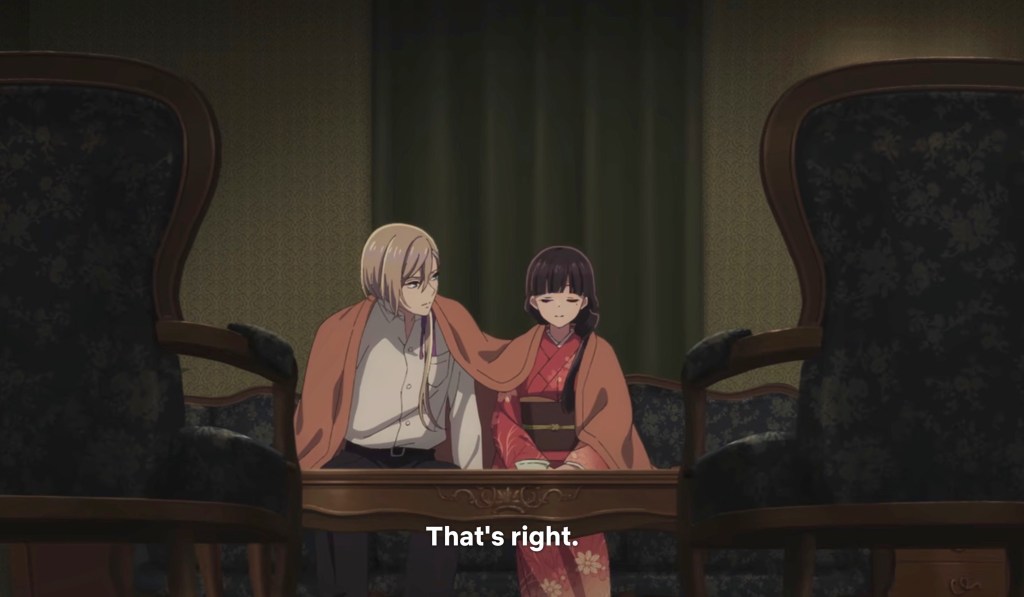
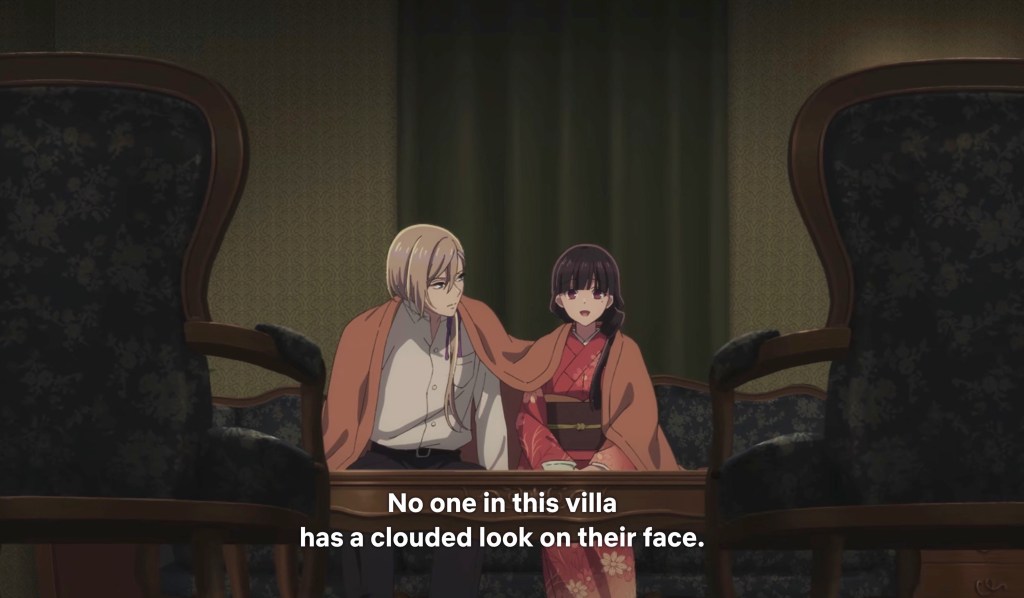
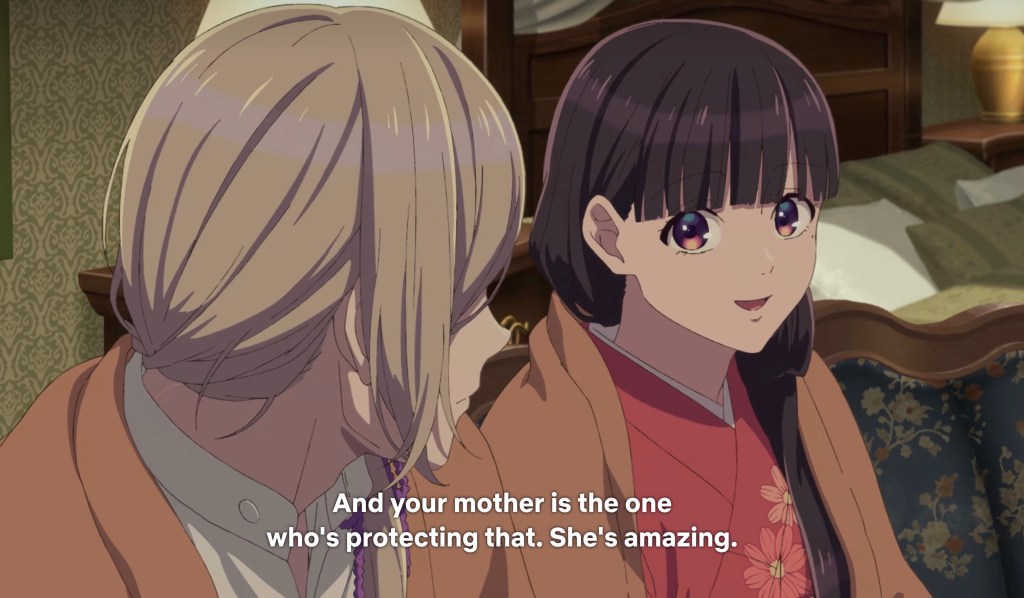

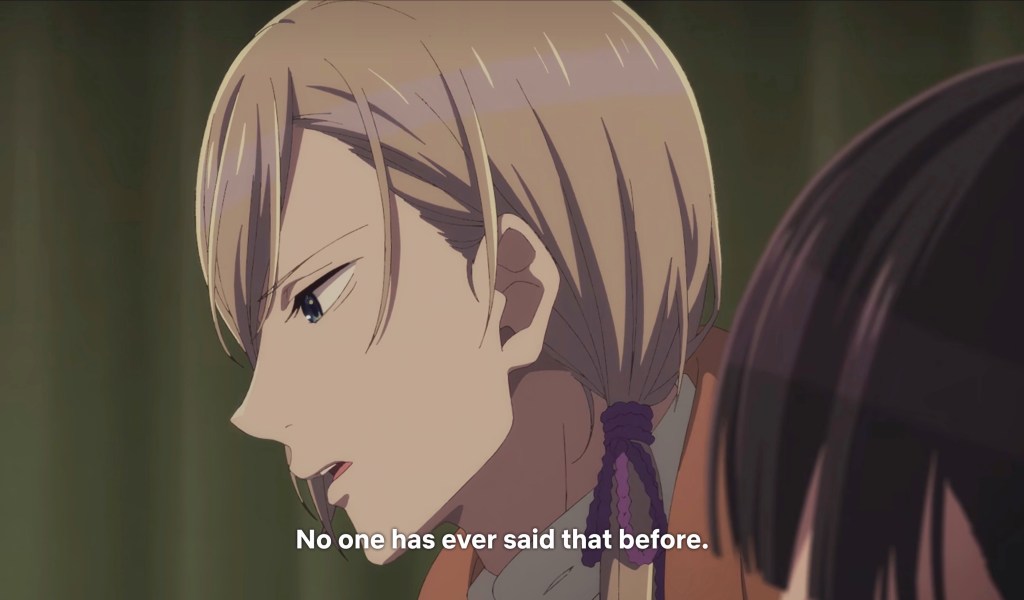
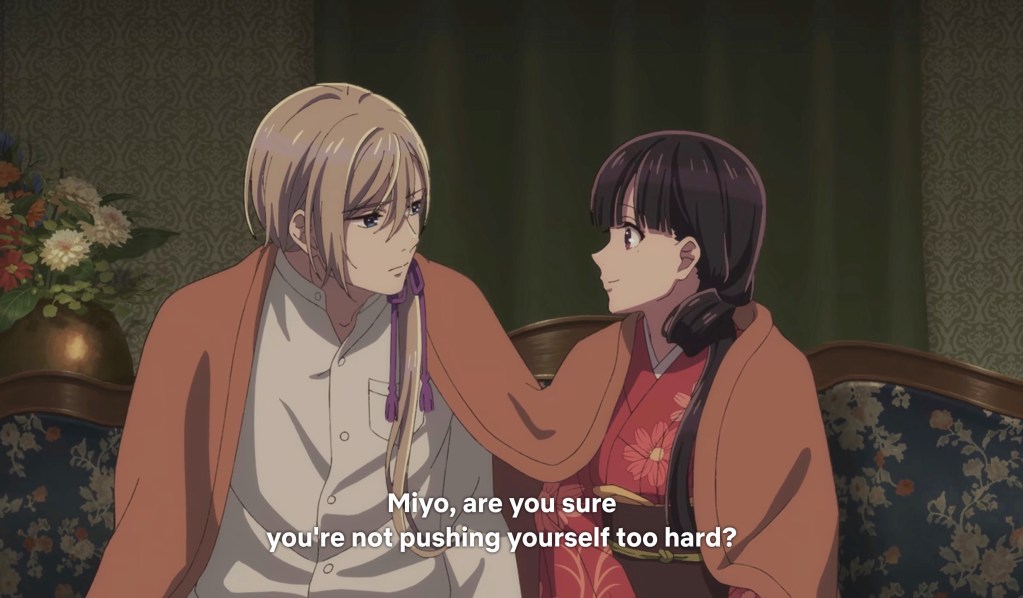
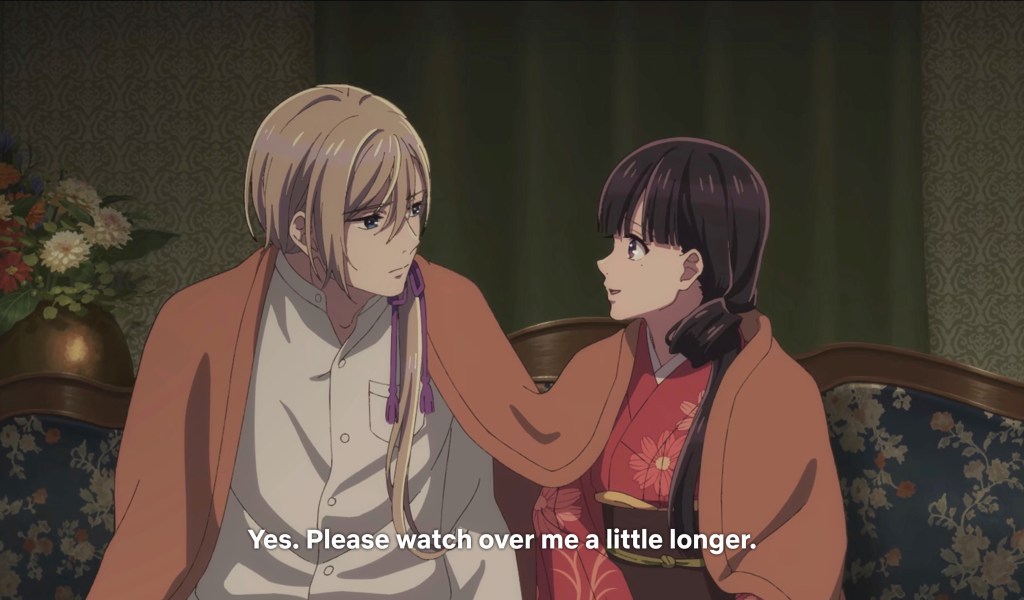
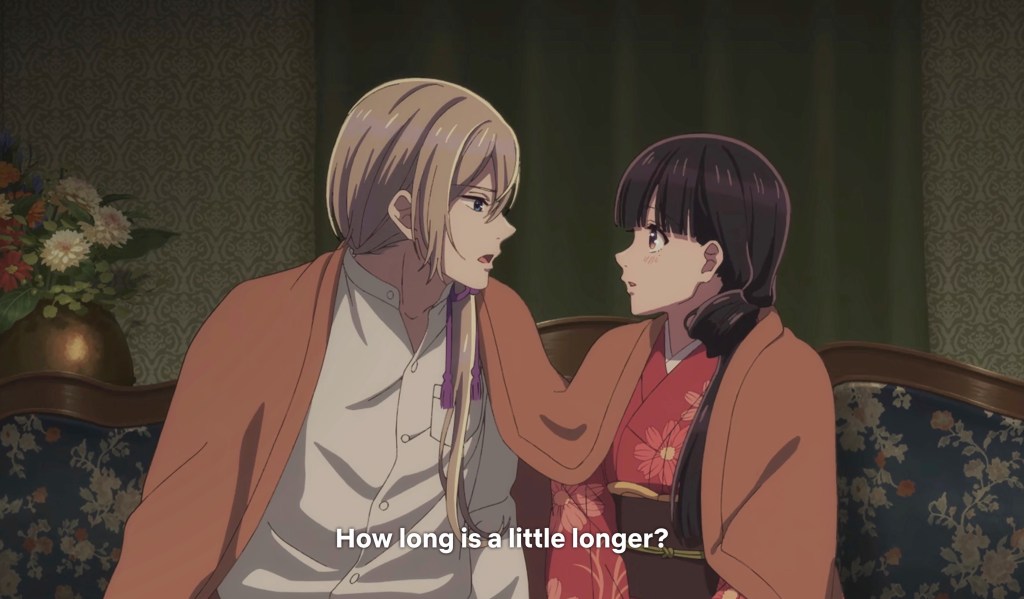
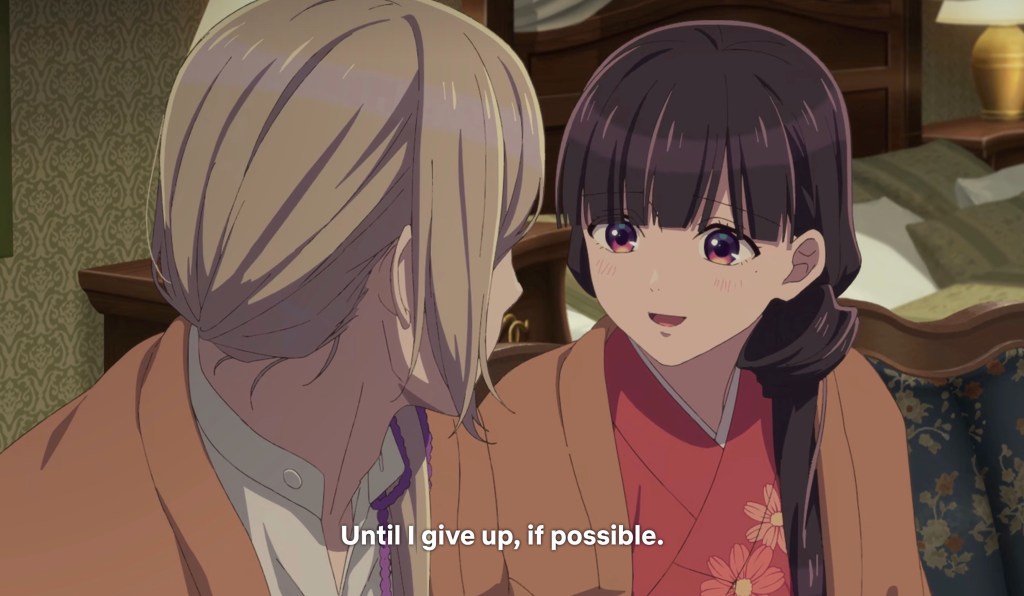
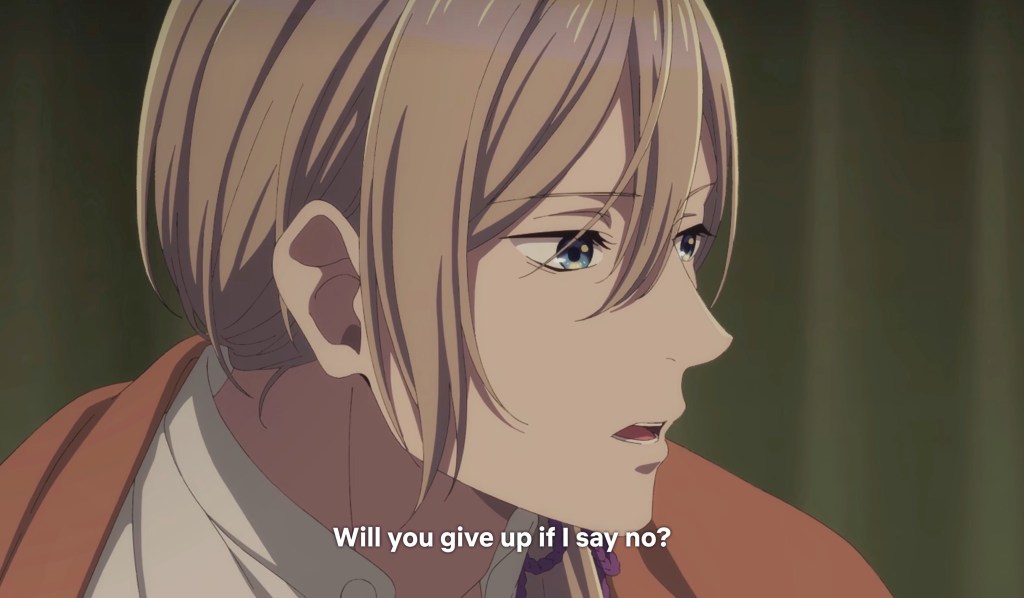





By the time Miyo and Kiyoka’s visit comes to an end, Fuyu even wears a bit of the dere aspect of her tsundere heart on her sleeve, gifting Miyo with a hair ornament and letting Kiyoka know that they are both welcome to return (although her words are of course wrapped up in dismissive comments, and delivered with her nose in the air, tsun tsun!).



We can’t control how our enemies treat us; and far too often, we can’t even influence them the way that Miyo is able, pouring hot coals on Fuyu’s head to melt her hard heart. But sometimes, going the extra mile to serve someone who is positioning themselves as your enemy does have unexpected effects. Either way, going the extra mile—especially in the difficult circumstances that Jesus was speaking into and which Miyo lived out—is guaranteed to change one important thing: it changes us. Jesus called us to walk in this radical new mindset not simply to be “holier than thou,” but because it is a practical, applicable way for us to use our agency to literally choose to be like him. And no matter what, he’ll meet us in the midst of it!


- Film Review: All You Need Is Kill - 01.15.2026
- First Impression: Kaya-chan isn’t Scary - 01.11.2026
- First Impression: Dead Account - 01.10.2026

[…] My Happy Marriage & Going the Extra Mile for Your Enemy […]
[…] I do love a historical series! The first three-quarters of this one gave me Moribito: Guardian of the Spirit vibes, which is a very good thing indeed, and then it went into full-on tragic mode, which in itself, has a kind of value, but it also worries me for what is to come. Don’t get me wrong, I do enjoy a dash of Shakespearean tragedy—as frustrating as it can be (“Why can’t they just have a conversation! USE YOUR WORDS not your sword!!! Arrrggg!”)—now and then. But my fear here is that the tone and pace that I enjoyed so much in the premiere will take a sharp turn into something more…mundane, making this yet another series with an excellent extended premiere, followed by a rather run-of-the-mill, genre-trope-upholding season (ahem, Oshi no Ko, cough). I’ll definitely give another two episodes to see how it does post-premiere, but I’m a bit on the fence. One thing worth noting: Reina Ueda, the VA for Suzune, does a masterful job with that character’s breakdown; hard to believe this is our sweet Miyo! […]