
It’s the most glorious time of the year again—Annecy time! Since its inauguration in 1960, the Annecy International Animation Film Festival has grown to become the world’s largest annual gathering of animators and animation, drawing audiences of around 15,000 from the most far-flung corners of the globe to the lakeside town nestled in the mountains that separate France from Switzerland. There’s nothing like it on Earth, and for the past couple of years, it’s been my privilege to attend on behalf of BtT.
In previous years, I simply wrote up reviews of some of the films I was able to see and posted them as the movies received international release throughout the year. This year, I’ll do something a little different—more like what we do for First Impression season. This here will be the Master Post!
What does that mean? Basically, I’ll update this post each day or so with first impressions of what I’ve been able to see, and link to any full-length film reviews as well. Don’t hold your breath for those straight away, though—Annecy is intense! With access to four screenings a day, plus a wide range of other events (exhibitions, pitches, interviews, and of course the beautiful lake itself!) to check out, there isn’t a great deal of time for writing.
True to our focus here at BtT, I’ll be covering mainly the anime that is screening at Annecy, but I’ll also include a few other Asian titles from China and South Korea, and anime-inspired works from other countries. Here’s the list of titles I aspire to view, but it’s subject to change. Internal links will go live as I update each section.
So, without further ado, “Ça va faire tout noir!”
Annecy Anecdotes • Sunday 8 June • Monday 9 June • Tuesday 10 June • Wednesday 11 June • Thursday 12 June • Friday 13 June
Feature Films:
100 Meters (Hyakuemu) • All You Need Is Kill • ChaO • Jinsei • The Last Blossom (Housenka) • Mononoke The Movie: Chapter II – The Ashes of Rage • Nightmare Bugs • The Square (South Korea)
Shorts, VR & Works-in-Progress:
Get Jiro (WIP, Warner Bros) • Lucy Lost (WIP, France) • Mobile Suit Gundam: Silver Phantom (VR) • The Mourning Children: Nagiko and the Girls Wearing Tsurubami Black (WIP) • Star Wars: Visions “Black” (short)
Annecy Anecdotes
The first thing you need to know about Annecy is that it is replete with its own winsome traditions—especially when it comes to the screenings!
First, the paper airplanes. Even if you have secured a ticket in advance, you will generally queue up for a good half hour before the screening begins, filing into the theater well before start time. So, what to do as you wait for the movie to begin? Why, make paper airplanes, of course! Any planes that float near the stage in front of the screen (the largest screen, the Bonlieu Grand Salle, is essentially an opera house, with seating for 1000) are encouraged along their flight path by a rising chorus of “Oooooohh” from the audience, which errupts into a sympathetic sigh or a roar of applause, depending on whether or not it hits the target. Planes that crash into the screen itself are celebrated with unbridled enthusiasm, as the aviation engineers behind their creation take a bow.
Once the lights dim, it’s time for the traditional call-and-answer: “Ça va faire tout noir!” someone shouts (“It’s going dark!”), possibly with mock panic in their voice; “Ta gueule!” comes the response (“Shut up!”). Occasionally, I’ve heard a final comeback, but I couldn’t make it out.
Each screening then opens with a couple of shorts: first, the main short animation for the festival that year, celebrating Annecy; and second, a “short of the day” from the spotlighted country, so this year, they’ll be from Hungary. Here’s where the tradition kicks in: whenever a rabbit appears on screen, the audience shouts, “Lapin!” or “Rabbit!” By Day 3, everyone has the timings down to an art for the rabbit appearances in the main short, and it becomes a competition as to who can claim first mention for each rabbit appearance.
My favorite tradition, though, tends to be reserved for the Grand Salle screenings or smaller screenings where the director or other members of the animation team are in attendance: nearly everyone remains seated, applauding throughout the credits as the hundreds and sometimes thousands of names of everyone involved in bringing the work to life receive their due from the audience. Annecy is the only place I’ve been where the compositors and effects team, key animators, and in-betweeners receive more cheers than the actors. It’s pretty heartwarming. Last year, there was a certain stunning French sci-fi film that had been egregiously snubbed a couple of weeks earlier at Cannes, but the outpouring of support for the director and production team at the Annecy premiere was like a soothing balm, bringing a tear to more than a few eyes. Annecy is a special place for animation and animators.
Sunday 8 June (Opening Ceremony)
Star Wars: Visions, Season 3, episode “Black”
dir. Shinya Ohira, david production
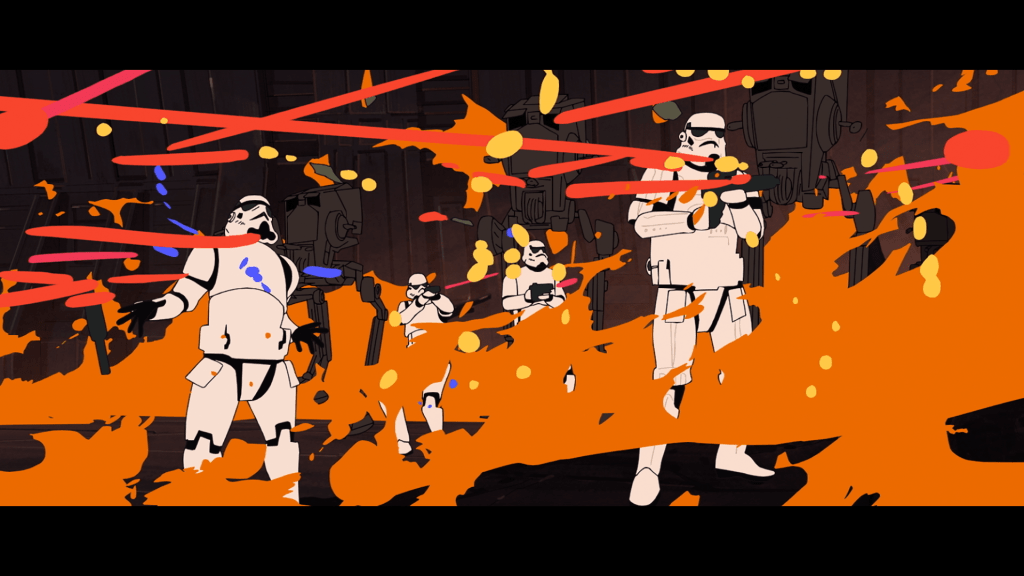
“A psychedelic battle between past and present, light and dark, and life and death plays out in the haunted psyche of an Imperial trooper who is on the cusp of defeat.” — Annecy Film Program
First Impression:
It starts with an attack on a Death Star—a familiar montage for any viewer with even the most glancing acquaintance with the Star Wars franchise. But before there is time for fears to set in that this may be some watered-down homage to a new plucky pilot character, the entire battle is revealed to be contained within the brilliant blue eye of a stormtrooper whose helmet has been mangled and half blown away. He is locked in brutal single combat with a compatriot, equally the worse for wear, each man’s suit of white armour limned with another color, recalling light sabres, green versus red, though no such dignified weapons feature in this grappling fight to the death. There is nothing of art or elegance in this martial encounter—except, of course, that the animation itself is absolutely stunning. The figures devolve into smears of color and motion and resolve back into painfully maimed human form, time and time again, spiralling through space and cycling through what must be the high points of a stormtrooper’s life, as a jazzy soundtrack, bright and playful, negates the need for dialogue. But like the imagery, the sound too devolves into sound effects, grunts and growls and scratches of white noise, then to a silence so complete as to give the impression there may have been a technical glitch in the screening, only to resolve back into a vibrant psychedelic jazz, before being overwhelmed by a cry, repeated over and over and clarifying into something on the verge of a word or a name, when it stops before it can form fully. And all the while, the two figures are locked in conflict, and the visual clues begin to mount as to what is really going on: this is a fatal moment for a nameless stormtrooper, and more than just his life flashing before his eyes, it is the battle within him that we see in this moment of death; he is both the green and the red stormtrooper. Faceless in life, he gains individuality only in his dying, helmet and body mangled, hand reaching out like Adam to God as fingers at last meet. Rather than a last gasp, there is the final grasping of hands as the battle comes to an end.
This is a stormtrooper like we’ve never seen; this is a vision of Star Wars like we’ve never seen. Director Shinya Ohira has done the impossible. He has humanized a stormtrooper without dialogue, without plot, without character arc—with only the art of color and line and soundtrack and a blur of mind-blowing creativity to capture the significance of the end of a life, however futile, and however anonymous it may be. It is shocking in the best way possible.
When the artistic director of Annecy, Marcel Jean, introduced Ohira’s short this evening, he prefaced it by saying that he was able to preview the third season of Star Wars: Visions when visiting Lucasfilm a few months ago. And when he saw “Black,” he knew it needed to be part of the film festival. He was right. It is stunning. And if it’s a foretaste of what is to come with the rest of the season, then we are in for the best one yet—by a long shot.
Monday 9 June
Jinsei (Life)
dir. Ryuya Suzuki, solo project

“From birth to death, each person goes through life with a variety of nicknames, and sometimes derogatory. The story depicts the beautiful yet sorrowful life of the protagonist who, unintentionally, rises to the top, against a backdrop of problems we are facing today, such as elderly drivers, the dark side of the entertainment industry, the unknown deaths of young people, and war.” ~ Annecy Film Program
First Impression:
Jinsei is a formidable undertaking in two ways: Not only is it practically solo-produced by animator, director, and writer Ryuya Suzuki, who develops a unique aesthetic that is compelling for all its simplicity, but it also takes life itself as its muse. And it starts out strong too, opening with a poignant montage of snapshots that tell a complete story on their own, and left this audience member, at least, feeling in a reflective mood. But as the film progresses, the fact that Suzuki had no script or end point in mind when he started out begins to show as both the life the film centers on and the movie itself go off the rails, seemingly in thrall to the ugliness of living while missing out on the beauty. The result is thirty minutes well spent, and sixty more marred by the failure of a coherent theme to emerge, topped off by more endings than The Fellowship of the Rings. This would have made an excellent short, but as a feature, it drags on too long and ends up nowhere in particular.
The Mourning Children: Nagiko and the Girls Wearing Tsurubami Black
dir. Sunao Katabuchi, work-in-progress, studio Contrail (MAPPA)

“‘I didn’t know the meaning of the bad omen then…’ At the time, there was still smoke rising from Mount Fuji. Kyoto was the capital of Japan. But the solar eclipse, comet and other signs of disaster came one after another, and many people in the city died of illnesses. Beyond despair and absurdity lies a story of daily life and determination that will be passed on to the next generation.” ~ Annecy Film Program
Work in Progress panel with speakers: Director Sunao Katabuchi and co-director Chie Uratani from Contrail, and producer Manabu Otsuka from MAPPA.
First Impression:
There is a lot that I cannot tell you about the current project by the director of In This Corner of the World, such as the plot, the main characters’ names, or the anticipated release date. But what I can tell you is this: It’s going to be stunning. Set a thousand years ago, The Mourning Children explores the churning depths below the peaceful surface of the height of the Heian period, juxtaposing the colourful, highly ritualised court life with streets littered with the discarded dead and dying in an era marked by epidemic. The film pulls on historical writings of women courtiers, with the lady Sei Shonagon’s Pillow Book being chief among them, in order to bring into the spotlight the women whose faces were never seen during their lifetimes, so tightly guarded were they by the protocols of the period. Alongside these writings, Katabuchi cited a young girl character in his work Mai Mai Miracle as the main inspiration for the film: He wanted to see what life would have been like for her as she grew up.
Most of the session was dedicated to demonstrating the depth of historical research that has underpinned the film, and which makes up a cornerstone of Katabuchi’s method (for instance, the Hiroshima shopfronts in In This Corner sport accurate phone numbers for the businesses at a time when the possession of a telephone was worth advertising!). Not only does the production boast a historical consultant who is responsible for pioneering research in clothing and fashion of the Heian period, but the team also invested considerable time and effort in reenacting historical forms of lighting, making torches of varying materials and testing out the illumination range of each, as well as the smoke patterns created when waved about or carried. Meanwhile, they recreated the natural dyes and clothing of the period and attempted to shoot reference video while completing common actions, but found that moving about in twelve layers of silk (which was the norm at court!) was beyond their skill set, and so a dancer familiar with traditional dances and clothing was brought in to shoot reference. They even studied the life cycle of mosquito larvae. In short, at the very least, the historical value of this film will be worth the price of entry, translating written descriptions and archeological investigation into vibrant, moving color.
One other theme stood out in today’s session, and that was the focus on legacy—a fitting complement to the project’s passionate engagement with history. To best support Kataguchi and his aspirations, producer Manabu Otsuka and MAPPA studio set up a new company under its umbrella, solely to make this film. The new studio, Contrail, was designed as a training program for young animators, but one that set them a task of exploration—developing the characters for the film—rather than requiring them to reproduce an established style sheet. The “contrail” of the company name is intended to evoke the trail of vapor left by an airplane, a trace in the unmapped vastness of the sky. After all, “Japanese animation,” explained Katabuchi, “is a form of exploration.” I, for one, am looking forward to the journey that The Mourning Children promises. Its release can’t come too soon!
There is no official trailer as yet, but there is this beautiful pilot for the project:
Tuesday 10 June
Lucy Lost
dir. Olivier Clert, work-in-progress, Xilam Films (France)
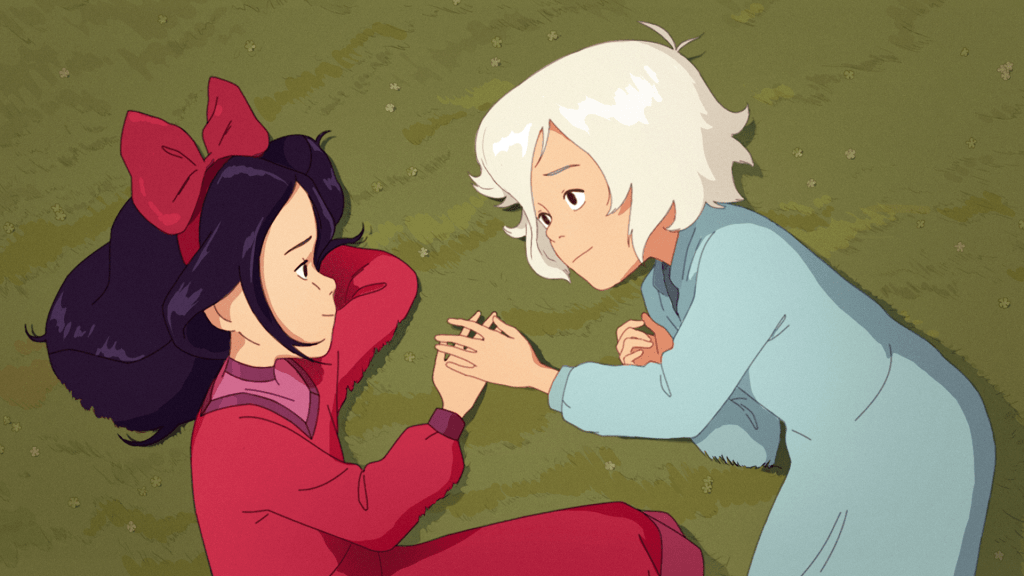
“Despite her family’s love and affection, Lucy has always felt like an outsider. Her extraordinary gifts and striking white hair set her apart, stirring hostility and distrust in her village. With the help of Milly – a little girl only she can see – Lucy embarks on a daring adventure to unravel the mystery of her powers and finally find where she belongs.” ~ Annecy Film Program
Work in Progress panel with speakers: Director Olivier Clert, First Assistant Lucie Giros, Artistic Director Joyce Colson, Head of Posing Juliette Laurent, Producer Marc Du Pontavice from Xilam Films.
First Impression:
Lucy Lost is a French production, adapting a children’s novel by British author Michael Morpurgo, known as Listen to the Moon in English and The Mystery of Lucy Lost in French. Set in the Isles of Scilly and New York City around about 1915, it has nothing to do with Japan. So why did I attend this session for BtT, you may ask? Well, I booked in on a wing and a prayer and the strong Ghibli vibes given by the still on the Annecy website (above). My gamble was rewarded when, within five minutes into the session, head of posing Juliette Laurent referred to the Ghibliesque reworking of the character designs. This “Ghibli turn” in the stylistics was not an accident—er, rather, it was partly an accident, but on purpose. Let me explain.
Lucy Lost has been in development since 2018, initially as a miniseries project before it was re-envisioned as a feature film three or four years in. The challenges of adapting the source material account for the delays, so when Olivier Clert took the helm, he started by rewriting the story itself over and over again, from multiple points of view, starting at various different points, until a story well-suited to animation emerged. The goal was to root the story in reality, while retaining the unique expressiveness of animation—and this applied to everything: The character designs, the background art, and the movement itself. And at every turn, as the various teams sought reference material for how to capture realism, simplicity (i.e. cost-effectiveness when it comes to animating!), and emotion, they invariably landed on Ghibli stylistics. For the character designs, it was more intentional, while with the backgrounds, it happened more accidentally, at least in the concept stage, after which point—judging by the images of reference boards shared during the presentation—it became more intentional. Kiki, Spirited Away, The Wind Rises, When Marnie Was There—they were all there, serving as inspiration for the movement in the landscapes, the wind, and sea.
The echoes of Ghibli are not merely superficial here, though. Lucy Lost promises to be Ghibliesque in terms of its ambition as well. With 1800 cuts in 85 minutes of runtime, and a cast of over 200 individuated characters, this is an epic undertaking, amounting to 75,000 hand-drawn character illustrations. These images have been painstakingly researched, literally from head to toe, as everything from hairstyles to shoes (or lack thereof), and everything in between, has been designed for period accuracy.
Beyond the style and scope, there is one final resonance here between this French production and Ghibli, and that has to do with the art of adaptation itself. Most Ghibli films have been adaptations, very often of British children’s literature, and some of the best have taken the source material in a very different direction, creating something uniquely suited to animation while yet retaining the heart of the original. This was arguably the case for Diana Wynne Jones’s Howl’s Moving Castle and Joan G. Robinson’s When Marnie Was There, which Lost Lucy recalls quite vividly. This is a rare achievement in an era of copycat adaptations on the one hand, that stick so close to the original as to be painful on the screen, and failed attempts to “modernize” and “make relevant” adaptations, on the other, which seem to miss the point entirely of the original work. It is a skill that Ghibli directors and screenwriters have largely excelled at, and one that the team behind Lucy Lost seems to have honed as well, at least according to the most important critic, namely, the author himself. In a special message filmed for the session at Annecy, Morpurgo described how he and his wife were moved to tears while watching the animatic for the film recently. He acknowledged that it is a very different story in this format, but that it comes from the same place, from the heart, and is “richer in the telling” than his own novel. “I wish I could have seen this before I wrote the novel,” he shared. Strong praise indeed!
At a time when the Ghibli style has been ripped off by AI, it’s more important than ever for us to remember and celebrate the depth of what makes that studio’s work so significant. It’s not just a style, it’s an entire approach to filmmaking, storytelling, and connecting one human heart to another until they span the globe. Lucy Lost is paying homage to Ghibli in the best way possible, by following in the studio’s footsteps while yet walking entirely its own path. Props to Xilam Films and the Lucy Lost team!
Lucy Lost will hopefully premiere at Annecy 2026!
Nightmare Bugs
dir. Saku Sakamoto & Osamu Fukutani, Zelico Film
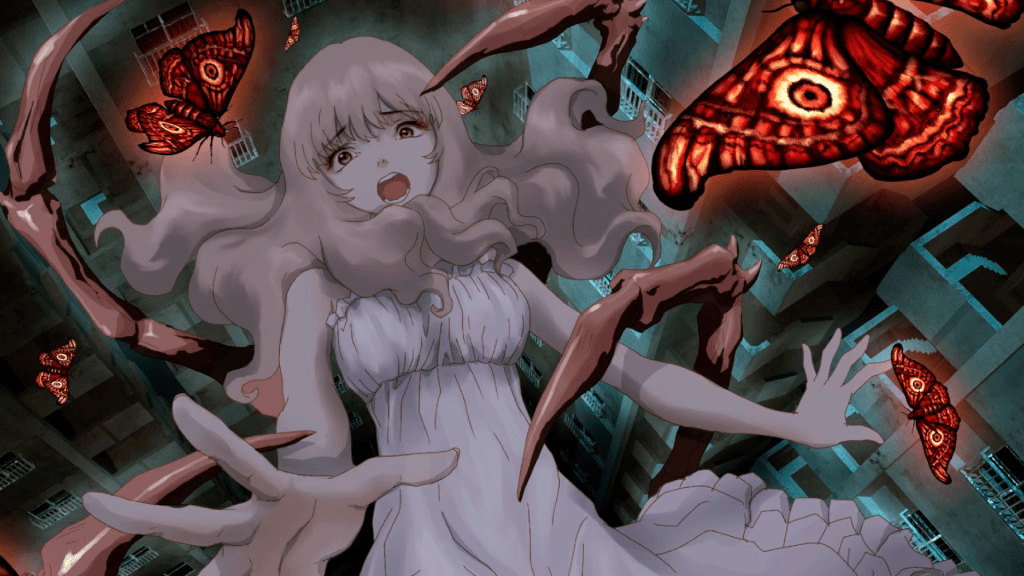
“College student Rin and high-school student Tamahi investigate the secrets hidden in a vintage apartment building that has been the subject of rumors of psychic phenomena and strange deaths.” ~ Annecy Film Program
First Impression: (midnight screening!)
Nightmare Bugs starts out pretty much how one would expect and gets a fair bit worse—to the point where quite a few people walked out within the first half hour. But there’s a plot twist: It actually gets a bit better, and ends relatively well—enough so to elicit a chorus of cheers from the back of the theater. For this reason, the plot of watching this film was substantially more engaging than the film itself, which makes this quite an interesting screening in my books. So let’s take a closer look at what may have happened here.
First off, this is an anthology film, and it really shows. Nightmare Bugs combines and condenses two earlier features by director Saku Sakamoto, both set in a super sus, possibly alien-made brutalist apartment block where murderous shadowy (spirit) forms and giant bugs stalk unwitting teenage girls until every psychological horror trope has been exhausted and it’s time for an ambiguous ending. The first part follows Rin, voiced with usual aplomb by Hana Kanazawa, and played by a 3D model that is two-thirds creepy unblinking porcelain doll’s eyes, one-third space between the eyes, and no-thirds chin, except when she’s screaming. At times, she’s rendered in traditional 2D style, and the effect is less unsettling, but most of the time, the protagonist herself is rather off-putting. The second part, featuring Tamahi and her two school friends, does not suffer from the uncanny valley effect, and instead leans hard into rotoscopy, making for an overall more pleasant viewing experience than Part I, despite the jittery lines and melt. The animation improves as the ending nears, offering a final money shot that goes a good way toward overwriting the ninety preceding minutes in the memory of the viewer as they exit the theater.
It’s not only the animation that improves, though. Tamahi’s story is also better than Rin’s, which suffers from choppy editing, an abundance of unexplained lore, and so many violent twists (much like the spate of nameless, murdered girls’ necks) that all sense of direction is completely lost. The main problem is that Rin is in isolation, battling against either real horrors, or the side effects of her medication, or possibly just a series of pizza dreams. Tamahi, on the other hand, is saved by her friends—not literally, mind you, I’m not spoiling the plot here, but rather figuratively. Tamahi’s friends provide her with a plot, in the form of a decision she must make. That’s all it takes: Give your protagonist a believable, gut-wrenching choice to make, and voilà! A plot materializes. There is still a considerable amount of ambiguous lore, but it doesn’t matter as much because we have an entry point into a recognisably human dilemma. Added to this, Part I is psychological horror in the jump scare sense, while Part II is more of a puzzle, with a time loop or parallel lives element, which I personally find more engaging.
But why the cheers from the audience at the end? Were they ironic? Cheers of relief or in celebration of the fundamental disestablishmentarianism of B-movie schlock? Perhaps. But there’s something more going on here, and it is conveyed in the closing credits, which were—no word of a lie—5 seconds long. Because, you see, this was practically a solo project, a labor of love, if you will, and love specifically, I suspect, for Japanese cult horror films of the 60s and 70s. This is by no means my area of expertise, but I’ve seen enough clips of hilariously outrageous “special effects” from these films floating around my socials to recognise some of the visual quotations in Nightmare Bugs (thank you for that, Danny!). Saku Sakamoto served as writer, director, and even composer for this film, which is as much an omnibus of an entire genre as it is of his own two previous movies. But what also stood out to me positively about this work is the absence of exploitation shots: Although it is teenage girls who are in unceasing peril, at no point are there any of the eroticising, objectifying shots that usually suffuse this kind of horror. Thank you, Sakamoto!
So, all in all, I don’t regret my late night spent with Nightmare Bugs, even if I did both close my eyes and roll them quite a few times as Tuesday clocked over into Wednesday. Do I recommend it to you, dear reader? Well, no, that would be going a little too far—unless you are already a fan of the genre, in which case, check it out and let me know how it holds up!
Wednesday 11 June
The Square
South Korea, dir. Bo-Sol Kim
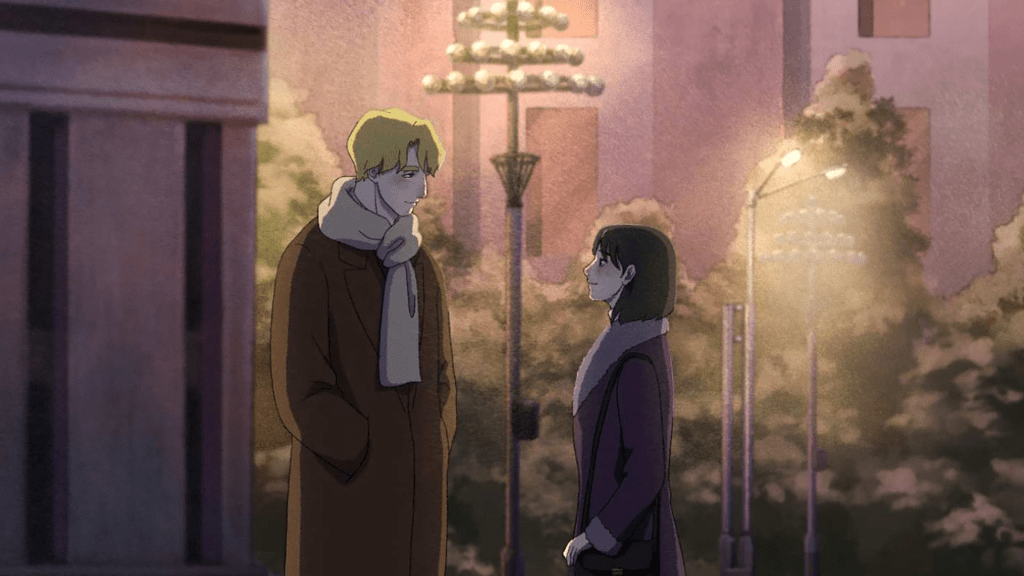
“Isak Borg is First Secretary of the Swedish Embassy in Pyongyang, so is constantly under surveillance and scrutiny. Borg has been secretly dating Bok-joo, a local traffic officer. They know their time is limited, so they cherish their secret meetings. One day, after a shady-looking man visits their secret meeting spot, Bok-joo suddenly disappears. Bori searches for Bok-joo and becomes suspicious of his interpreter, Lee Myeong-jun.” — Annecy Film Program
First Impression:
The Square is a beautifully made film of deceptive simplicity, both aesthetically and in its storytelling. The art boasts arresting character designs with confident linework that is nevertheless finished with a roughness that, taken with the gorgeously gloomy winter color palette, evokes a sense of the harshness of life in North Korea. The absence of traffic lights and other familiar markers of modern urban life clash with the smart phones that feature now and then, discombobulating the viewer’s sense of when exactly the story takes place, and thus capturing the feeling that is palpable in many a documentary about North Korea, as being a place out of time, possibly in a parallel universe somewhere or down the rabbit hole. There are glimpses of the visual propaganda of the state, though they are relatively understated, buried by the slush and snow, reflected in a dark puddle, or fading into the shadows of the early fall of winter’s nights.
Instead of parades and speeches and obeisance to the Kim family legacy, the focus of The Square is on the humble lives eked out along the edges of the boundaries of what is permissible. It centers on three characters: Swedish diplomat, Isak Borg, who is seeking to extend his term in Pyongyang for the fourth time; traffic warden Bok-joo, whose stolen moments with Isak will surely cost her dearly; and wary interpreter, Lee Myeong-jun, who knows better than anyone the risks involved in being too close to a foreigner, and stands out as the most complex and compelling member of the cast. It is all quite subtle, meaning that the dramatic tension is reliant on the audience knowing a thing or two about North Korea, or at least political dictatorships, in order for the build-up to work—things that, rather frustratingly, Isak seems to be completely oblivious to. Which brings me to my main complaint: Isak’s staggering naïveté. I do not know how this young man with diplomatic training and enough time under his belt spent in North Korea to surely open even the most firmly closed eyes, could be so utterly clueless about the implications of his romantic pursuit of a young woman and attempts to befriend his colleague. He’s a very sweet guy, and one can easily see why people warm to him, but my goodness, he does seem to be channeling Mister Magoo most of the time.
For this reason, rather than a romance per se, The Square is more a coming-of-age story, as Isak Borg is confronted by the fact that an authoritarian regime does not care about his individual happiness—or that of anyone else, for that matter. The question remains, will he do the growing, or will those closest to him need to do so in his stead? I’ll leave that for you to discover, dear reader, for despite the shortcomings in Isak’s characterization, this one is a pleasant watch, so check it out if you get the chance!
Mononoke The Movie: Chapter II – The Ashes of Rage
dir. Kenji Nakamura & Kiyotaka Suzuki, GENO Studio
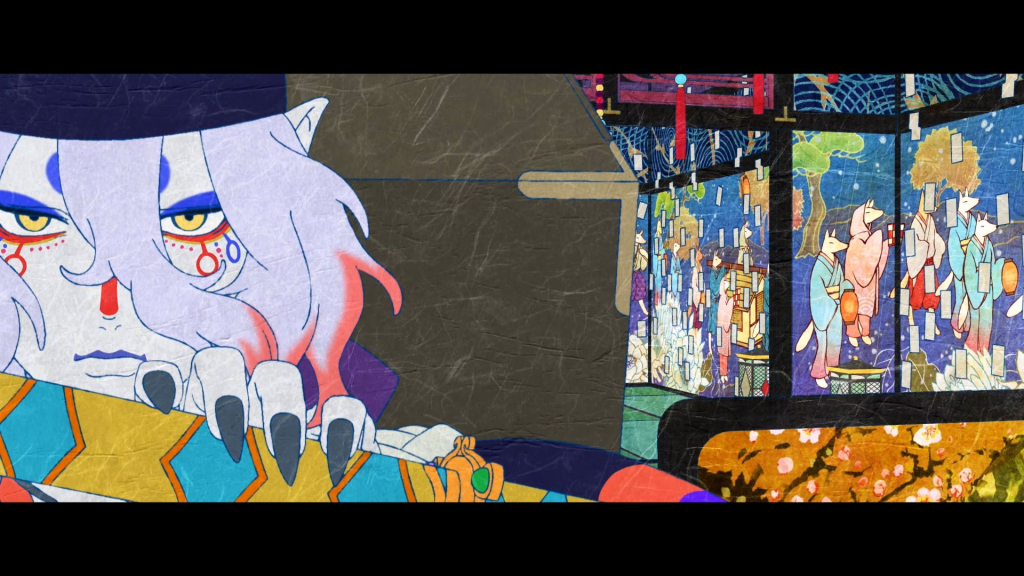
“Shortly after the frenzied battle against the mononoke, Karakasa, the Medicine Seller returns to Ōoku. There, the aftermath of the previous incident has left its mark, causing a shift in the power dynamics inside the inner chambers. In his pursuit to defeat the mononoke, Medicine Seller delves deeper into the darkness that lurks within Ōoku, seeking to uncover the threefold truth of form, truth, and reason to confront the mononoke and resolve the crisis.” ~ Annecy Film Program
First Impression:
The psychedelic supernatural detective historical political drama is back! Ashes of Rage is the second in a trilogy of films (the first is on Netflix), and I have good news: it does not—I repeat, does not—suffer from middle movie syndrome! This is a beautifully self-contained and satisfying story that could easily serve as an entry point to the franchise, with enough explanation of the lore (without exposition) for new viewers to follow along—assuming, that is, that they survive the initial shock to the senses that is the Mononoke color design, as well as the wild (but popping) opening song. But it also works brilliantly to move the story forward, picking up a month after the events of the first film, and exploring the consequences of that film’s events (and deaths) for the Ooku, where the concubines of the Emperor hold court. The Lady Botan is back in force, wearing her new promotion well, as are the various humorous side characters, who keep things lively with their antics, though the focus has now shifted to Lady Fuki. But it’s not all fun and games in the Ooku! The mononoke of the title bear no resemblance to a certain princess, after all, so there be thrills and horrors in store here. The franchise returns to the pre-Ghiblified Japanese folklore in which mononoke are demon-like spirits created by the corruption of human souls embittered by a grudge of deadly proportions. No pan flutes or fluffy sidekicks for these vengeful spirits! Yet, the mysterious Medicine Seller does his duty of tracking and slaying the demons with compassion alongside an unwavering sense of justice, allowing the full story of the corrupted soul to be revealed before cutting it off, and in so doing, granting a kind of recognition or even, perhaps, absolution. It’s a powerful story arc, exuberantly told. If you enjoyed Chapter I, you’re going to love this one too!
Full review to come next week!
Thursday 12 June
Get Jiro
Work-in-progress for 2025, dir. Rick Morales, Warner Bros.

“From Warner Bros. Animation and based on “The New York Times” bestselling DC/Vertigo graphic novel, “Get Jiro” is set in a not-too-distant future Los Angeles where master chefs rule the town and people literally kill for a seat at the best restaurants. A mysterious sushi master named Jiro enters a bloody culinary war to craft his recipe for revenge. Join members of the creative team for an exclusive exploration of the creative and production process of bringing this exciting graphic novel to life.” ~ Annecy Film Program
Work-in-Progress panel with speakers: Director Rick Morales, Art Director Jonathan Hoekstra, Executive Vice President Peter Girardi, Warner Bros. Animation
First Impression:
Did any of y’all know that celebrity chef Anthony Bourdain wrote a couple of graphic novels? About a post-apocalyptic future in which the only pleasure known to humanity is consuming food, and so chefs rule the world? Well, he did! And now Adult Swim is teaming up with veteran Warner Bros. animators and studio Mercury to bring us a full season of the violent doings of rogue samurai sushi chef Jiro (who does not take kindly to customers trying to dip his fresh omakaze into soy sauce), adapting the graphic novels and adding a whole lot more original material. Sadly, Mr. Bourdain passed away before he could contribute to this expansion of his vision, so the team has relied upon his right hand man, chef, and frequent television consultant, Matt Goulding, instead—at least for the food content. When it comes to the story development though, the main inspirations are the classic Japanese samurai film Yojimbo, Clint Eastwood Westerns, and the cult anime movie, Mindgame. And this is perfectly legit because, you see, Anthony Bourdain was a diehard otaku. In fact, there was even discussion at one point in the past decade (animation productions take a very long time!) of developing the series in partnership with a Japanese studio!
Ultimately, the team has landed on more of a French/European style though, taking heavy inspiration from the master of the ligne clair himself, Moebius—even to the point of recreating his Micron pen as a digital brush in order to better reproduce the dots, squiggles, and tic tac-like shapes that make his work so iconic. Think Scavenger’s Reign or the episode “Moon” from S3 of Love, Death and Robots. But with lots and lots of food—including accurate depictions of its preparation—plus gory action and food cartels, like the villainous vegans (apparently, Anthony Bourdain hated veganism). These gangs vie for control of the inner circle of a rebuilt LA, now divided by walls into three zones or rings. The center houses the most chi chi of restaurants, where hopeful customers must book into the skyscraper hotel above their chosen establishment for up to a year as they await their chance at a meal; the middle ring boasts chain restaurants à la Chipotle and Olive Garden; while the outer lands are a free-for-all akin to the Wild West. This is where Jiro has his sushi joint, in a no-name strip mall, well under the radar. Except, his fish is just too good, and pretty soon, powerful people start to take notice. Will he survive the attention? Will he in fact thrive under the pressure? Who knows—nothing about the plot was revealed!
Production is at the “beginning of the middle,” according to today’s panel, but there was one short clip they were able to share, hot off the hard drive, and I gotta say, it was pretty striking! It’s definitely an adult animation—a guy loses his head for dipping his sushi in the aforementioned forbidden soy sauce—but it seems to be hitting a really catchy balance between drama and humor, with a generous dash of culinary education for added seasoning! Definitely one to keep an eye out for next year.
Housenka (The Last Blossom)
dir. Baku Kinoshita, CLAP
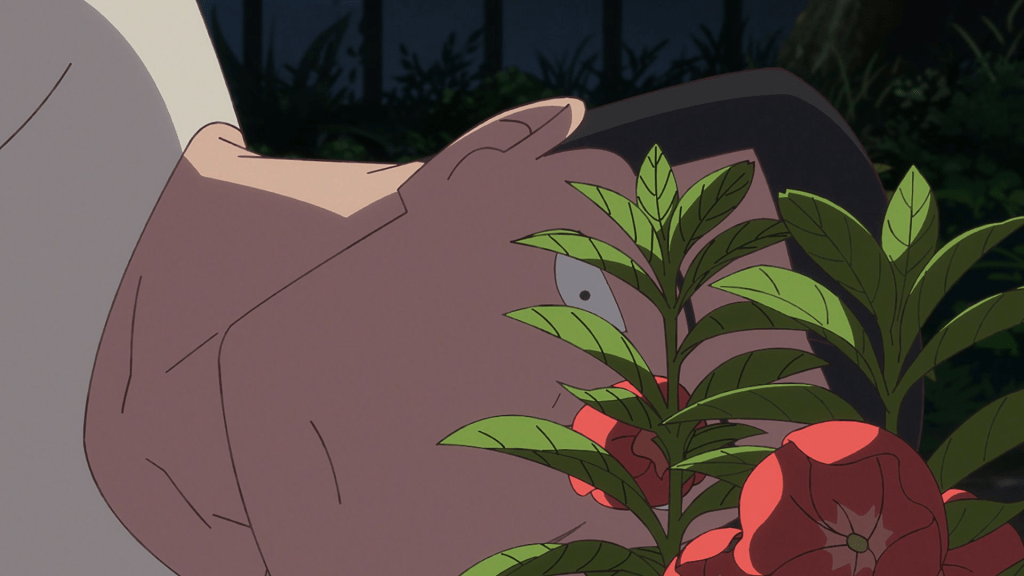
“Autumn 2023. Akutsu, an elderly inmate serving life in prison, is on the verge of a lonely death in his single cell. A talking Housenka flower says to him, ‘What a rotten life you had.’ Akutsu starts reflecting on his past. Summer 1986. Akutsu is living with Nana and her son Kensuke in a shabby apartment with a garden full of Housenkas. It is the tale of a one-night victorious comeback by a dying yakuza, and his family’s story told by a flower that blooms in prison.” ~ Annecy Film Program
First Impression:
As anyone who has seen ODDTAXI knows very well, director Baku Kinoshita is not afraid of unexpected juxtapositions— and he brings possibly the most unusual of these to the screen with his latest project, feature film Housenka, which pairs the titular balsam plant with a mid-level yakuza enforcer in the 1980s. Not odd enough for you yet? Well, did I mention that the plant talks, emotes with its leaves, and can wiggle itself and its pot across the room? (Housenka brings a whole new meaning to the phrase “Japanese flower language!”) Best of all, it really, really works. The combination is poignant, in and of itself, but it also evokes the deeper concerns of the film, as expressed by Kinoshita in the introduction to the film—of finding beauty in everyday life, of taking the time to take it all in, and of holding onto hope until the last moment. The animation is gorgeous, with distinctive, appealing character designs; the humor lands, managing to be kind as it does so; and the writing is tight, keeping you on the edge of your seat, albeit without stress, until the end. Kinoshita closed his brief intro with the wish that at the end of the day, this film will have inspired each audience member to say, in the spirit of its hope-filled yakuza protagonist, “Today was a good day,” and when it comes to this viewer at least, I can say his wish will be granted. This film is a must watch!
More to come soon about this beautiful film!
Hyakuemu (100 Meters)
dir. Kenji Iwaisawa, Asmik Ace
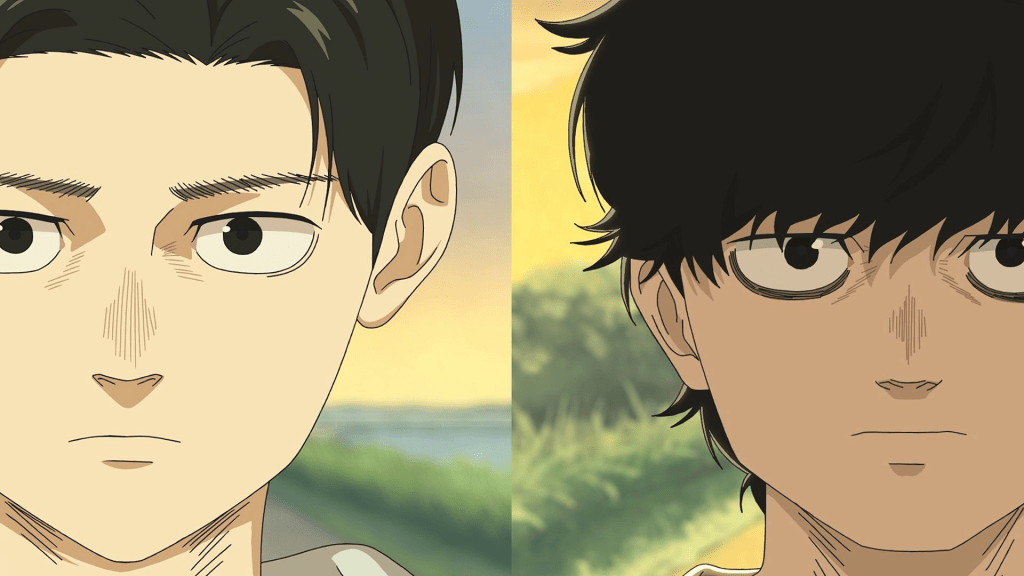
“Togashi is born to run. As a kid, he is naturally gifted and effortlessly wins every 100-meter race. But in sixth grade, he meets Komiya, a transfer student who is full of determination but lacks technique. In teaching him, Togashi gives Komiya a new purpose: to win no matter what. The years pass, Togashi and Komiya meet again as rivals on the track, and it will reveal their true selves.” ~ Annecy Film Program
First Impression:
Adapting five volumes of manga in a mere 100 minutes is no mean feat, considering that the average 12-episode season adapts 4 volumes, but that is the task that director Kenji Iwaisawa took on with this project, bringing the popular track and field manga by Uoto to life on the big screen. The second challenge Iwaisawa faced was injecting such an intense, yet brief form of competition with sustained drama when there is so little time for building tension, uncertainty, and ultimate catharsis in what is essentially a ten-second scene. So, did it earn a place on the podium? Let’s watch the instant replay…First off, 100 Meters is an excellent showcase of the creativity and innovation that comes from mashing up independent and professional studio approaches to animation, and applying every tool in the traditional 2D toolbelt to solve the challenge of keeping a dozen or more footraces engaging, while also conveying the psychological ups and downs that each match signified for the runners. Not everything lands completely, but the energy that such experimentation with style and form bring to the screen is captivating. Second, the film manages to pique my curiosity about a manga and a genre that are unknown to me, meaning that it is successful in appealing to a broader audience. Where the film loses some of its momentum, though, is in the final third, following a time skip to when the cast has matured into adulthood and, it seems, taken up philosophizing about running as their main pasttime—possibly to deal with the PTSD that they all seem to be suffering following injuries, slumps, and at least one unexplored traumatic backstory. That is to say, 100 minutes was too short for 100 Meters, and in sacrificing more time with the characters off piste, we lose some of the emotional impact of the closing moments of the tale. So, a silver medal then, or maybe, if the racing conditions are just right, tied for gold. Definitely a place on the podium though, either way!
Full review to follow soon!
All You Need Is Kill
dir. Kenichiro Akimoto, Studio4℃
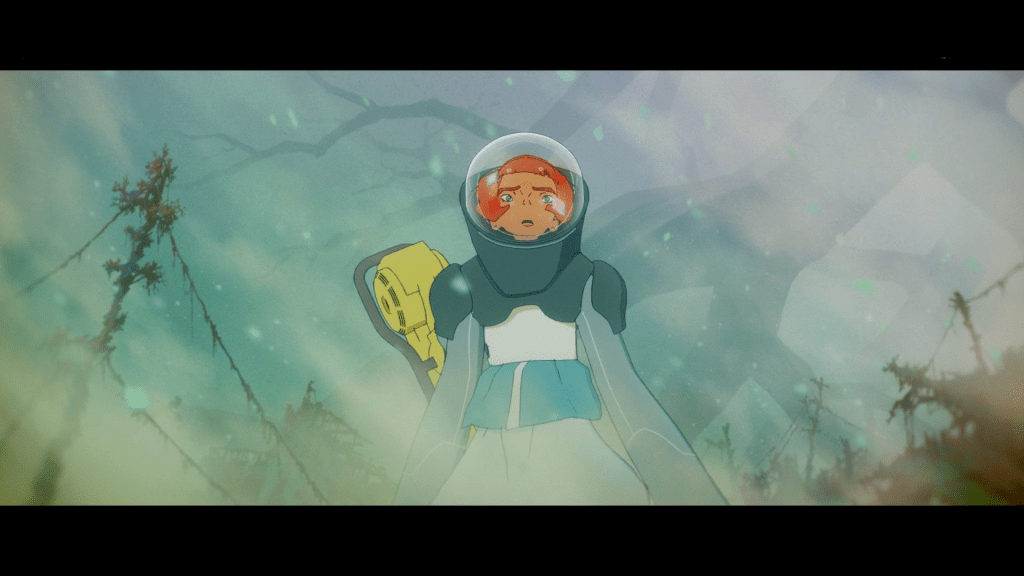
“Chiba Prefecture, Japan. The Boso Peninsula. A massive, unidentified plant from outer space, known as ‘Darol,’ has spread its roots across the land, wreaking havoc with its electromagnetic waves and high-concentration gas, devastating the environment on a massive scale. To aid in the recovery efforts, volunteers from across the country and abroad have been randomly selected.” ~ Annecy Film Program
First Impression:
Move over Tom Cruise and Emily Blunt! Time to edge into the wings, Edge of Tomorrow! There’s another stellar adaptation of Hiroshi Sakurazaka’s novel, All You Need Is Kill, hitting screens this week and it’s poised to steal the spotlight, if the positively electric atmosphere at the Annecy premiere is anything to go by. I often bemoan the state of sci fi anime, but this feast for the eyes and ears by first-time feature film director Kenichiro Akimoto will keep me well satisfied for some time to come. As a fan of the Hollywood adaptation, which covered only part of the original story despite a runtime of nearly two hours, I was a little nervous when I read that Akimoto was covering the entire novel in a slender 82 minutes, but I needn’t have been. The writing and storyboarding are so tight as to waste not a single frame or word of dialogue, while yet allowing the two leads enough space to breath and grow into their partnership. The animation is fantastic, and the color design, out of this world—quite literally, when it comes to the palette for the alien lifeforms which, far from blending into a gloomy post-apocalyptic landscape, pop and clash gloriously in a world still vibrant with terrestrial life. The day they are looping is Day 1, after all, before the world has been devastated. It was a bold artistic decision and it pays off, setting this adaptation apart amid the rather bleak, dismal norm in the genre. Best of all, Rita gets enough development as a character to buck the trend toward one-dimensional female leads with non-existant arcs (“I’m a woman but I can punch things too!”) that have been dominating action franchises in recent years (Disney/Marvel, I’m looking at you!). My point: this film was my most anticipated of Annecy 2025 and it did not disappoint!
Full review to come!
Friday 13 June
Mobile Suit Gundam: Silver Phantom
VR Works In Competition, dir. Kenichi Suzuki, Bandai Namco Filmworks and Atlas V
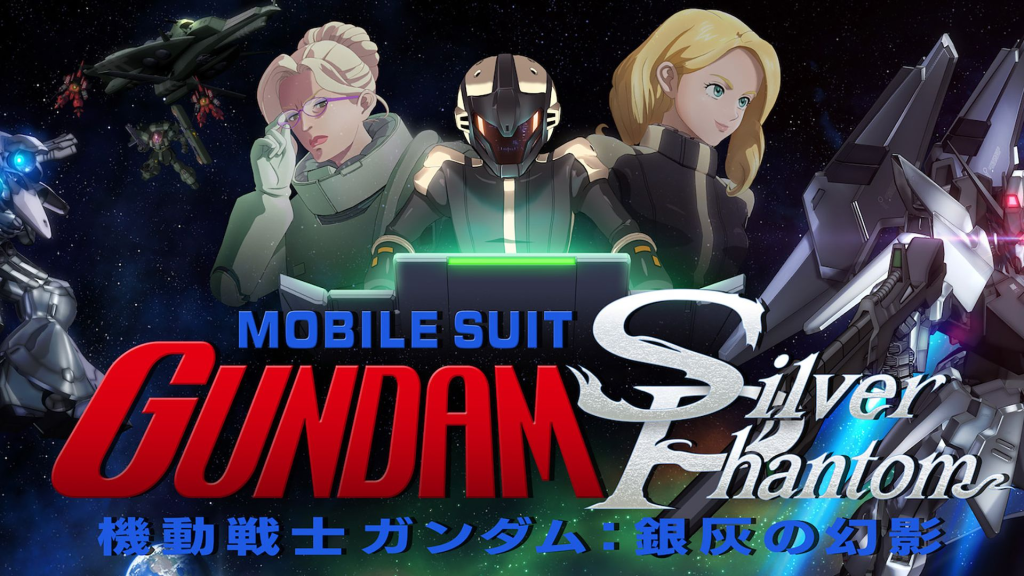
“Universal Century 0096. Three years after the last conflict between Neo Zeon and the Earth Federation, an independent mercenary organization is hired by the Earth Federation to track down a former Commander who joined Neo Zeon remnants ‘Sleeves’. An all-new and epic adventure into the heart of one of Japan’s most iconic anime universes.” ~ Annecy Film Program
First Impression:
I’m late to the party when it comes to Gundam, having only taken the plunge into the most recent couple of series. So I when I saw that a VR Gundam movie could be played at Annecy, well, I took it as my chance at exoneration, my personal opportunity to prove myself as an otaku who can handle her Newtypes and Minovsky Particles, her red-suited villains, and awkward flirting while ensconced in meters of metal. So I queued up early this morning, with only five hours of sleep under my belt (blame the midnight screening of All You Need Is Kill), confident that I’d be able to book my place no problem, having had a little insider info from the security guard posted to the VR room a couple days earlier. And, well, I just missed out. There were only 8 slots—EIGHT SLOTS at a festival hosting 18,000!—and I was persona numero nine; or actually, person seven, but there were two entries marked “Guest” that had obviously been pre-booked by VIPs. Fortunately, a savvy Dutch guy was stood in the queue behind me and asked what would happen if the “Guests” didn’t show; was there a chance we could have their slots? So we waited, and sure enough, “Guests” did not materialize, meaning that me and Mr. Dutch secured the chance to become Gundam pilots!
Cut to two hours later (even though the runtime is meant to be an hour and a half), and it’s clear I won’t be enrolling in the Asticassia School of Technology anytime soon. As one of the characters told me at one point in the midst of battle, “You’re no Amuro Ray.” Burn! But also, word. Though the eye-tracking worked pretty well, I stalled a few times when it came to the head movements and hand gestures (honestly, the VR set simply did not want to let me pull the gun trigger in one sequence; maybe I should have tried holding it gangsta-style), and I also had to take a motion sickness break an hour or so in, adding an extra ten or fifteen minutes onto my game time, as it didn’t return me to my last save point, but rather quite a ways earlier. I was able to use that opportunity to reset the voice actor, though, which was good. Nothing against the Yuuki Shin, the male voice, but when I got into the game, I had a female body, so there was a bit of cognitive dissonance. Besides, who wouldn’t want to go on the journey to becoming a Newtype with Frierenseiyuu Atsumi Tanezaki?! I recommend the Japanese cast—they do a great job—though in retrospect, it may have been reading the subtitles that made me motion sick.
As for the film itself, the animation was pretty cool! Vast improvement on what I encountered the last time I used a VR headset, back in 2021. The level of detail was good, with textures, layers, and lighting making for an engaging experience. The 2D animated cutscenes (flashbacks, really) matched the animation style of the OG Gundam series, which was a nice touch too. It was surreal at first, floating around with the villains and pilots, and I was struck by how tiny everyone is! For the pilots, this makes sense, since they are all virtually children, but even the adults are somewhat diminutive—based, perhaps, on average Japanese heights rather than North American. As a vertically challenged person myself, I quite enjoyed feeling taller than the main villain, Azumi. The plot itself was nothing to write home about, hitting all the usual Gundam beats, and swapping out plot twists in favor of mini games, which is fine. There’s only so much you can do in 90 minutes, after all.
So, what does this mean for all you Gundam fans out there? If you’re mainly interested in the world and its stories, then you’re not missing out if you aren’t able to play this anytime soon. But if you get the chance to trial it at some event somewhere, it was worth queuing up for—but maybe not missing my lunch over! Yolo though, amiright?
ChaO
dir. Yasuhiro Aoki, Studio4℃
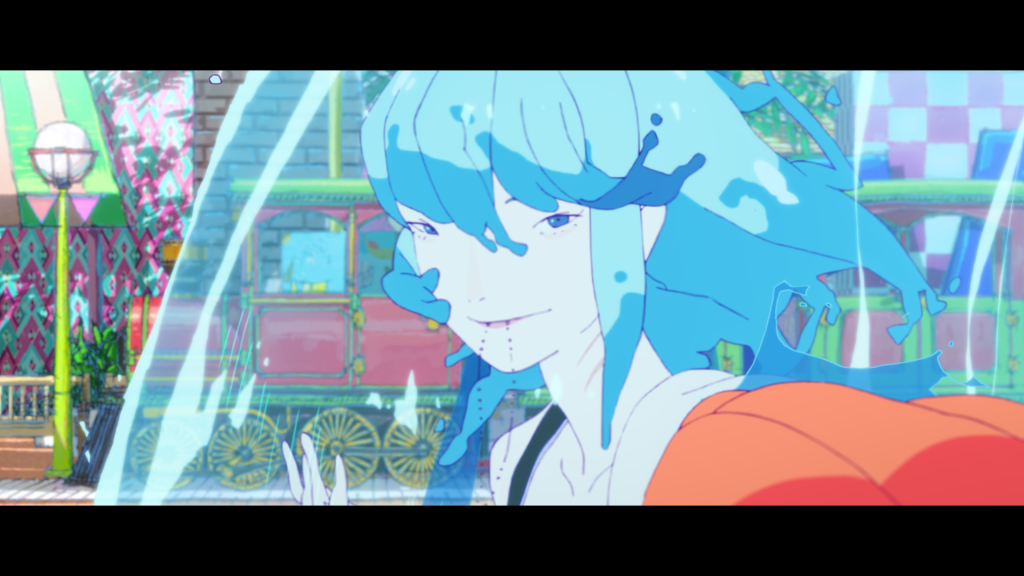
“In a future society where humans and mermaids coexist, Stephan, a regular office worker at a shipbuilding company, is suddenly proposed to by Chao—a princess from the mermaid kingdom! With no time to make sense of what’s happening, Stephan finds himself living together with Chao. As he is showered with Chao’s pure and wholehearted love, Stephan gradually begins to fall for her. What will become of their unlikely romance?” ~ Annecy Film Program
First Impression:
When director Yasuhiro Aoki took to the stage at the world premiere of his film this evening at Annecy, he just kept on going, right across and into the wings on the other side. This was just the first of several gags he pulled during the next ten minutes, coming back to take the stage and mic twice more, and pretending to introduce each member of the film crew, before humorously spelling out the studio name instead, Studio 4℃. It was a perfect demonstration of what was to come with ChaO: a film absolutely bursting with visual gags, playing out in the foreground and background alike; a simple story, without much tension; and a world peopled by a wide cast of characters, everyone of them likeable in their own way. The only thing that Aoki did not foreshadow personally, but which was hinted at by the still from the film on the screen behind him, was the visually exuberant animation to come, with its wildly inventive worldbuilding and evocative rendition of a fantasy-tinged modern Shanghai. What a glorious spectacle! And what a delightfully zany, fundamentally good-natured film to close out Annecy 2025. Yoroshiku onegaishimasu!
Full review to come…
Outro
Well, that’s it for me from Annecy 2025! It’s been a marvellous week, and I’ve enjoyed sharing things with you all. As I said at the beginning, this is a new format for our coverage of Annecy, so…what did you think? Shall we do this again next year? Let us know in the comments.
And keep an eye out over the coming weeks for full reviews of the main anime films screened at Annecy. There’s been an embarassment of riches this week and there’s still plenty to share!

- Film Review: All You Need Is Kill - 01.15.2026
- First Impression: Kaya-chan isn’t Scary - 01.11.2026
- First Impression: Dead Account - 01.10.2026

Wow, how awesome that you get the opportunity to visit this amazing festival. I’ve only heard of it here on BtT (from you!) so it’s very interesting to read and see trailers from upcoming animations. I love that it’s a global celebration of art, not just one country.
Looking forward to the updates 🙂 Be safe, and have fun.
Totally! It’s really unlike anything else 🙂 I definitely value the opportunity so much. Also, Annecy itself is stunning, so if you gotta “work” during your vacation, this is the best place to be!
[…] Daily Dispatches from the 2025 Annecy International Animation Film Festival […]
[…] an era of pointless sequels, Mononoke The Movie: Ashes of Rage bucks the trend—with a flourish! The animation is immersive, dazzling the senses as it balances a […]
[…] This is a stormtrooper like we’ve never seen; this is a vision of Star Wars like we’ve never seen. Director Shinya Ohira has done the impossible. He has humanized a stormtrooper without dialogue, without plot, without character arc—with only the art of color and line and soundtrack and a blur of mind-blowing creativity to capture the significance of the end of a life, however futile, and however anonymous it may be. It is shocking in the best way possible. (posted previously in Daily Dispatches from Annecy 2025) […]
[…] The film premiered at a positively electric midnight screening at the Annecy International Film Festival in June 2025, which I was privileged to attend. […]