
What are heroes? Why do we need them? Let me tell you a story. It is December 12, 627 AD, and the Eastern Roman Empire is fighting the Persian army. The year before, those same Persian troops had conquered the Roman Empire’s provinces, besieged its capital city, and threatened everything it held dear. After a long campaign, the Romans finally have the advantage now. As is common with ancient battles, they are depending on their cavalry charge to overwhelm and break the enemy formation, and if they succeed, they go home victors.
So the ranks close around their leader like iron particles attracted to a magnet (as writers at the time put it). This is Emperor Heraclius (named after Hercules), a 52-year-old man who is at the pinnacle of the Roman social world. With him at the head of the formation, the ranks charge together. And the miracle happens. They overcome. They return home, bringing with them a mountain of treasures, including three hundred captured Roman standards. The Empire is safe at last. Or is it? In six years’ time, an Arab army will conquer Persia and smash the Romans at Yarmouk. In nine years, the Romans will lose the provinces they had recovered under Heraclius. And in fourteen years, Heraclius himself will die of a humiliating illness. Alas, history has none too many fairytale endings.
To Be Hero X, a Chinese series co-produced with Aniplex, offers many such instances of frustrated heroism. The stories of Nice, Ling Ling, E-Soul, Lucky Cyan, Loli, Ghostblade, Queen, Little Johnny, Ahu, Dragon Boy, and X all seem to go off the rails. And yet…I love this show’s vision of heroism. I’d even say it echoes two obscure feasts I celebrate every September: the Exaltation of the Holy Cross and the feast of Our Lady of Sorrows. Never heard of them? Stay tuned!
Of Knights and PR
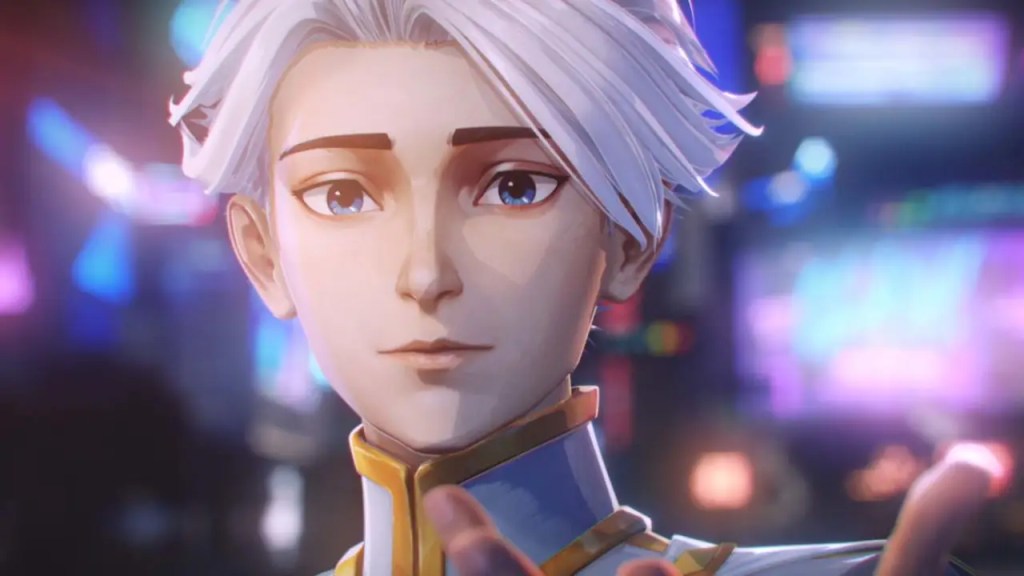
To Be Hero X introduces us to a society that rallies around those at the top of their social ladder: celebrity superheroes, modern-day Hercules figures with iconic names and symbols. But the series also puts a contemporary spin on the concept: In this world, faith, appreciation, and trust (or fear) on the part of the public are a literal source of superpowers. So popularity, algorithms, social media followings, and marketing campaigns are, literally speaking, of vital importance for these heroes. And so are sports-style competitions between them.
The show opens up with Ling Ling—an intern for the PR team of a young Superman-like hero called Nice—in the middle of pitching a spot for an upcoming tournament, as he mentions that its appeal lies in the fact that “everyone can be a hero.” We rapidly learn to question that idea, though. Everyone can have moral courage, but to lead a charge, you must hold a vantage point so that people can see you. A platform, if you will. This is also true in the real world: Our Heraclius, a popular general, became Emperor by leading a revolt against the unpopular Emperor Phocas, who in turn had done the same with Emperor Maurice. And in our age of smoke, mirrors, and mass media, with its meteoric rises and falls, communication is all the more vital, and popularity is even more relevant.
The show really commits to this concept. I haven’t delved into this, but apparently, input from the real-life viewers of this series (an online poll, I think?) will affect how the tournament in the second season will go. The power of the heroes literally depends on the trust of the public, both in-story and for real. This is always the case, up to a point: A not-so-popular superhero will stop selling toys, games, and movies, and ultimately disappears from publication. In the blink-and-you’ll-miss-it world of 2025, Marvel and DC win and lose battles in the public’s eye, go scorched earth, advance, retreat, and ambush the public week by week as if they were helmeted warlords of the Sengoku period.
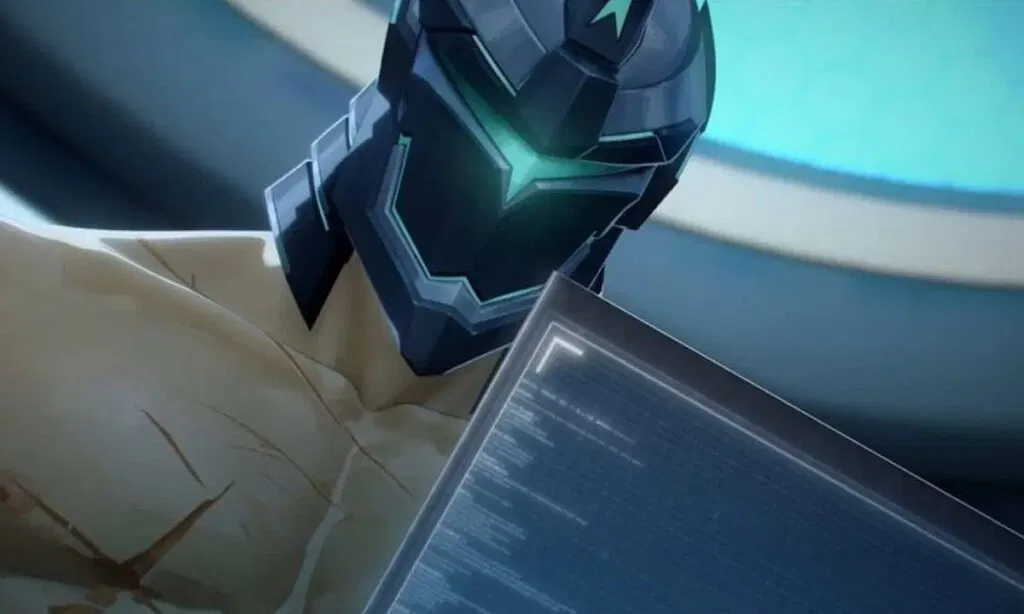
What if the discarded weren’t fictional characters, but real people? The story (especially from episode four onward) is willing to go to some dark places to explore this: Here’s your trigger warning for depictions of suicide, depression, and bleak character deaths. To Be Hero X isn’t The Boys, though. For all its satire of corporate media and celebrity culture, and for all its warnings that superhero mythology can be manipulated, the show never scoffs at the superhero ideal, or the way that an aspirational example helps millions pursue moral courage, making the fantasy become true. Every time this happens in the series, the art style changes.
Heroes do not only inspire us in outward battle: They help us fight our fears, fostering moral courage in us and helping us connect with others who are pursuing the same ideals. When the young E-Soul, whose origin story resembles that of Batman, sees a modern-day knight errant helping the defenseless, he is inspired. As you may have deduced from my profile picture, I am a lifelong Batman fan. When I see him taking the blow to help others, I am inspired too. But where does this power come from?
Superheroes marry the iconic power of Greek demigods with the capes, symbols, and code of chivalric romance, and they resemble knights more than they do demigods (this is an insight I owe to the amazing YouTube channel Pilgrims’ Pass). If you see it once, you’ll see it everywhere: The heroes endlessly build armor and castles, inherit titles and legacies, are exiled or choose the errant life, protect vassals and squires, join orders and Round Tables, and save damsels and orphans.
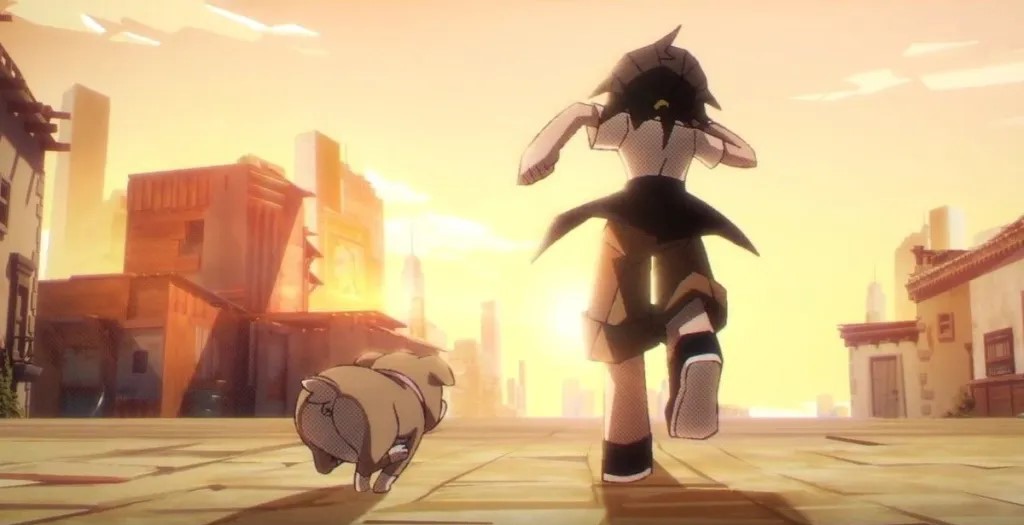
To Be Hero X tweaks (most of) these tropes to reference icons of our contemporary world instead: agency kids, top graduates, pop stars, celebrity kids, barely disguised criminals, and even circus animals. But the light of the ideal still shines through, driving the idealistic characters to push against the corporate inertia. Two forces fight it out at the heart of the show: PR and knights, the facade and the real thing—those who, in the final analysis, fight for popularity and those who fight for principle.
The worldbuilding reflects on other modern worries too. The story of Ahu the Dog is about elderly renters being scammed. Start-ups and disruptive new technologies are all over the place. When Ling Ling (spoilers ahead) is unjustly fired, we learn that he has no home, savings, or girlfriend. But the Pauper becomes the Prince: Suddenly, Nice disappears, and Ling Ling becomes his secret substitute. He is now at the top of the world, trying to change things with his moral courage. Will he remain pure?
Ling Ling’s is the first story about who the ten champions are and how they came to be; how their personas rose to the public eye and captured the hearts of fans. But the story also questions us, the viewers. Is this character cool enough, interesting enough, different enough that we should care about him or her? Should we join this charge? Should we exalt this hero?


Of Exaltation and Heroes
“Exaltation” derives from the Latin words ex and altis, “up and away” (or “out”). This is the catchphrase the Superman radio serial of the forties used when he took flight. It’s a great metaphor for heroism: Not all the heroes fly, but they all become metaphorically elevated, living in our hearts and minds as symbols, always visible to us. But the term also points to the other side of this relationship. You can “exalt” things, elevating them, putting them above you and beyond you. The bond is symbiotic. With every new arc, a new champion is elevated above his or her peers by becoming a living point of reference.
The call to become a superhero normally follows the pattern of a vocation. A father, a mother, a master, a former handler of the mantle, an Uncle Ben—there is always a figure who looms large in our hero’s mind. That person is dead, or in a foreign or enchanted plane. And then a chance appears. It’s an omen, a message; it’s providential. It’s a “Yes, father. I shall become a bat.”
The stories of our champions include another element too, though: the account of how they “went viral” and were spotted by the all-powerful advertising companies. How did it all start? Did they go viral on social media after some random act of street heroism was caught on camera? Did they build their brand through powerful speeches? Did they steal the act of an outdated superhero? Were they celebrities in other fields? Did they have famous relatives? Whatever the cause, the effect is the same: The trust of many hearts came to rest upon them and they came to lead their society’s struggles, connecting with a group of fans, whether edgy or traditional, easy-going or passionate.
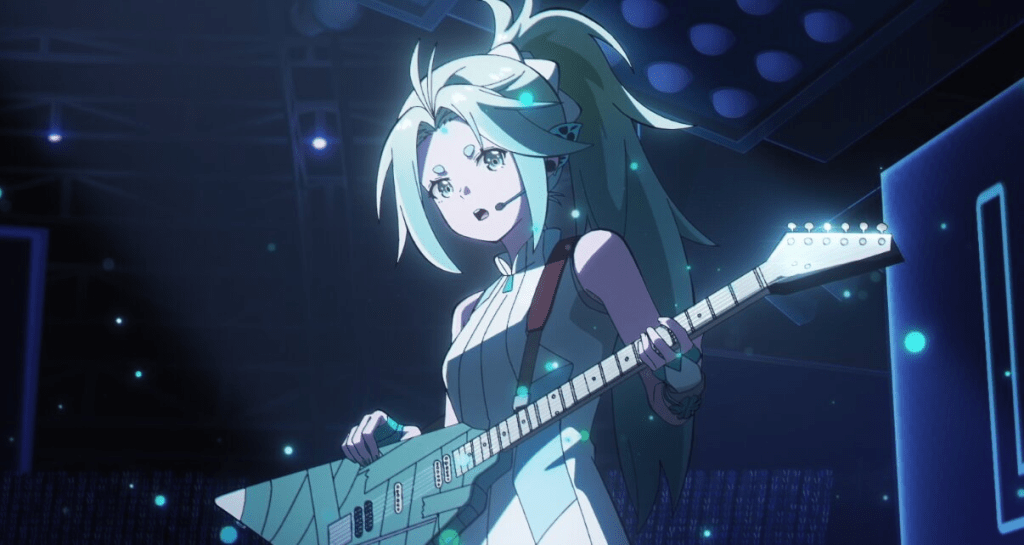
To be clear, I think this is a perfectly natural trait of human societies, not a sinister oddity. We learn by example. We need rallying points, especially in hard or stressful social situations. From a rock concert to a cavalry charge, we project ourselves onto the hero, lending our strength and receiving strength in return. Heraclius led a charge which only prevailed because everybody charged alongside him. Or, as Batman puts it in Batman Begins, “People need dramatic examples to shake them out of apathy and I can’t do that as Bruce Wayne. As a man, I’m flesh and blood, I can be ignored, I can be destroyed; but as a symbol…as a symbol I can be incorruptible, I can be everlasting.”
But this process, necessary as it is, presents two problems, which the show explores from all angles. Firstly, the hero and the mentor position can be hijacked by self-serving agents, the Uncle Rocks, the Mickeys, the orphanage directors, and the Commissions of this world. The second problem is even more difficult to handle, namely, the intrinsic limitations of the hero. Imagine being Heraclius, confined to his final sick bed in 641, hearing about the news of the coming invaders, looking out the window. What would you feel? Sooner or later, strength fades away. Symbols become stale, or heroes become unable to embody them, to be above and beyond. He who bends is not the “Ever-Standing Hero” anymore.
Exaltation may be necessary for us to fight together, but it is also a mixed blessing that contains the seeds of its own demise. When your limits become apparent, hero, what hero will save you in turn? Sin, mortality, limitation, agony: That’s the sorrow of the hero.
Of Sorrows and Cycles
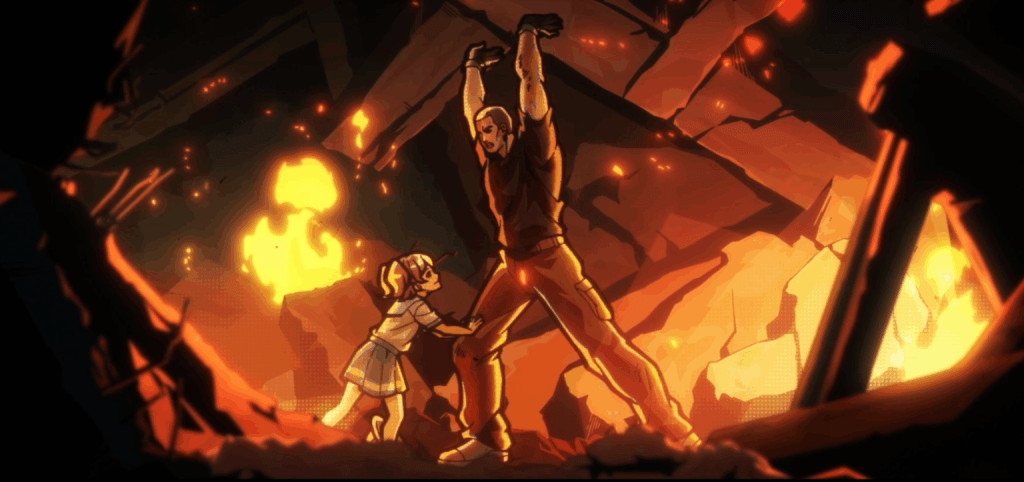
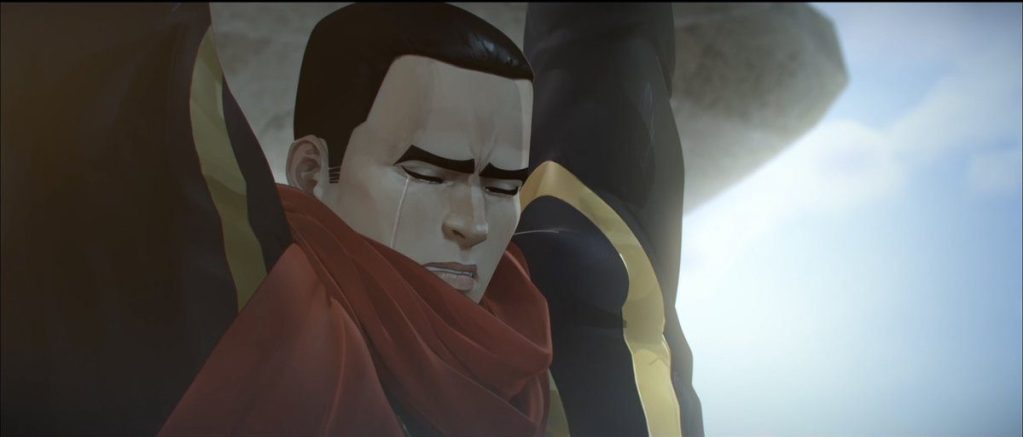
Nowhere is the struggle between exaltation and sorrow clearer than in the story of the Ever-Standing Man, the unbending fireman who shielded a girl during a catastrophe. As his story unfolds, he becomes more and more statue-like and triumphant in the minds of his followers. In private, this becomes a limitation for him, humiliating him to an almost unbearable extent. And his villainous nemesis turns out to be the only person who can see his pain, the girl he once rescued.
The Ever-Standing Man is a hero in the inner sense: Not only is he a popular icon, but he is also a kind, courageous defender. He really put everything on the line, his life included, to save the little girl and withstood great pain until help came. But until that happens, he is being crushed by his role. His fans won’t allow him to have defects—at least, not until he is defeated and then they just don’t care anymore. The Ever-Standing Man’s story depicts with heartbreaking clarity how the exaltation we humans can achieve is not enough long-term, because both the givers and the receiver are deeply flawed.
The personal cost of heroism is a common theme in superhero stories, with the secret identity trope providing heroes with breathing space. Not in this story, though, where heroes are celebrities, with all the temptations that implies. Blind social forces are projected onto them. Public errors can cost them their livelihood. Dark powers seek to exploit their popularity. But mostly, their own traumas and limitations imprison them, as they look to one another for hope. And so To Be Hero X goes back and forth between the exaltation of the hero and the secret sorrow of the hero. What does leading the charge for years do to these heroes?
Our heroes lose their voices, like Ghostblade, or get depressed, like Queen, or lose their families, like Smile, or are otherwise unable to balance their position and their inner desires. Often, heroes are torn between the genuine hope they inspire and their deep sorrow. Should they step down from the platform to find relief? What if they lose the positive effect they could have made in society, or even their ability to protect themselves and their loved ones, like Johnnie’s father? And what if they fall anyway?
For the heroes who remain in the game, there are many traps to avoid: golden cages, Faustian bargains, power games, envy, disappointment in those who inspired them, unwarranted hostility by the powers that be, and, above all, being part of a manufactured world of appearances that take on a life of their own. The hero’s face is plastered all around —trademarking products, tendencies, and feelings—until the hero doesn’t recognize it anymore. Every hero can win some battles. But to win the battle to save the world, we need a hero who transcends the world. One who can bear his own sorrow—and ours too.
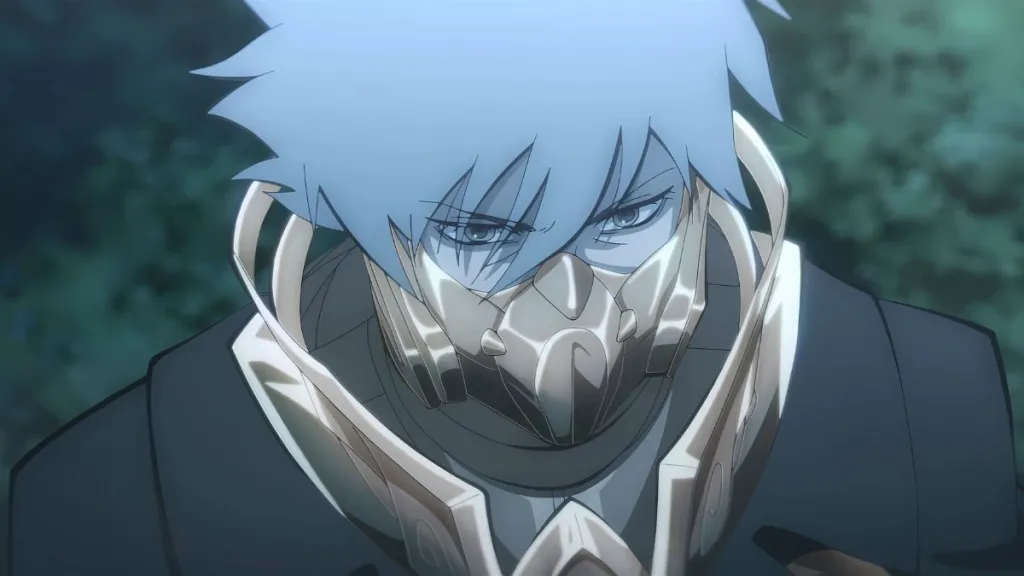
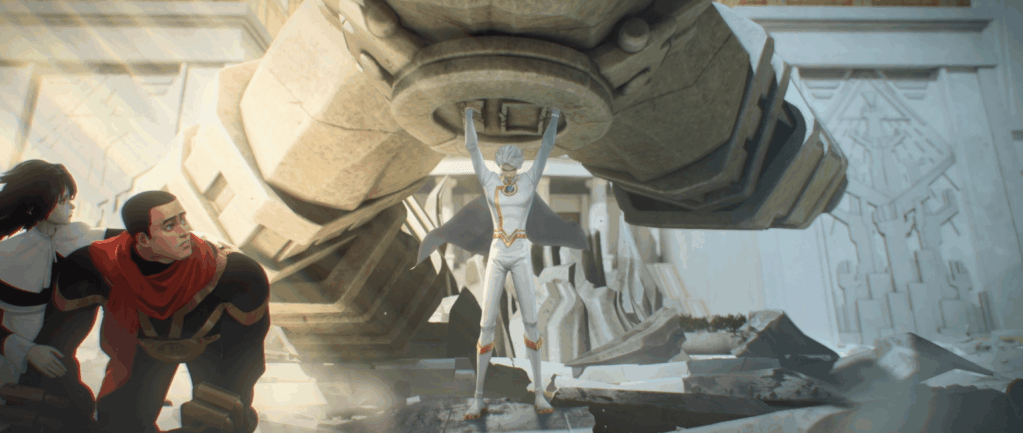
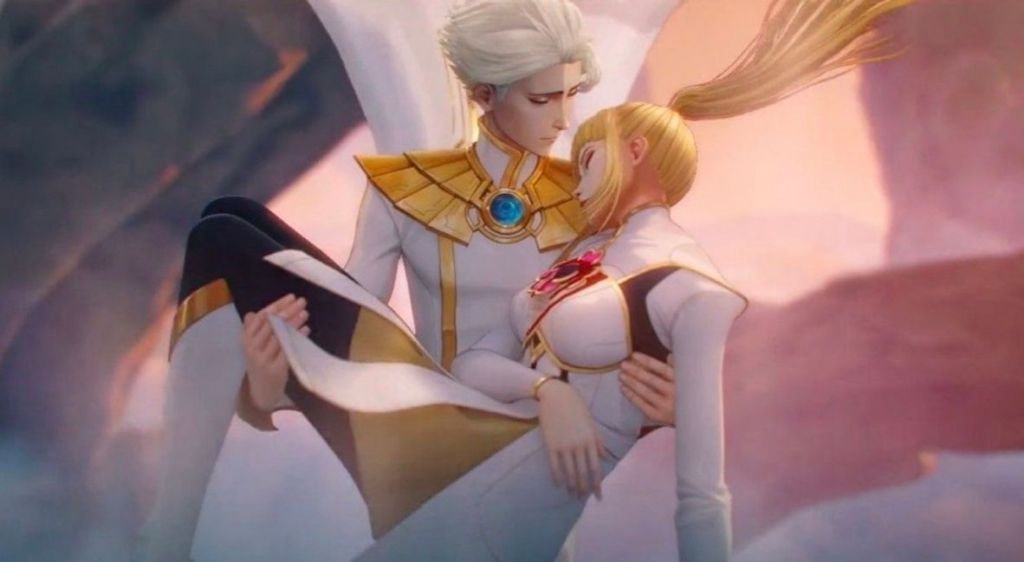
X is the show’s answer to this problem. We first see him in the opening and ending animations. Gradually, we learn that he is the winner of three previous tournaments. We see his signature move: the snapping of fingers that seems to end the battle in a second. He is connected to the mysterious plane incident (possibly inspired by 9/11) that no hero could stop, which seems to be the key to the stories of the original E-Soul, Queen’s father, Lucky Cyan, Little Johnny, and possibly Zero, the fallen hero.
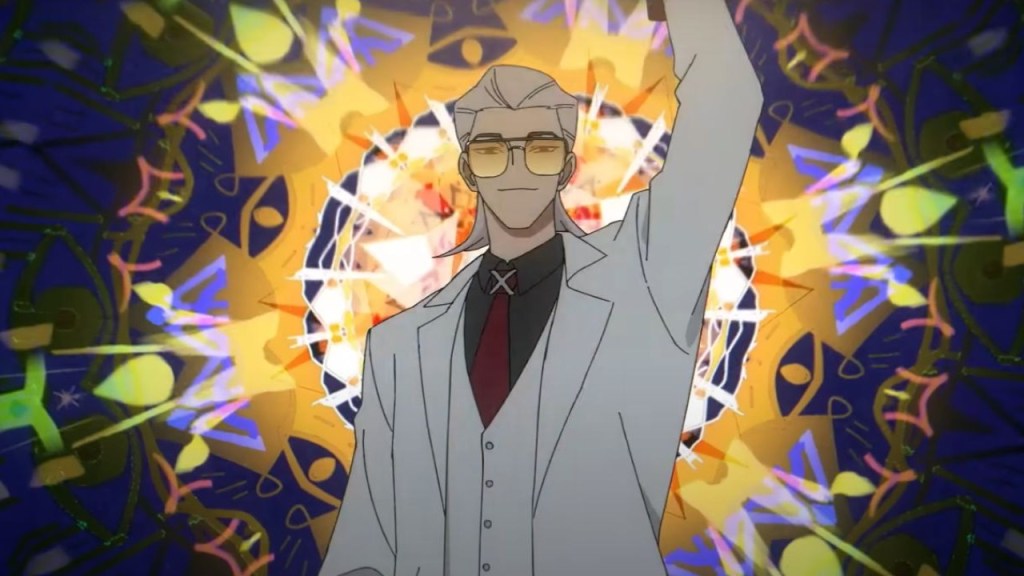
X’s power visually transcends the medium he is in, as his finger snapping prompts changes in the art style of the show. He’s probably meant to represent the power of revolutionary imagination to battle the inertia of narratives and systems, but I see something deeper in him: a symbol of something beyond his world, coming to the rescue. I find it telling that he’s the one hero who zealously keeps a secret identity as a salaryman. He can be a hero for our heroes, this world’s knightly Superman. If you’re wondering, I’d vote for X.
But what about our own world? How can we transcend the cycle of exaltation and sorrow?
The Ever-Standing Sign
In 627, Heraclius took back from Persia a greater treasure than gold or banners: He retrieved the wooden relic that the Christians of Jerusalem, from the times of St. Cyril at least, considered to be the cross of Christ. When Heraclius returned to Jerusalem on September 14th, he dismounted, laid aside his crown and imperial robe, and carried the cross on foot to the church of the Holy Sepulcher. Like X in his unassuming salaryman’s suit, he set aside the signs of his power, behaving instead like a humble nobody, a penitent. That day is celebrated in the Roman Catholic Church as the Feast of the Exaltation—or the Triumph—of the Cross.
Heraclius ruled the Roman Empire that had crucified Jesus, and yet he stepped down to put the cross above himself. In doing this, he was expressing that, before the cross of Christ, even the greatest heroes are sinners in need of redemption, and pilgrims in need of hope. Above and beyond Heraclius’s battles, his sins, his struggles, his limitations, and those of his people, Christ was looking down with love, and was present with each of them every step of the way as they feared, fought, and came back home.
Heraclius was elevating the cross before his people to signify that, in truth, it was Christ who was elevating them, teaching them to love fully despite their circumstances and to find hope in their sorrow. After all, the cross is something our Hero could have escaped with a snap of His fingers, yet which He freely took on Himself for us. Choosing the life of a nobody, Christ nevertheless showed us, His followers, what the most heroic of loves looks like. This is what God exalted in the Resurrection, crowning it with a victory over death that both enables and puts into perspective every other victory.
The feast of the Exaltation of the Cross helps us strive for heroic love with humility and attention to our limits: to follow Christ with the help of Christ. And on the day after, the Catholic Church celebrates the feast of Our Lady of Sorrows. Like the girl who was saved by the Ever-Standing Hero and was thus able to see his pain and the true, non-romanticized nature of his feat, Mary witnessed firsthand, for six hours (Matt 27:55-56), the One who was suffering, so that she and everyone who believed in Him, would be saved. Contemplating her pain (for example, with the beautiful hymn Stabat Mater, “The Mother Stood”), we contemplate the pain of her Son.
The fact that these two feasts—seemingly opposites, a celebration of exaltation and a contemplation of sorrow—occur back to back like this reveals a deeper reality about the nature of true heroism. The Cross of Christ, showcasing both unyielding love and grievous pain, is a sign of both exaltation and sorrow. The greatest hero the world has seen, the only hero who was truly able to transcend the world, unites both these things, and gives us a path of hope, of faith that does not fail, and of love that overcomes all evil.
When the pagan world discovered the cross, its kings and warriors were inspired by the idea of Christian chivalry—of might humbly serving love beyond the victories and defeats of this world—and it changed their world forever, leading, in time, to our superhero stories. So let us elevate the Cross as it elevates us. Let us join with the Hero of all Heroes, who would literally go “up, up, and away” on His Ascension, the One who formulates His own “Yes, Father,” and allows us to be part of it, discovering new dimensions in our world.
In the midst of all the noise, this vision of the cross of Christ, our X, remains forever fruitful for us to look to, to receive courage from, and to transcend the world with. As the motto of the Carthusian Order puts it, “The Cross stands as the world turns.”
To Be Hero X can be streamed on Crunchyroll.

