This May, a week after the election of Leo XIV, I visited Japan for the first time. I have many wonderful memories of that one-week trip with my wife and her family, but my favorite was a boat tour on the Sumida River. As the sun set over the riverside and lights turned on in the streets, I looked out over structures that resembled sci-fi wonders from the sixties (including a boat designed by Leiji Matsumoto of Captain Harlock fame), and thought of Metro City, home of Osamu Tezuka’s most famous creation, Astro Boy.
Metro City is clearly the Tokyo I saw from the river, viewed with eyes of hope and wonder, while Astro Boy is an embodiment of its spirit. Part Pinocchio, part Superman, Astro Boy is a robotic kid superhero in an optimistic sci-fi Japan of the future. The original 1952 manga has inspired many adaptations: the pioneering 1963 anime (the first of all shōnen); Tezuka’s 1980 reinterpretation; the joyful, bright 2003 version (that is quickly becoming one of my favorite anime); and reimaginings like the 2009 movie or last year’s Pluto. The 2003 version doesn’t have a Christmas episode, but the 1963 one does (so does the 1980 version, but that is a story for another time).
Tezuka is never blind to the darker undertones of his stories, and a threatening shadow looms over his Christmas. So is it with the first Christmas: Starting with the murderous tyrant who seats in the throne of David, King Herod, many will react to Jesus in hate and violence. As old man Simeon prophesies to Jesus’s parents in the Temple (and as I pointed out in a past article), the coming of the Light makes the darkness in this world go all out to try and swallow it.
But the coming of Christ is a light that prevails against such darkness: It is also “the consolation of Israel” that Simeon was living for (Luke 2:25). Astro Boy highlights this element of the holiday: In it, the Christmas setting becomes consolation in the face of pain. Let’s dive deep!

Welcome to the prehistory of anime! We’re talking black and white, gags evoking Silly Symphonies, exaggerated features, and cute animals. But, for a franchise that evokes such a feeling of joy and innocence, the mixture of light and darkness appears pretty early on. In every version since 1952, the origin story of the flying robot kid has remained constant: Dr. Tenma, the head of the Ministry of Science, lost a son named Tobio and tried to recreate him as a powerful robot. The specifics vary, but Dr. Tenma abandons his creation when it becomes apparent that “Atom” will never be Tobio.
His lack of love looms over our hero: He’s a Disneyfied Gendo Ikari, a dark shadow, counterbalanced by the kindness of his successor, the prodigiously long-nosed Dr. Ochonamizu (the dub goes ahead and renames him “Dr. Elephant”). For Ochonamizu, Atom is his own person, worthy of appreciation, and also a Messianic mediator between man and machine, a “robot with a heart.” In a powerful scene of the 2003 anime, all the lights of Metro City go out when the current is redirected to the tiny body of the robot child, and are gloriously restored when he wakes up. The life force of the city is the life force of its hero.
The very name Atom cannot help but evoke the shadow of the atomic bomb, which in 1952 was just seven years in the past. But it also evokes the spirit of Tokyo’s reconstruction, which is why you find him smiling in murals around the city’s subway. Like Simeon in the Temple, the good professor was waiting for a reconciliation, a new world of technology, hope, and wonder. Atom’s story has always been about finding the wonders of the future and fighting against its most bleak and dangerous possibilities. Fittingly, the episode “The Most Wonderful Christmas Present” has a premise that is both disquieting and evocative, happy and sad.
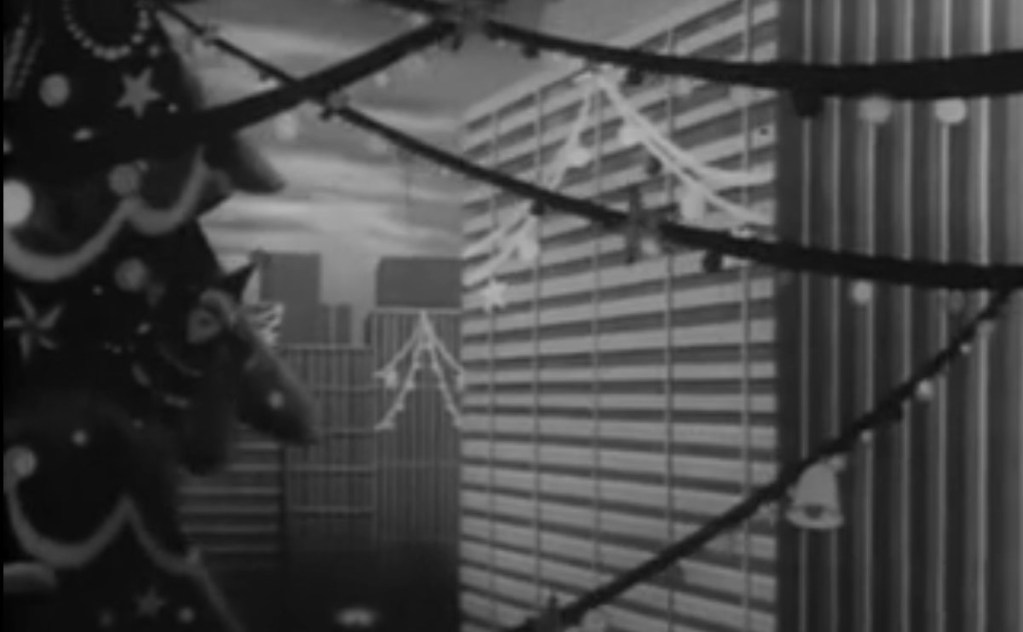
It is Christmas in the year 2000, a time of joy for men and robots of good will. Today, a secret chamber in the Ministry of Science will open when the clock strikes nine. In it, Dr. Ochonamizu expects to find the last will and testament of one of his best friends, a deceased roboticist, and with it, directions as to the whereabouts of his most precious invention. After the will is stolen by two unscrupulous thieves, shenanigans ensue. Little does anyone know what the invention is: a sentient robotized house in the mountains, complete with a motherly personality. All these years, the house has been taking care of Akio (Mio in the dub), the orphaned son of Ochonamizu’s colleague, who now befriends Atom and his little sister Uran.
The idea of a machine raising a child is not an uncommon one in science fiction. Recent entries in this category include the dystopian I am Mother (2009), last year’s evocative The Wild Robot (2024), and Neal Stephenson’s cerebral The Diamond Age. Astro Boy‘s version depicts Akio’s situation in an enchanted light, but shows us that something is amiss too. Akio is friends with all the animals in the forest, and he soon becomes acquainted with our main characters. But when he is invited to spend Christmas Eve with them, Akio initially refuses: His home has to be kept a secret. He tells the house he feels lonely, and in the most striking part of the episode, the house responds by sweetly singing to him and rocking his bed.
But when the orphan’s home is attacked by the thieves and protected by the powers of Atom, the secret is out. After the battle is won, Akio’s new friends have proved themselves apt and willing to safeguard his treasure, and he can leave it in their hands and become a part of their world. Evil has been vanquished, and the orphan partakes in the Christmas banquet at last. He will be adopted in an expanded family that includes the character we know.
Akio says goodbye to his beloved house. He’ll finally get to go to school, see the city, live among other kids, have a bright future. And the house will remain available for other orphans who may need it.
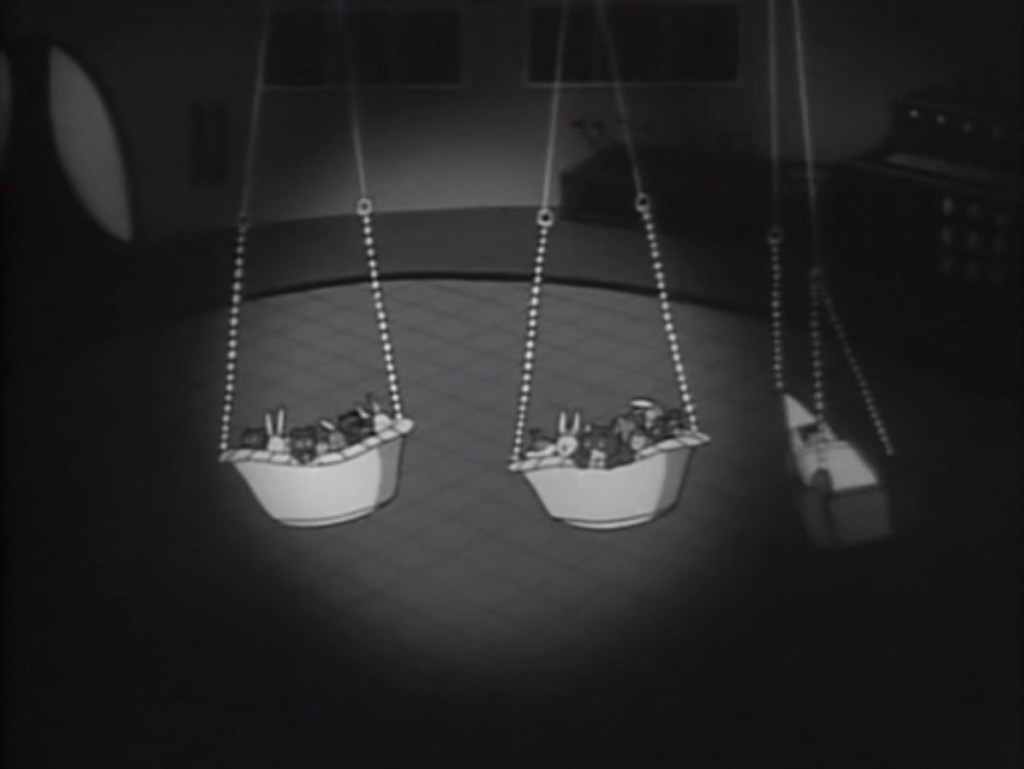
Akio’s house, surrounding him with motherly love on Christmas Eve, is a powerful image. Atom, like him, is in a certain sense an orphan, threatened by dark forces that have a hand in his origin story. We, too, are like orphans, wandering through life under the shadow of lovelessness and death. With the introduction of sin in the world, the natural order has gone off the rails. But our origin is ultimately loving and has devised a wonderfully crafted creation, a home infused with the presence of the Father, an Ark of Noah, a loving mother: the Church.
Like Akio, we are pained that so many of our friends cannot see it, but we hope that one day, we will celebrate Christmas with them. In a cave in Bethlehem (which in Hebrew means “the House of Bread”), the coming of Christ introduces a new hope in the world: a community of adorers of all social classes and nations, the reconciliation of God and Israel, and ultimately, the reconciliation of the Creator with this sinful humanity.
The powers that be might strike, hoping to draw innocent blood, as they are accustomed to doing. Indeed, King Herod tried to have all the kids in Bethlehem killed (Matthew 2:2). But God will intervene, as he did during the first Christmas by warning the Holy Family to flight in the middle of the night, and thus protect our Ark of Salvation.
And we’re waiting too for a bright future. In the Book of Revelation, the future Church is depicted as a New Jerusalem, a city of love and friendship. We are told that the city is shining: “The city does not need the sun or the moon to shine on it, because the glory of God is its light, and the Lamb is the city’s lamp. By its light, the people of the world will walk, and the kings of the earth will bring their glory into it. The city’s gates will never be shut on any day, because there is no night there” (Revelation 21:21-26).

This movement towards the New Jerusalem is what we start to see in Christmas, in its star, in the gathering of the shepherds and the magi. Christmas is the beginning of a new world, one that will ultimately prevail against evil, and ushers in a new form of community, the Family of God, open to all orphans like Akio. Merry Christmas!
Astro Boy (1963) can be streamed at Amazon Prime, but only has the first 50 episodes (and colorized). Further ones are available dubbed with adds at Retrocrush (in the original black and white). Alas, no official subbed version to my knowledge!

- 12 Days of Christmas Anime, Day 7: Astro Boy and the Consolation of the World - 12.20.2025
- To Be Hero X: Of Exaltation and Sorrows - 11.12.2025
- First Impression: One Punch Man Season 3 - 10.13.2025