


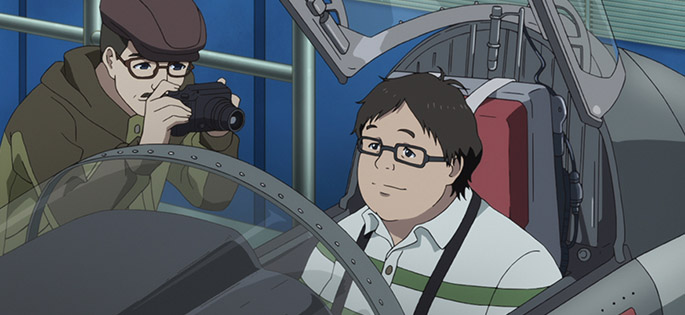
I’ve mentioned this before, but to me, Shirobako feels like family. There are some members that annoy me, some that I embrace, but regardless, I care about them all. I want to know what’s happening with everyone – a week seems too long to wait to catch up with the cast. I streamed the first cour to catch up to the second, watching an episode or two each day – and getting that much of these characters felt just about right!

Among the characters, the one I find most interesting is the director, Seiichi Kinoshita. Besides being hillarious, there’s a realism to him despite his over-the-top tendencies. Most of the realism comes in the way of his faults – his procrastination, stubbornness, shyness, gluttony, and insecurity. The last of those is most interesting to me, because like the characters he creates and the context that he develops, especially in relation to Arupin, there’s reason for the way his current self has become the way he is.
Do you remember the episode that showed Kinoshita accepting an award for his early work? He came across as humble, energetic, happy. The Kinoshita we know now is of course largely none of those things. But on the back of his failed marriage and ridicule regarding his work, for which he is particularly sensitive, how could we expect him to be the same? And personal jokes or chides at his expense are common, perhaps most hurtful when they came angrily from episode director Zaruyoshi Yakushiji in episode 18.
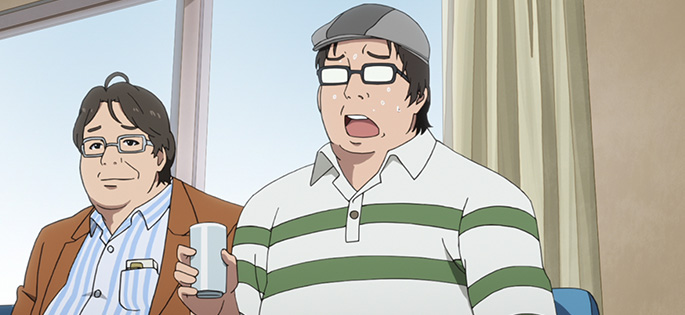
Words have immense power. My wife says that my love language is words of affirmation, and perhaps that’s true – I know that when I’m praised, I’m eager and energized to serve. And on the other hand, words can destroy, which is what I think has happened to Kinoshita.
When we use our words to hurt people, we show hatred toward them. When we do it publicly, as Yukushiji did, we’re destroying their dignity. We’re saying that they are trash – subhuman and unworthy. It’s a horrible thing, and it’s no coincidence that treating people such ways are a beginning stage toward infinitely worse horrors – genocide. After all, the perpetrators of genocide have always seen their victims as something less, as vermins, insects, and animals.
Jesus speaks to this idea as well:
But I tell you that anyone who is angry with a brother or sister will be subject to judgment. Again, anyone who says to a brother or sister, ‘Raca,’ is answerable to the court. And anyone who says, ‘You fool!’ will be in danger of the fire of hell.
– Matthew 5:22
When we call someone a fool or an idiot, we’re trying to humiliate them – to tell them they are less than. As we humiliate others and strip away their dignity, we make that person feel worthless. Unfortunately, many of us have suffered this indignation time and time again. Jesus realized the power of words, too – he taught us that hateful words are equated with murder. And at the very least, they murder our souls.
The question here, though, isn’t whether this behavior is bad – it’s, do we do the same? I hope that you don’t, not on a regular basis, but certainly many do. And I might be pessimistic, but I imagine most of us have done this, or do it from time to time, or secretly wish they could.
Our hearts are prone to all sorts of things – hatred, vengeance, evil, rage. Thankfully, there’s always hope, and it’s shown through the opposite of what brought Kinoshita down – it’s shown through grace and love.


- First Impression: Kirio Fan Club - 04.03.2026
- The Bridge That Saves: Frieren, Gehen, and the Hope of Good Friday - 04.03.2026
- First Impression: The Ramparts of Ice - 04.02.2026