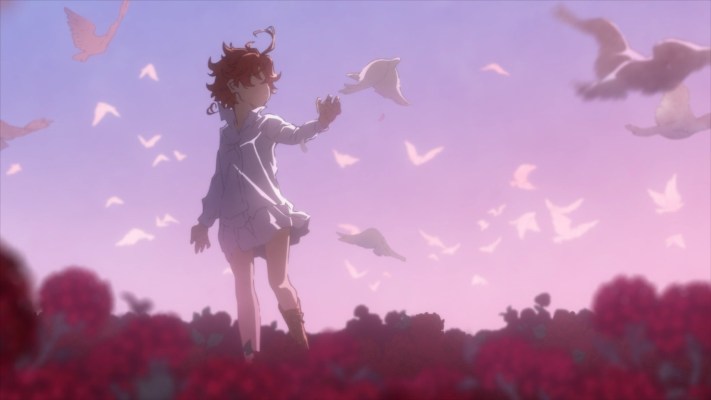
Howdy, dear reader! In my last article, I sought to illustrate how TPN, my favorite anime ever made, takes inspiration in its themes, lore, and even its name from the biblical story of the Promised Land, and how the parallels extend to the gospel itself. (Be sure to check this article by our writer Thathilomgirl for a systematic look at the manga’s depiction of the ancient faith!) Messianic figures, ancient rites, salutary chalices, and frightful demons populate both the text of the Holy Writ and the story of Ray, Norman, and Emma.
I also noted something far more peculiar: The concentrated, focused structure of the first season, as well as the themes of sacrifice, food and purification, create, in my eyes, a direct parallel with the order of the Holy Mass, a rite that aims to submerge the faithful in the story of salvation, as a way to prepare the soul for the reception of the Eucharist, the Bread of Life. It is like the Promised Land of my weekly Exodus.
The Mass may look dry or confusing from the outside, but I see it as a treasure chest, full of diverse wonders of darkness and light, tragedy and hope, and love and sacrifice, quite like TPN. Since I will be dissecting each of these parallels scene by scene, spoilers ahead!
Liturgy of the Light
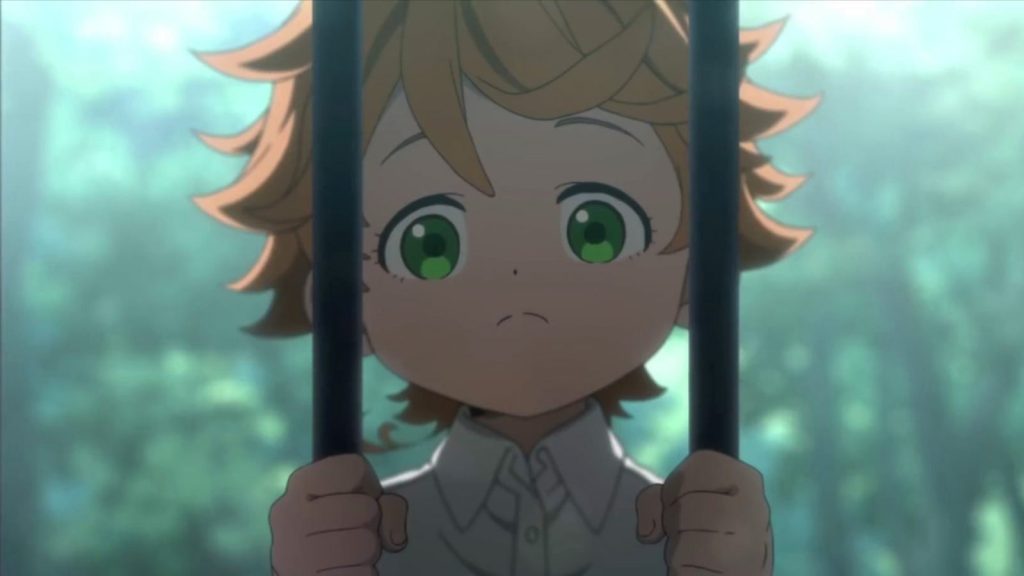
When I start to watch The Promised Neverland once more, I return to the contrast between darkness and light, inside and outside. There is a fence, and the familiar voices of Emma, Ray, and Norman. In retrospect, I know how deeply they care for each other, albeit in slightly different ways: Between the three of them, there is admiration, trust, inspiration, wonder, and dire commitment. I smile, hearing their hopes and dreams once again, even as the shadows loom.
My Holy Mass also begins with a fire being kindled in the darkness: During the Easter Vigil, we do it outside the church after the sun has set. Most days, the fire is just two pairs of candles over the altar, often in relative darkness. An outside and an inside, too. My eyes get accustomed to the difference as I walk into the temple, the cathedral, the church. This is the so-called “Liturgy of the Light.”
Candles were also lit in the Jewish Temple (most famously, the seven-branched menorah), as light is the first creation of God (Genesis 1:1) and God spoke to Moses from a burning bush (Exodus 3:13). But ultimately it is Jesus, whose resurrection took place at the break of dawn, who is “the true light that enlightens everyone coming into the world” (John 1:9). He illuminates us like nothing else can. In a world of shadows, He is the true Light.
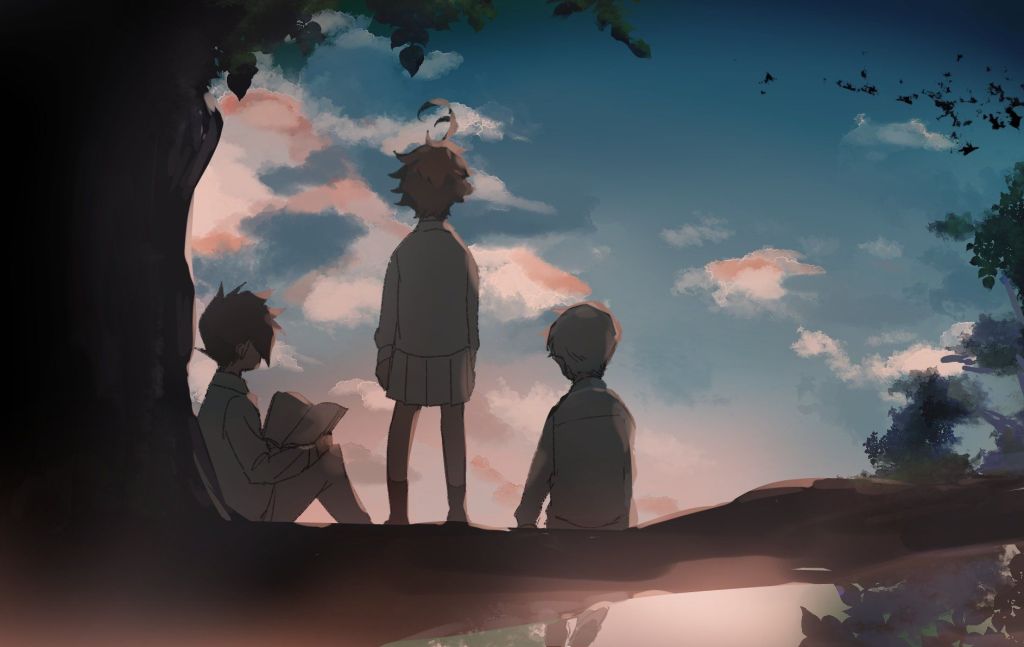
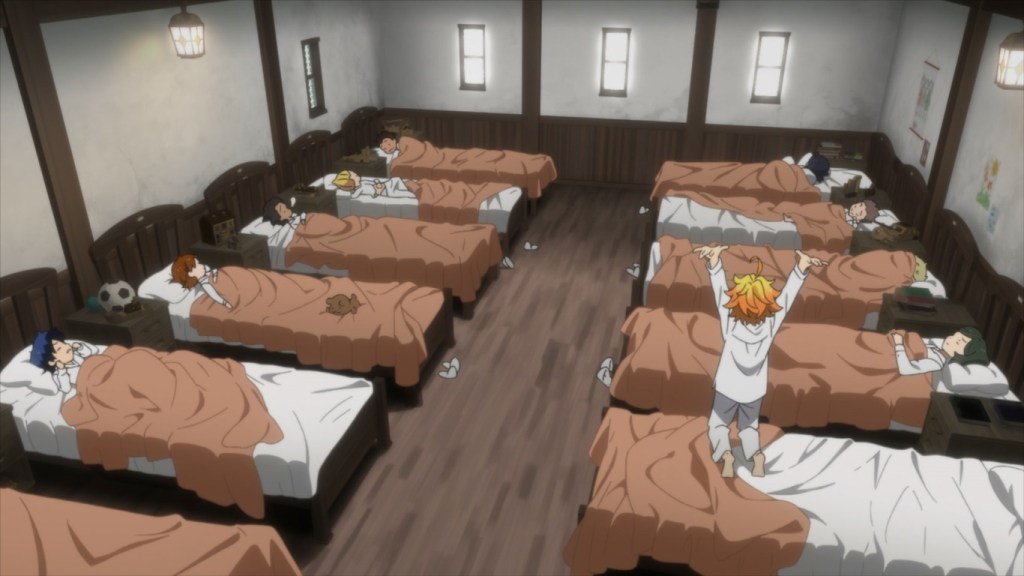
In the show, we’re back to Grace Field, a place I feel like I know. I witness the morning greeting, and I see the family of orphans running to the dining hall for mealtime. The thanksgiving prayer is solemn. Even knowing what I know, I feel nostalgic. Their clothes are white, but the scene is colorful: Emma’s orange hair, Ray’s black spikes, Norman’s blue eyes. I’m happy to see how they have grown, how they react to each other, how their bond has endured.
At Mass, I see the priest enter, also dressed in white. Depending on the season and the feast, he wears over the white a vest of various colors, mainly red, green, purple, or gold. He bows and kisses the altar: A greeting to the Lord. He then begins the Mass “in the name of the Father, the Son, and the Holy Spirit.” The cornerstone of the Mass is also the eternal love of its three protagonists, stronger than the world itself, the triple Sun of my solar system.
“The grace of our Lord Jesus Christ, and the love of God, and the communion of the Holy Spirit be with you all.” Every little thing we know about the Trinity, we know because God himself, in Jesus, has condescended to reveal to us His precious intimacy, His joy. The priest greets the congregation thus. I’ve gone to Mass in Japan, in the USA, in Spain, in the Holy Land: I’m surrounded by family, whoever they may be, joining them once more for our family meal, the Last Supper.
Introductory Rites
I have seen the light. I now see the other side, the horror of the darkness. In TPN, I follow Norman and Emma as they discover the horrific, murderous acts and designs of their Mother. Her conniving with demons. A beloved sister, Connie, is now a lifeless corpse. I see their whole life tainted, and I feel for them.
At Mass, I open my mouth and confess to God and my brethren that I have sinned. Monstrous, hellish lovelessness has tainted my acts and my words, what I did and what I didn’t do, conniving with demons. On top of their effects on others, each of these deadly choices has wounded or killed the child of God in me. I have lost my innocence, like Adam and Eve. I remember that my sins, however small they may seem to my eyes, are scarlet like blood.
The shadow does not overcome the light, though. In tears, Emma falls, her heart full of sorrow, then she mutters a wish for her precious family not to die. She asks Norman to help her; she cannot save them alone. I ask for help, too. After invoking my family already in Heaven (in the Book of Revelation, we see them praying for us), I ask God three times to have mercy on us here on Earth, striking my breast to wake up my heart. I cannot do it alone, either.
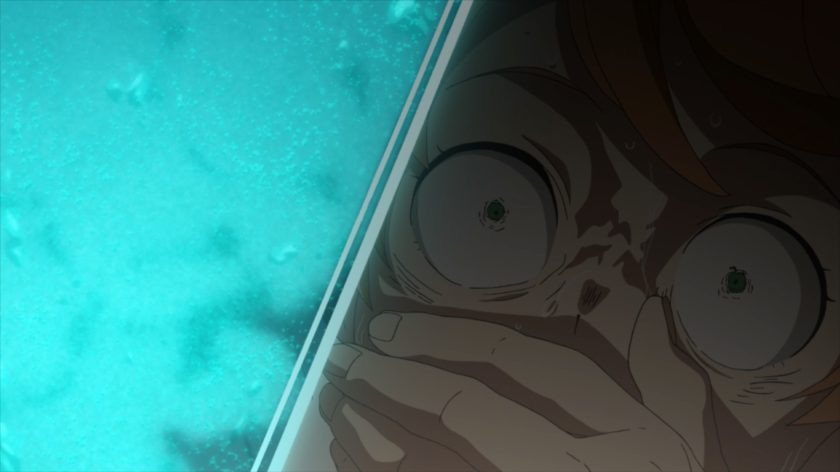
The priest sums up our prayer thus: “May Almighty God have mercy on us, forgive us our sins, and bring us to everlasting life.” This is Heaven in a single spark of light; the plan of salvation in a nutshell. And, in every season but Advent and Lent, what follows is a chant of glory, the one the angels sang when Christ was born: “Glory to God in the highest!” And we add: “We praise you, we bless you, we adore you, we glorify you, we give you thanks for your great glory…”
The show has its own chant of love and praise. Norman, a quiet smile in his eyes, tells the sober-thinking Ray that Emma’s heart is so great, her resolve so strong, her wish so pure, that he will do the impossible to let her keep her smile. At Mass, I, too, sing to the glory of the God whose love burns like fire, whose compassion is infinite, who devised the most daring plan ever conceived and accomplished the greatest feat—all because He didn’t want any of His little ones to be lost.
Liturgy of the Word
Few fantasy stories unveil their world so elegantly, so naturally, as TPN. I’ve loved Sherlock Holmes from childhood, so when Emma, Norman, and Ray do their detective work, I get the same thrill from the game of deductions, trials, and hints that the trio of protagonists unveils. They get closer and closer: The mysterious books that contain clues by one William Minerva, the kids telling one another about what they have heard and seen, and ultimately, chillingly, direct dialogue with Sister Krone and “Mom.”

The Promised Neverland, Chapter 109. Illustration by Posuka Demizu.
Norman vowed to build a metaphorical ship of hardened clay to bring everyone to the other side. I see it built, and I am once again full of wonder. I see the children acquire what they need: A rope, food, escape training. I see them include others, like Don and Gilda, in their plan. Ray’s motivations are unveiled. Slowly but surely, the kids win the information war.
At Mass, I, too, fight the information war of the spiritual world: I listen to the Word of God. At a bookstand that normally resembles an eagle (a reminder that these words come from Heaven!), I first listen to a short excerpt of the Old Testament, distant in time, full of symbols and images of redemption. Then, I sing the Psalms of Israel, in which my brethren in the faith reflect or react to the words and actions of God. I try to echo them in my heart. And finally, I hear Christ directly. I hear the Gospel.
For most of the readings, I sit, but for the Gospel, I stand. The hallelujah is sung, the veil is lifted, and I hear what kings and prophets from old wanted to hear. Even if I know the text, I can discover it anew. The priest then attempts to explain the readings to us to the best of his ability, adapting to our understanding, as Our Lord did on the road to Emmaus.
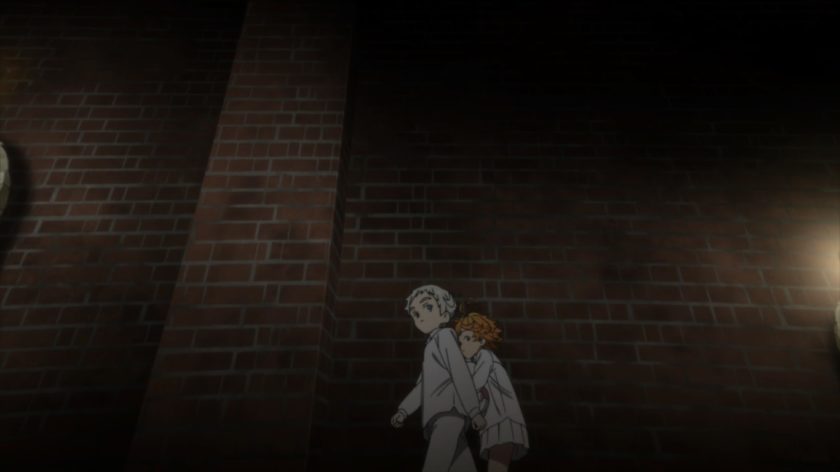
We have listened to God. We now make our petitions heard to Him. Someone goes up and prays for the Church, for the country, for the particular needs we have. On top of that, I ask in my heart for what I need the most; for my own boat of clay, navigating this immense ocean. With this, the Liturgy of the Word ends. In times past, those not yet baptized would leave the Mass at this time, and only the Christian community would remain.
Liturgy of the Eucharist
A friend is going to die. Though he could save himself, he is taking the blow for us. The triumphal ascent is cut by the sadder episodes of the anime. Norman gives his body as food for demons, just as Mujika will give her blood. And his last days become a heartfelt, heartbreaking dialogue with Emma and Ray, full of hope and sorrow. We are haunted by the road to the moment when, smiling back, waving his hand, his eyes full of love, he accompanies Mom into the night.
Before facing His Passion, Christ talked to the Father in the garden. Before lifting the bread and the chalice during the Last Supper, He spoke to Him directly, too. And in the Mass, the liturgy of the Eucharist also takes the form of a dialogue with the Father. In it, the love that moves the Sun and all the stars, the love of the Trinity, comes to the forefront. I silently bear witness to it.


Echoing the sacrifices of the Temple, the offering is presented to God. If any other sacrament is being celebrated in the context of the Mass—such as baptism, confirmation, priestly ordination, or matrimony, as with my very own marriage—this is its time, before the great sacrament. An Offertory Hymn to the Father is sung. The gifts are presented, sometimes with incense. I offer God everything I have, too.
The priest prepares the bread and the wine, then asks the people of God to stand and pray with him. “Lift up your hearts.” I lift mine, and the great moment comes. We echo Isaiah’s vision, twenty-nine centuries later, of the angels adoring God in Heaven, saying “Holy, Holy, Holy…the Heavens and the Earth are full of Your glory” (Isaiah 6:3). The priest prays. And then all knees bow, a bell sounds, and the words of Jesus two thousand years ago are repeated over the bread and the chalice. “Take this, all of you, and eat it. For this is my body which will be given up for you… Take this, all of you, and drink from it. For this is the chalice of my blood, the blood of the new and eternal covenant…”
A physically tiny object absorbs all my attention as the priest elevates the white wafer. I firmly believe that in that moment, Jesus is physically present in the room with me, offering Himself to the Father, at the Cross, now and forever. There are echoes of the rite of the Jewish Passover meal in the blood, the lamb, the memorial act, and the lifting of the cup, but also of the renewal of the Covenant with Moses, the sacrifice of Isaac, the animal offerings, and the Cross. All is fulfilled in a sacrifice of infinite love.

After I see Norman leave in TPN, I feel shaken. Silence falls over the show. Will Emma and Ray stay down? Not in a million years! They are full of resolve and fire. At Mass, so am I, telling Christ: “When we eat this Bread and drink this Cup, we proclaim your Death, O Lord, until you come again.” I pray I’ll never get accustomed to these words. Now, the prayer to the Father ignites again, and the priest proceeds, the liturgy culminating in the Our Father.
The Communion Rite
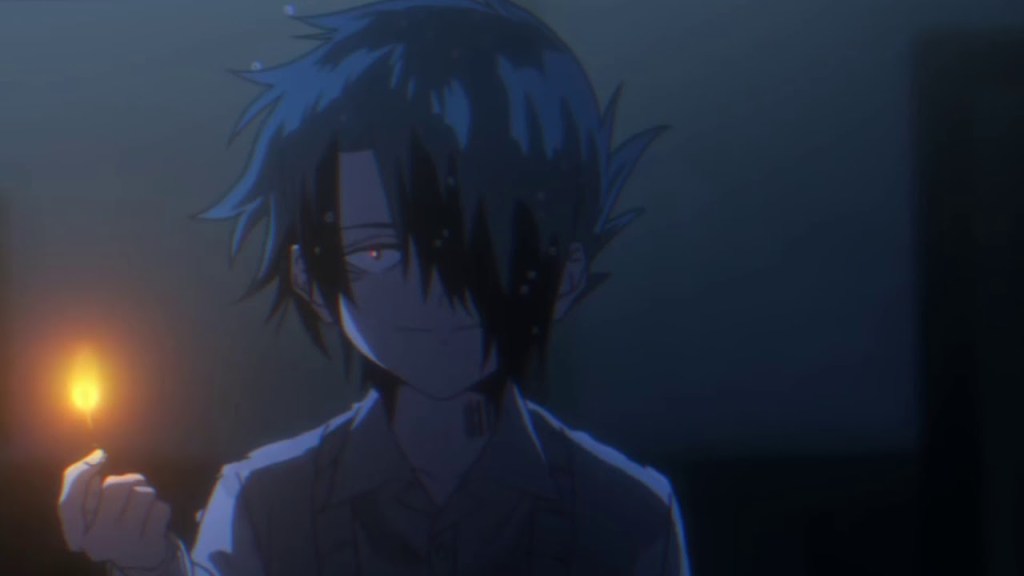
I see myself in all the main trio of TPN, but I identify with Ray the most. His descent into suicidal rage is…relatable. Underneath his cool, distant facade, his faults, wounds, and the dreary fact that he is the son of Isabella weigh invisibly upon him. When he decides to burn himself alive, he is trying to find a way to strike back at the world and to punish himself, all at once. But a great love has claimed him. Norman wanted him in. Emma won’t let him go. And an army of siblings has been there all along, fighting silently for him.
Ray breaks down. He is not a son of the darkness anymore; he is a sibling in the light. At Mass I, too, feel once more the wonder of calling God “Our Father” together with Jesus and my numberless siblings, the Christians of Heaven and Earth. Again, I ask for God’s name to shine, for God’s kingdom to come, for help now, for a merciful heart, for light against the darkness. And our sacrificed Brother appears again, as the Peace prayer is addressed to Him.
Peace. Our Lord told us to make sure we held nothing against our brethren in our hearts before partaking in the offering. In TPN, once she is over the wall and facing Isabella, Emma has a word of love for her Mom and her House, one that makes Isabella fall to her knees and change her heart. This same love will let Emma embrace Mujika and Sonju. As I offer the sign of peace to whomever may be at Mass with me, I try to forgive all. Like Emma, I, too, want to walk into the light with a free, loving heart.
Just as St. John the Baptist once did near the Jordan River, the priest shows us the Lamb of God who takes away the sins of the world. I then silently walk to him and kneel to receive communion. And then, I am free. I am, if for a short time, in the Promised Land, walking alongside Jesus, man and God, hidden yet alive. I kneel at my seat. I pray, I try to listen. I wait with Our Lord. This prayer will feed my personal prayer, day after day.
For now, this is my training ground, my thanksgiving, my Shelter B06-32. I’ve walked my way up to here, and I’ll do so again and again to receive the gift at full force. I walk by faith now, but one day I’ll see directly what I now experience through the words and actions of the Mass. “Do you believe because I told you that I saw you under the fig tree? You will see greater things than these,” Jesus told Apostle Nathaniel (John 1:50). In TPN, appearing by Ray’s side, a vision of Norman tells him to “come, and see something cool.”

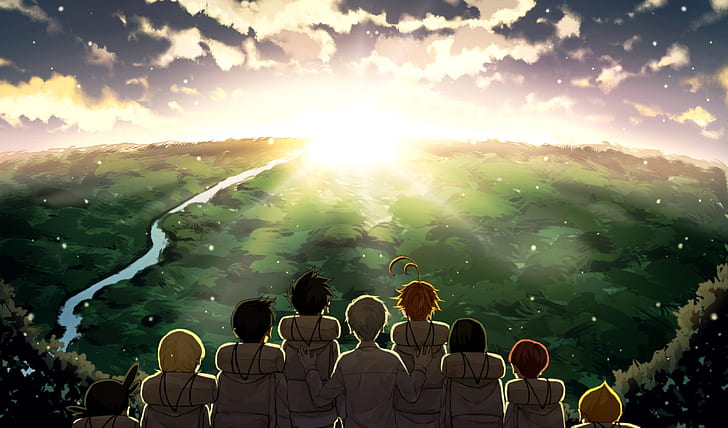
The moment passes. The world out there calls. After one final blessing in the name of the Trinity, we are sent back, and I leave the temple. I’ll be back. And for as long as TPN reminds me of the Holy Mass, you can expect me to be back there, too. Again, the shadow and the light, the voices and the fence. Again, Norman, Ray, and Emma, determined to grow while remaining children at heart. I’m 31: I hope that describes me at 101.
God willing, I’ll be able to tell you after Mass.
The Promised Neverland can be streamed at Crunchyroll.

- First Impression: Love Through a Prism - 01.17.2026
- First Impression: Oedo Fire Slayer -The Legend of Phoenix- - 01.12.2026
- First Impression: In the Clear Moonlit Dusk - 01.11.2026

[…] In an era of pointless sequels, Mononoke: The Movie – Ashes of Rage bucks the trend—with a flourish! The animation is immersive, dazzling the senses as it balances a psychedelic color palette with a parchment paper aesthetic that makes for a unique fusion of modern and feudal—a combination that is echoed in the soundtrack, with its blend of traditional instruments and sick drops. Ashes of Rage is all style, but it has substance, too, going deeper into the Ooku and the lives of the women of Edo Castle than the first film allowed. […]