
We are blessed to live in a world that is full to overflowing with resources for the believer. From podcasts and livestreams, to books and digital tools, to millions of hours of worship music and prayer meetings and online services and conferences—it’s all at our fingertips. But this can be a bit of a curse too, as algorithms create echo chambers and rabbit holes that may easily lead astray, as with the recent #RaptureTok tizzy, providing platforms to figures with no accountability who may preach a mixed gospel or mask hidden agendas. Now, more than ever, we need discernment. We need to know what to reject and when to walk away. Enter the finale of Turkey! Time to Strike, in which both a hero and a villain demonstrate exactly this kind of knowledge. Let’s see if we can find the secret to their stellar discernment!
Spoiler warning!
If you haven’t been watching this series, first off, go watch episode 1 right now before I spoil it in the next sentence. Trust me, it’s fun.
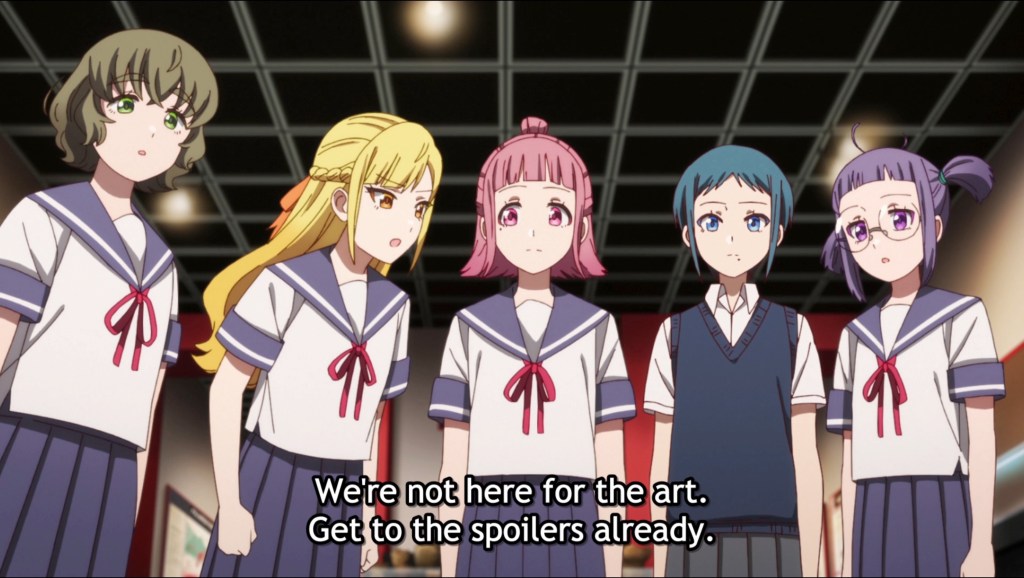
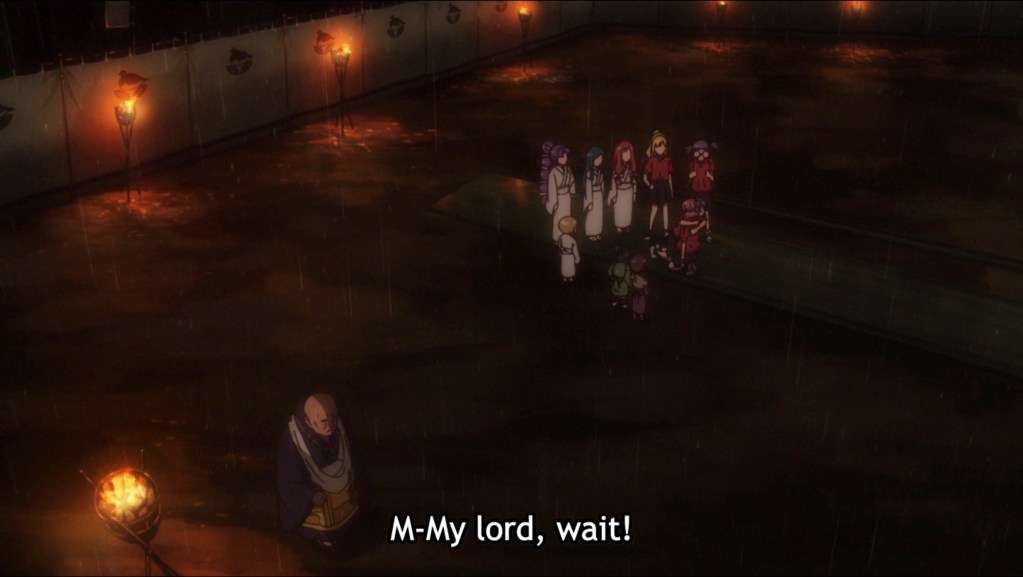
Ok, now that you know that Turkey! is not really a slice-of-life series about bowling, but rather, a tale that uses time travel in order to dive deeply into the churning waters of conflicting cultural mores and values across Japanese history, let’s get started! We join the high school girls’ bowling team in a moment of utter crisis. In a bid to save their Sengoku-era friends from death at the hands of the cruel lord Kagetoki and his shaman, the girls had engaged their foes in a wager, seeking to defeat them in a contest of bowling. But things do not go well, and team captain Mai is faced with the unthinkable: two of her friends will now be executed. As a heaviness as dark as the night sky threatens to consume her, Mai cries out and confronts Kagetoki and his shaman. But rather than decrying their cruelty or pleading for mercy, Mai does something so unexpected and so forceful that it made me catch my breath: She rejects kami-sama (“god” or “the gods”) and professes her faith in bowling.
Yep.
Now, of course, this isn’t really what’s going on here. What Mai is rejecting is actually the shaman’s use of “kami-sama” as a justification to manipulate her, intimidate her, and exploit her weakness so that he can control the outcome. She’s rejecting both the spiritualization of abuse and the abuse of faith.

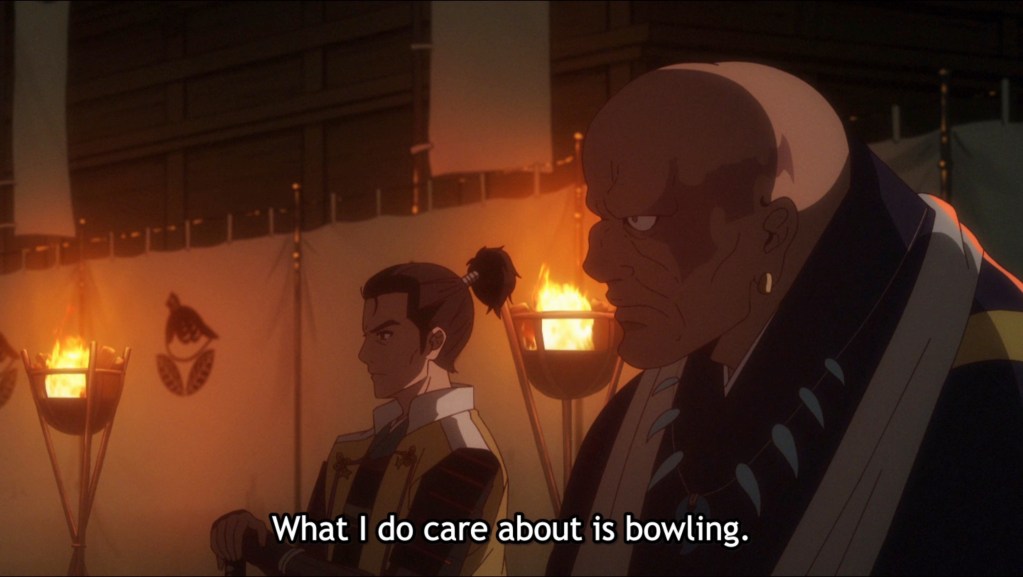
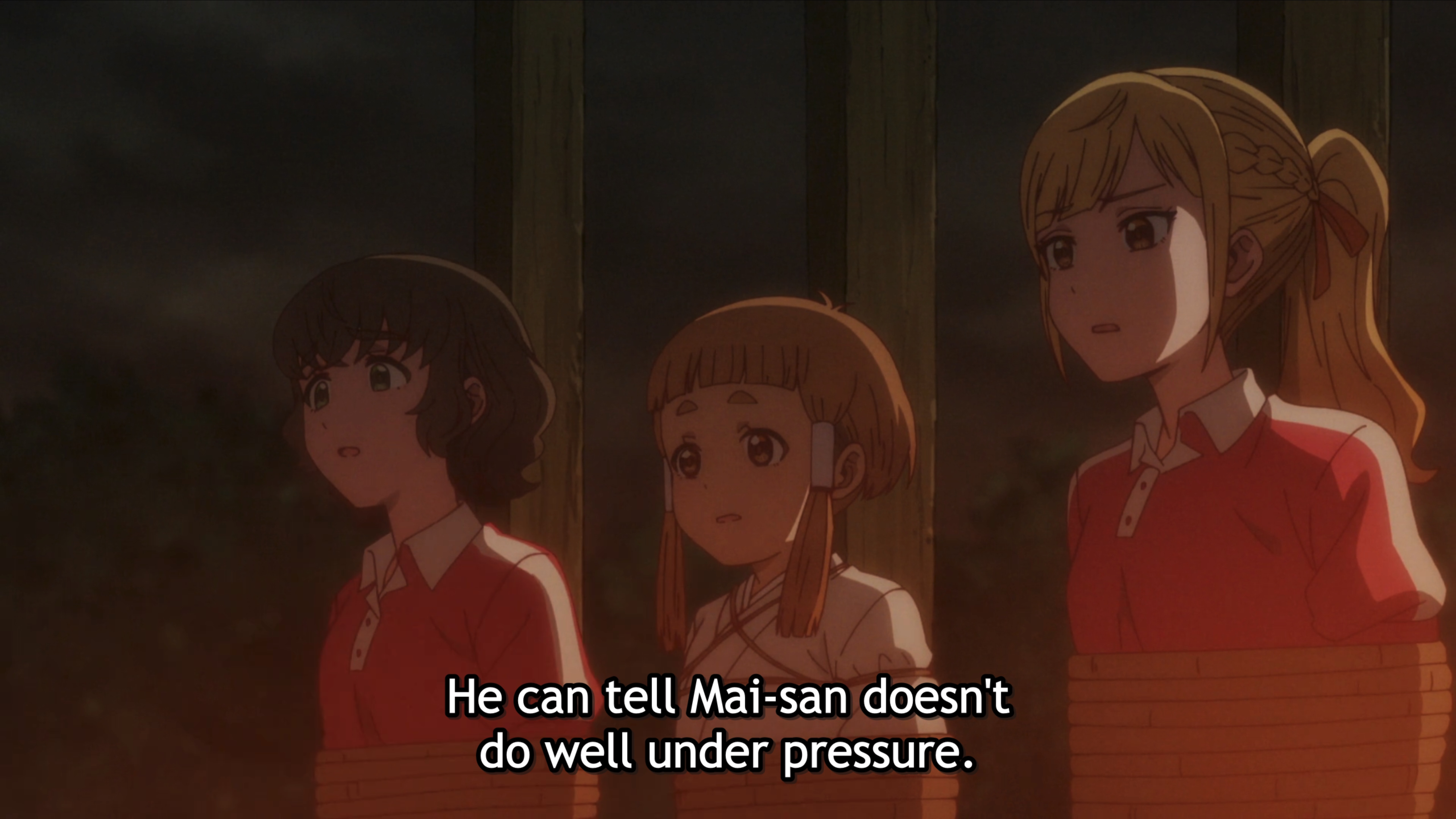
You see, in the name of kami-sama, the shaman changed the rules of the wager they had agreed upon. On the surface, it actually seemed to be an advantageous change for Mai and her teammates: Instead of five of their friends being executed if they failed to bowl a single strike out of five, the shaman lined up ten friends and teammates like bowling pins, staking them to posts overlooking the alley, and said that, should any pins be left standing, only the lives of the corresponding friends would be forfeit. Seems generous—merciful even, right? Wrong. Mai is an excellent bowler, but she has been struggling with the yips all series, and seeing her friends tied up at the end of the bowling alley was guaranteed to mess with her head. It was a masterful move of psychological warfare by the shaman, such that it would be virtually undetectable to an outside observer.
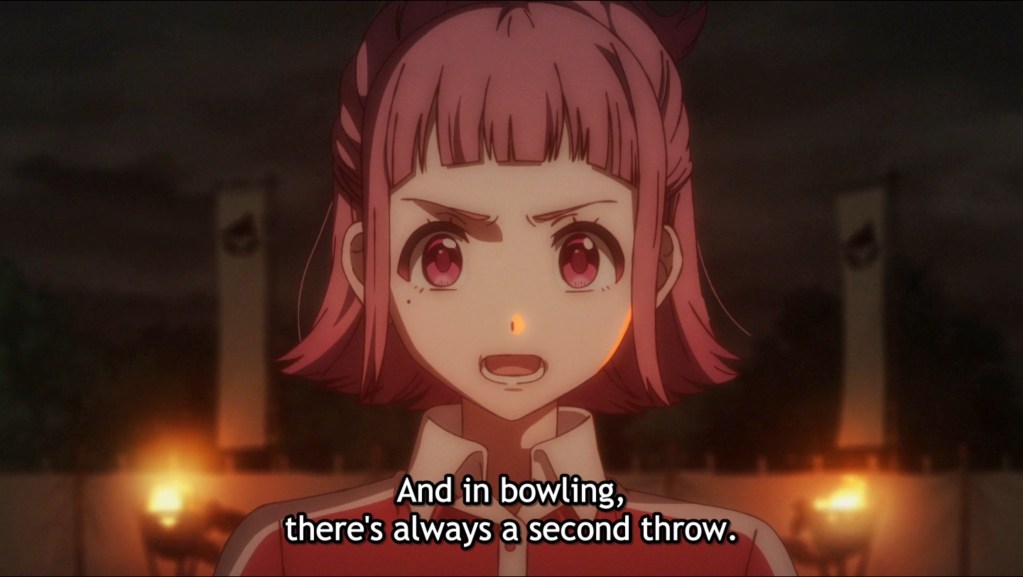
And Mai is having none of it. She rejects the shaman’s kami-sama and puts her faith in bowling. But not just the sport—this isn’t an idolatrous act here or a petulant protest from a secular teen. Instead, Mai shares the reason for her faith: There is always a second throw in bowling. There’s always a second chance. In other words, in this moment of crisis, Mai is putting her faith in grace. I’d even go so far as to say that, without knowing it, Mai is placing her hope in the existence of a true God who may just grant her the grace of a miracle.



Her faith is rewarded, and Mai succeeds in a near-impossible throw under horrendous conditions (it’s started to rain torrentially by this point), knocking down both pins of a dreaded snake eyes formation. It’s a glorious relief.
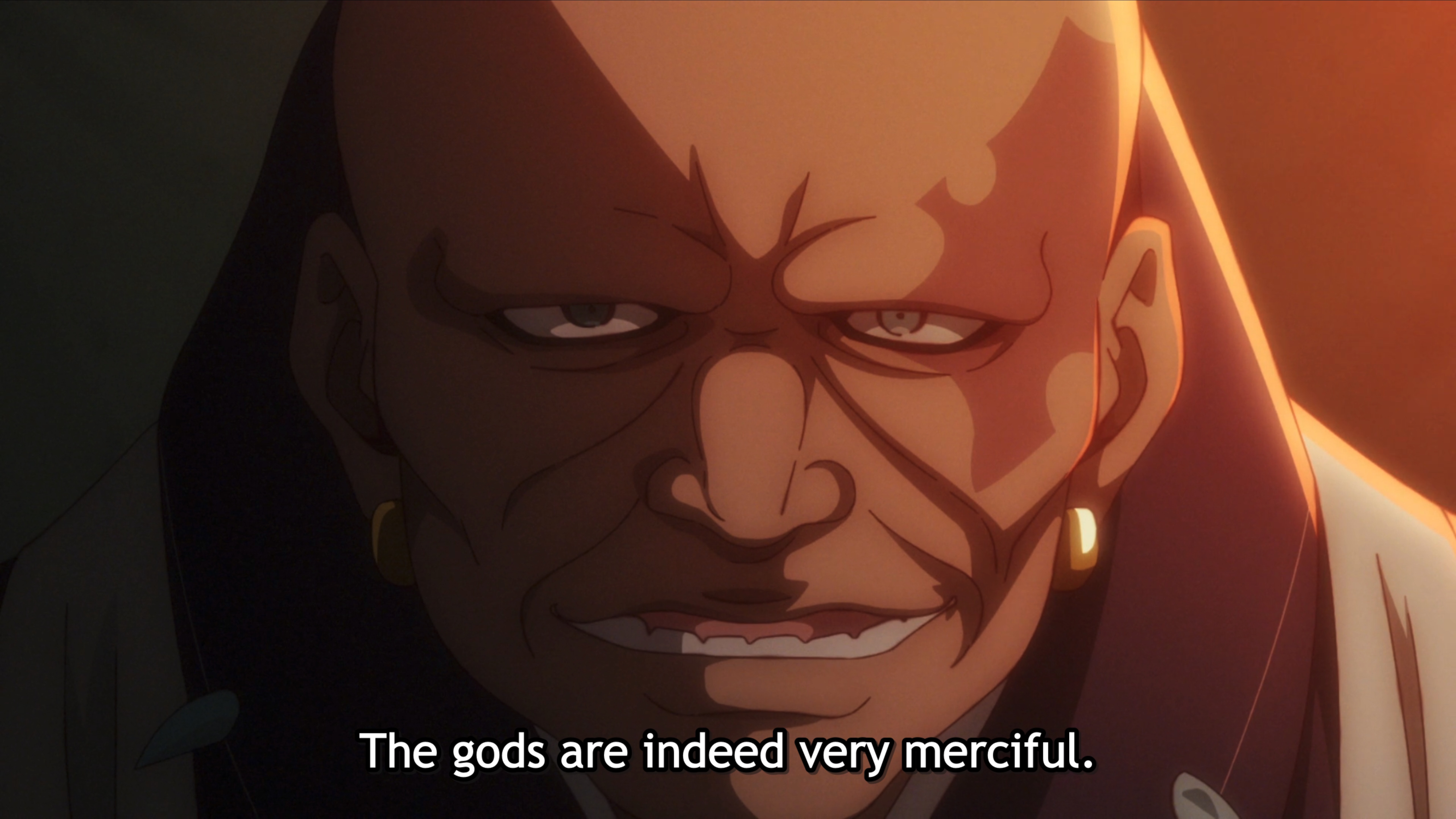
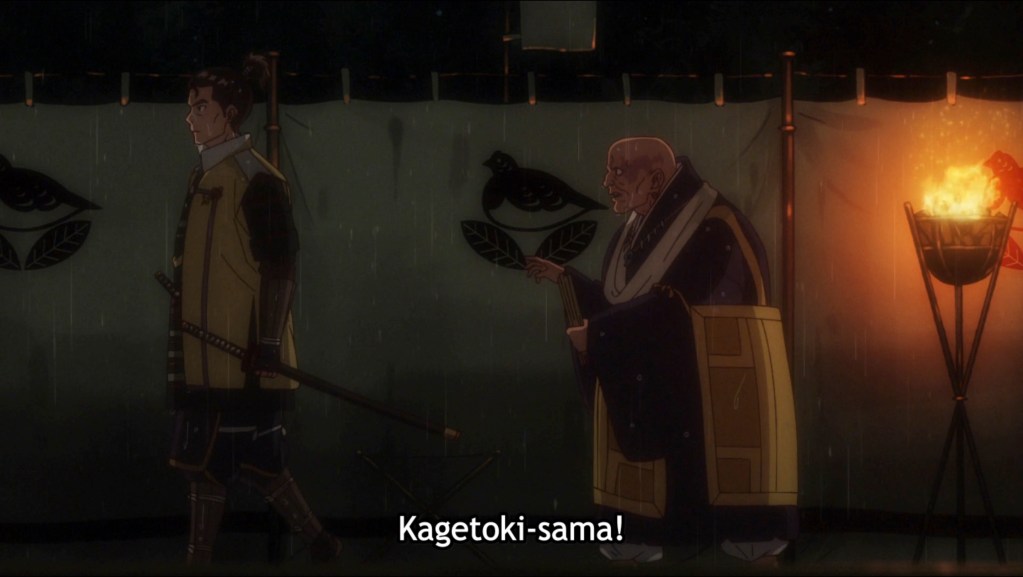
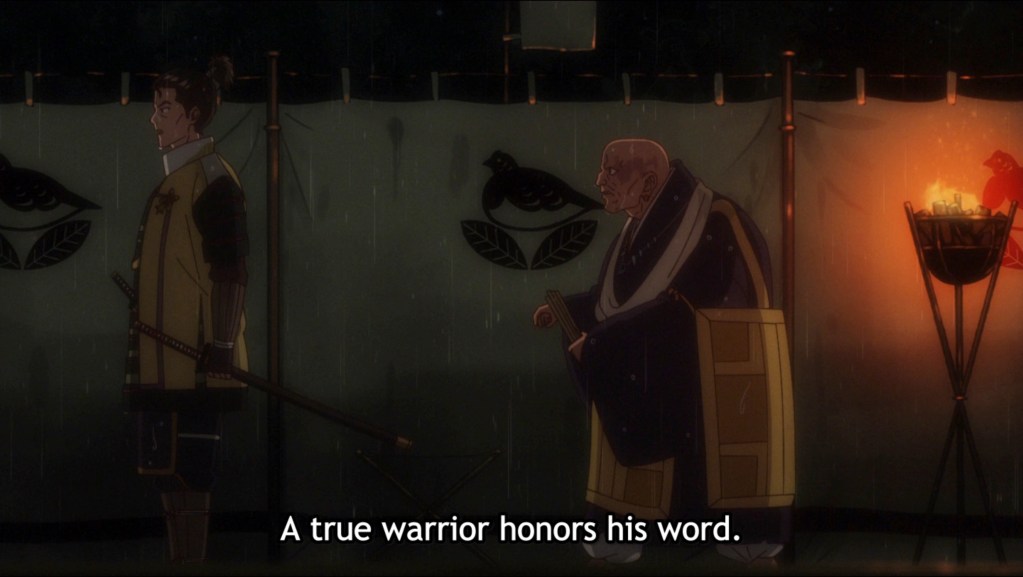
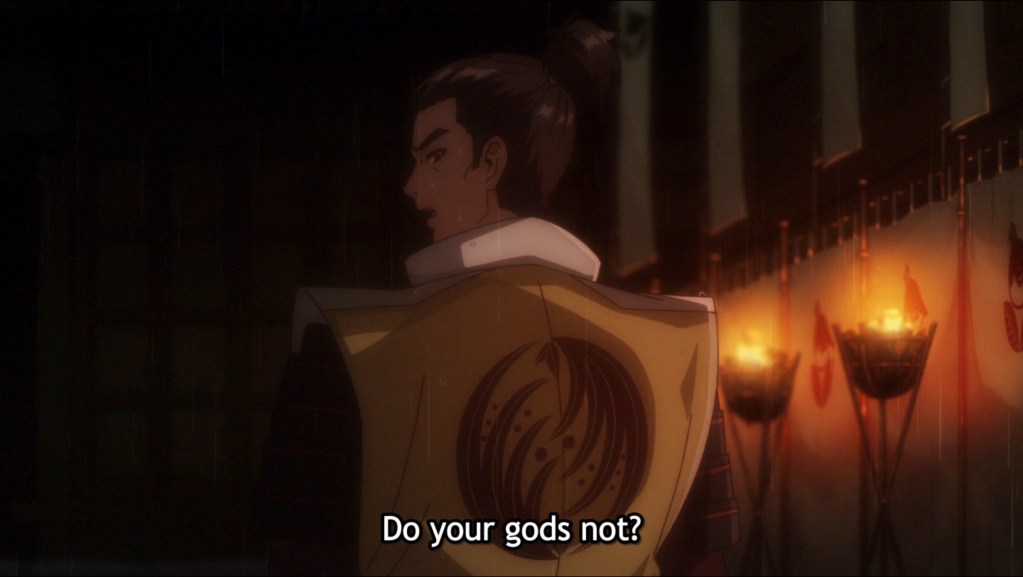
It doesn’t stop there, though. After acknowledging Mai’s victory, lord Kagetoki, whose every decision, every action, and seemingly even every thought has demurred to the shaman and his proclamations of the will of kami-sama, likewise rejects the gods. For Kagetoki, the turning point comes when the shaman attempts, once again, to change the rules following Mai’s miraculous bowl. Kagetoki views this as a breach of honor, a failure to keep one’s word. He turns his back on the voice of authority that has shaped his entire adult life, and walks away.
Although Mai and Kagetoki articulate their rejection as being against “the gods,” what they are really rejecting is a misrepresentation of the gods and the co-option of religious faith by a manipulative authority who presented himself as a speaker for the divine. Part of me wishes that they had been more precise in their phrasing, distinguishing between kami-sama, the actual (in-world) gods, on the one hand, and the shaman and his representation of the kami-sama, on the other, making it clear that it is the sham of a shaman whom they are rejecting. But admittedly, the muddied waters in their words here are true to life; we, too, can easily conflate the ministries, leaders, or religious communities we trust with God himself, which makes it all the more difficult and painful should they lead us astray. We can feel as if we’re turning our backs on God, or losing our faith, when it’s really the misrepresentation of God—a false god—that we are rejecting.

So, how do we see through deception in spiritual matters?
For both Mai and Kagetoki, discernment regarding the shaman is powered by a specific, strongly-held value, which, when transgressed, serves like an alarm or early warning system. For Mai, it is grace, the eternal second throw, that she holds so highly—a value inherited from her parents. For Kagetoki, it is honor and keeping your word—a value shared by his society and the class of ruling elites to which he belonged.
Yet, strongly held values in and of themselves are not enough, even if they come from family, tradition, or our community. So much so that Paul actually warns us not to be deceived by people leveraging philosophy, human tradition, or the norms of society and the world to win our trust. Instead, there’s a different clue to be found here: Mai and Kagetoki haven’t simply inherited their values; they’ve made them personal—allowing them to speak into their lives and inform their decision-making. Time and time again throughout the series, whether she’s faced with an angry, hurting, or fearful teammate or circumstances that seem impossible, Mai actively draws on the grace of bowling to speak into the situation and guide her on what to do and how to respond. It’s almost as if she’s calling on a Person…
And that’s the key. It isn’t the values themselves that keep us from being hoodwinked; it’s the Person behind them, the One who inspires them, and who reveals himself through them. More to the point, it’s direct, personal relationship with Jesus himself—he is the source of our discernment and our guide against deception. This is why the desire of God’s heart was for a nation of priests, a people who would each commune with him personally, rather than outsourcing their faith to a designated representative or an institution of worship. This is why he promised under the Old Covenant that the day would come when he would teach us personally, and why he followed up, under the New Covenant, with releasing his own Holy Spirit to come live in us, that we might commune with him daily, learning to recognize his voice, and chewing over every thought and question with him.

It’s not just modern technology and the profusion of voices today that behooves us to pursue discernment, after all. Instead, the need to be wary of deception is a minor but persistent theme in the New Testament. Throughout the Epistles, the apostles exhort us not to be deceived, while Jesus himself likewise sounds this precautionary note just before his ascension. And every single time in these verses, the antidote to being misled is to know God well, to turn to him, and imitate his ways. We need to know him for ourselves, and not only, or even mainly, through the mediation of others. Yes, teachers and leaders will be held to account for causing us to stumble, but isn’t it better not to stumble at all? When the person we follow most closely is Jesus, and not a fallible human, many of the tripping hazards melt away, and those that remain are not so fatal, as Jesus and his yoke steadies us along the path.
After all, the best way to spot the counterfeit is to know the real deal very, very well. This is how anti-forgery specialists are trained to spot fake currency; not by studying all the modes and possibilities of counterfeiting, but by spending a lot of time with genuine tender, engaging all their senses in getting to know every fiber of a legal bill, from its feel and smell to its sight and sound.
That’s what we do, too. We get to know God through and through, one-on-one. Mai and Kagetoki could spot the shaman’s faithlessness because they themselves had a strong faith in a particular value; we can go one better by knowing directly the One who gives those values meaning, by knowing the Person from whom all value emanates.
So let’s make God’s values—his grace and his honor, his compassion and mercy, his wisdom, truth, and beauty—our own as we share in his life, directly and personally. It’s the best way to avoid the shamans out there.


- Film Review: All You Need Is Kill - 01.15.2026
- First Impression: Kaya-chan isn’t Scary - 01.11.2026
- First Impression: Dead Account - 01.10.2026

[…] of their warfare against the principalities and powers in the dark Sengoku age…(which you can read more about here). Mai confronts evil with her bowling gospel and then defeats it with her miracle-working second […]