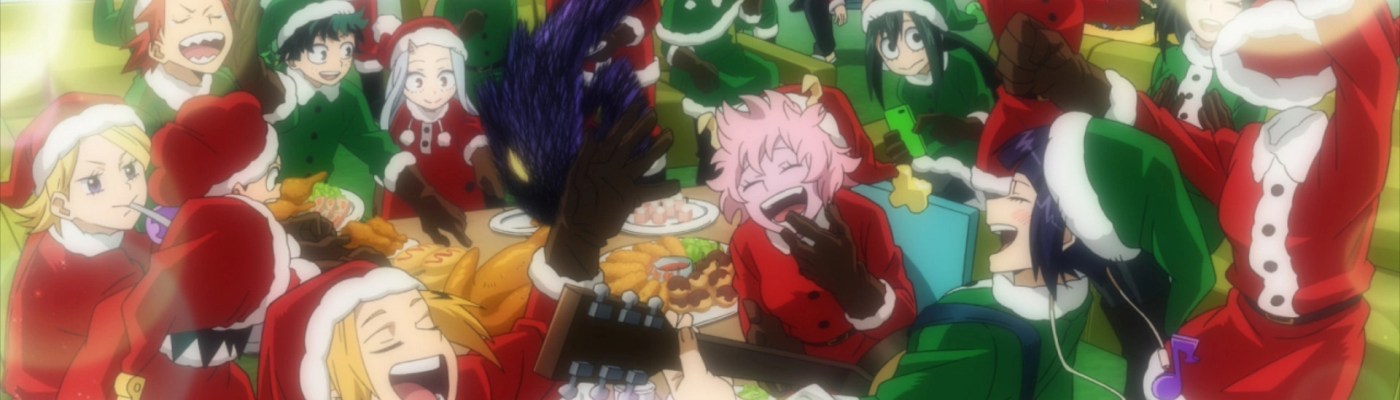
Episode 101 of My Hero Academia, “Have a Merry Christmas!,” is quite the busy one. Entire cities (spoilers!) are engulfed by dust, the hero society crumbles under siege, the search for the enemy within ensues, the young superheroes receive media exposure training, and the casualties from the last war loom large as the new, accelerated internships are discussed. It is only at the very end that we also get some Christmas: Class 1-A congregates in their heavily guarded dorm and exchanges gifts near the fire. Today, they celebrate. Tomorrow, the fight continues.
And yet, the feeling the episode evokes in me is not one of weariness or worry: It is fun and joyous, and it strengthens the bonds of these characters, who get to goof around and be normal kids. The tonal shift is not jarring, either. Of course the aspiring heroes of Class 1-A are capable of putting a hopeful spin on this challenging feast day! That is their whole thing. Even when there are reasons for sorrow and anxieties to be dealt with, these characters are fighters, and celebrating Christmas in this way is a part of the fight.
We can be there too. Celebrating a feast sounds like the easiest thing in the world, but it wouldn’t be one of the Ten Commandments if it were not a challenge sometimes. Even if we do not fear a supervillain apocalypse, we still face holiday blues, dark clouds on the horizon, or unwelcome memories, and even the stress of the preparation itself may get in our way when facing Christmas. Paradoxically, some struggle and a bit of strategy are often necessary to experience a blessed time. In this article, I want to talk about that struggle, and hopefully show a glimpse of what makes My Hero Academia so special.

Have you forgotten what day it is?
This is what Headmaster Nezu asks All Might, who is confused after being asked if he can make it to the school today. All Might was involved in the war, but the war is out of sight now. Wearing green and red Santa costumes, Class 1-A enjoys roasted turkey, games, and guitar music. Bells, stars, and candy canes decorate the walls. Bakugo hangs around in his black t-shirt, chased by Mina Ashido, who wants him to wear at least a Santa hat. After some talk about internships and studies, lewd Mineta (of all people) proclaims that it is a holy night, and school talk is henceforth forbidden.
The special guest of the night is little Eri, the nullifier of superpowers, who comes into the celebration radiating with joy and proceeds to mix up all sorts of Halloween, Easter, and Setsubun festival elements. The class laughs and surrounds her, but this gag has a rather tragic implication: Eri is acting like this because she has not celebrated Christmas before, or any festivities at all. That’s why she has them all confused. She has spent them alone in a dark room, surrounded by criminals who left deep scars on her, both physically and emotionally. But that’s finally over. She’s here now.
The rest of the cast also has a lot on their plate: Mentors who are dead or incapacitated. Memories of a hero society that was strong, not headless and cracking. Memories of celebrations held in their homes, not a fortified dorm. Nevertheless, they eat, exchange presents, and generally goof around. The feast thus becomes a glorious moment of rest—a little image of the joy of Heaven. Our protagonist Midoriya ends up wishing to himself that next year will have a celebration just like this. But how did we get here? How did this happen?
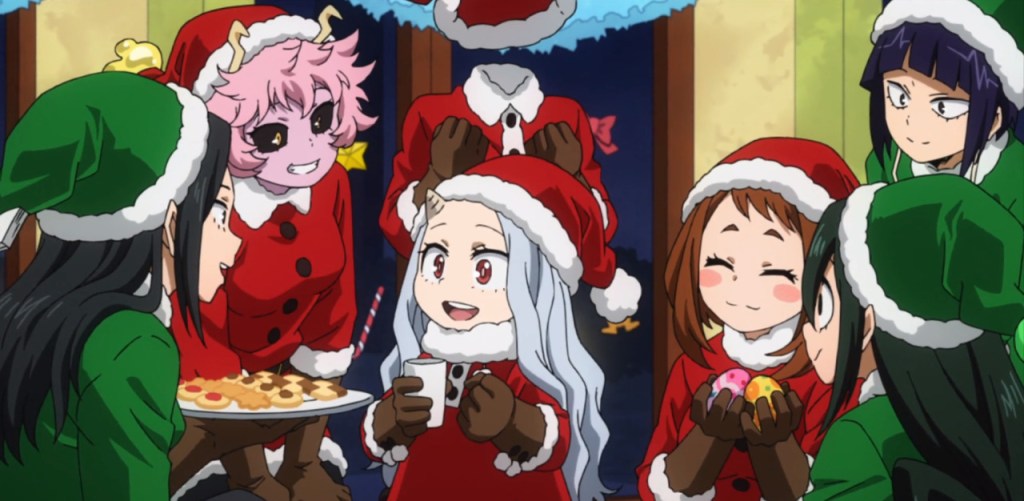
Before the celebration begins, All Might points out how all of these characters have the heart of a hero. Their fighting spirit, commitment to training, and devotion to the heroic ideal are all about overcoming sorrowful or harsh realities and giving them a hopeful turn while finding support in one another. Izuku Midoriya’s hero name, Deku, means “I can do it!” Right from the get-go, My Hero Academia is a story about the training of an able heart, one that can embrace a luminous ideal. This commitment is far-reaching: working nobly, be it at school or in the professional world; behaving honorably towards friends, mentors, heroes, and even sworn enemies; and struggling with intimate questions.
How can I fight my shortcomings? What is the next step? What does this or that person need from me, deep down? What can I do or say to help? This interiorized struggle, paradoxically, allows them to rest and goof around when the occasion calls for it. Strategically, this makes sense: A bow that is always tense breaks. But it is deeper than that: The hero fights for peace. Defending, appreciating, and enjoying that peace when possible is part of the role. And Christmas, the “Silent Night,” is a day for peace.
It is within this framework that our characters have probably asked themselves, “How should we celebrate Christmas?” We should do the same. The Christian also has a high, heroic, far-reaching ideal: to strive to lead henceforth a life “worthy of the gospel of Christ” (Eph 5:1-2). But to do that, the Christian needs to separate the work days and the holy days, so as not to get absorbed in worldly affairs, losing sight of the most important things. What does Christmas have that makes it different from Halloween, Easter, or even Setsubun? The birth of Christ, the turning point of God’s Plan of Salvation.
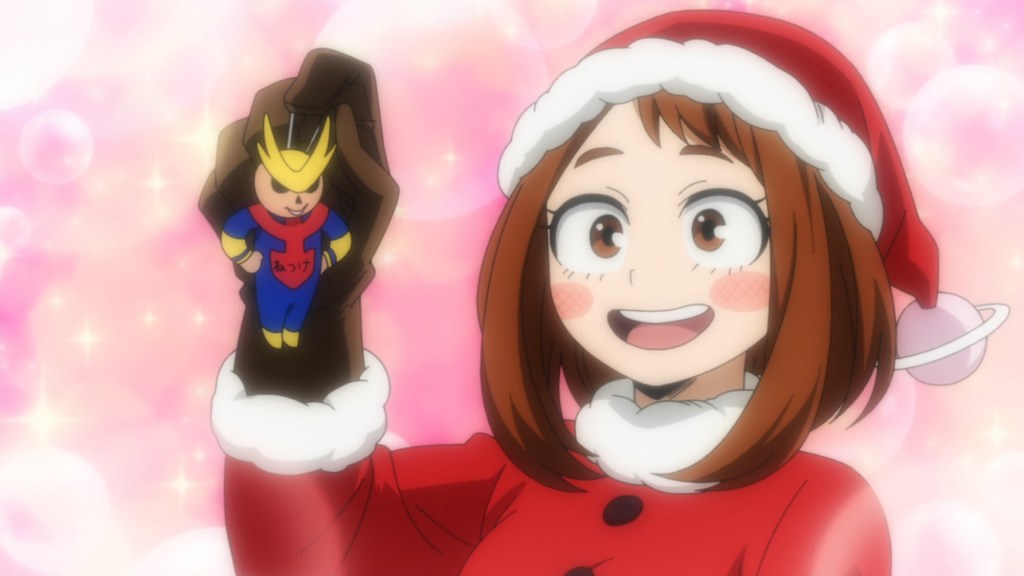
Christmas is a night of hope fulfilled, of childhood and family embraced by God, of peace achieved. It’s like everyone’s birthday all at once, because it is the birthday of Christ. To celebrate it, we need a spirit of peace and joy. But how can joy be achieved when there are causes for sorrow?
Here’s where Thomas Aquinas can give us some insight. One of the most charming and memorable moments in his Summa Theologica is the brief analysis of the remedies of pain and sorrow in Question 38 of the Prima Secundae, which you can find here. There is a wisdom here that shines in MHA’s Christmas episode too—and in other moments of MHA.
Christmas joy and the remedies for sorrow
Grace doesn’t destroy nature, but rather heals it, elevates it, and sometimes builds on it. So, when we ask how to celebrate Christmas in a heroic and joyful spirit, the insights My Hero Academia provides might be helpful for us. The first thing to have in mind is the organization of the celebration itself. Most of you might have traditions you have inherited, but perhaps, like Eri, you have never been able to truly celebrate a festivity, or you have bad memories associated with the feasts. How should one conduct a feast?
In his analytical style, St. Thomas responds to the question in five ways. Firstly, “remedies work by contraries,” and so pleasure assuages sorrow. Sorrow is a wound in our hope, in our desires, in our hearts. It makes us weary. On the other hand, things we know we enjoy are restful. A feast should be full of pleasant moments where everyone bonds together. In the MHA episode, there are delicious food, fun music, games, and surprises that can instill the feeling (possibly overwriting contrary feelings, as the case might be) that the festivity is good, that it is a special day for everyone to enjoy. Preparing them together is a big part of the feast.

The second pre-feast remedy for sorrow is a good cry beforehand: Go through the painful emotions, trying to reach to the peaceful ones. Crying is something Midoriya is known for. This, in my experience, makes many of the younger viewers of MHA prefer Todoroki or Bakugo. How can a hero cry? Well, perhaps it helps! As St. Thomas puts it, “A hurtful thing hurts yet more if we keep it shut up, because the soul is more intent on it; whereas if it be allowed to escape, the soul’s intention is dispersed as it were on outward things, so that the inward sorrow is lessened. This is why men, burdened with sorrow, make outward show of their sorrow; by tears or groans or even by words, their sorrow is assuaged.”
Another remedy St. Thomas mentions is related to this. Our characters are physically resting as they celebrate Christmas. Sometimes, we are in dire need of a rest, perhaps a bath and a good night’s sleep. In fact, this practical combo is precisely what St. Thomas (who is nothing if not a realist) suggests for those who are sad. The body, not just the mind, needs to rest so the whole person can rest. Celebrating allows us not to get caught up in the moment-to-moment daily struggles. We need to let our body know that the time for tension has passed, and now is the time for peace.
But if there’s one remedy that is above all the rest in this context, it is the sympathy of friends. St. Thomas quotes this text from St. Augustine: “When many rejoice together, each one has more exuberant joy, for they are kindled and inflamed one by the other.” This describes the episode to a T. Everyone is here. Everyone knows each other. And everyone knows the weight the others carry. When someone, St. Thomas says, “sees others saddened by his own sorrow, it seems as though others were bearing the burden with him, striving, as it were, to lessen its weight; wherefore the load of sorrow becomes lighter for him.”
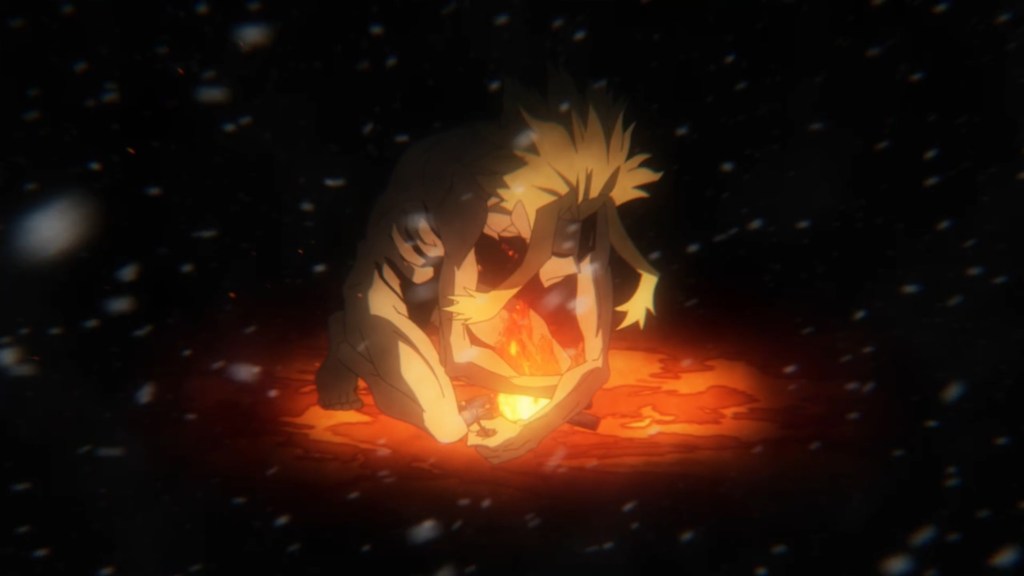
And finally, there is a more mysterious remedy, one that can always be pursued, even when all the others are not available. Not everyone will be surrounded by loving friends this Christmas, or will be able to procure pleasurable things for the feast, or sleep and rest properly. Some people cannot relieve themselves by crying: It is still too soon, or they need to put on a brave face for others, an iconic smile perhaps. But everyone can contemplate Christ in Bethlehem. Everyone can contemplate the truth. When the night is particularly dark, that may even be all one can do.
At the very beginning of the Bible, we see God creating all that exists: light and water, the natural rhythms of the cosmos, the sun and the stars, flora and fauna, and lastly, humanity itself. Afterward, God rests (Gn 1). This is a celebration, a holy day, a sabbath. Through God’s example, we learn that activity is for the sake of contemplation, that there is a permanence that transcends the movements of the world, and that we, too, are called to stop our activity sometimes and celebrate the glory of God, of God’s world, of God’s salvation, achieved in Jesus.
The moment Christ came to Earth, the angels sang and St. Mary contemplated, keeping what she was seeing in her heart. We will find an infinite treasure if we do the same. This is not only the ultimate purpose of celebrating Christmas, but it is also a powerful counterbalance to our sadness—perhaps the most powerful one. God does not always lift our sadness immediately, sometimes not even in this life, but He wishes to change our deepest sorrows into hope and joy, and often He will do so in the face of the greatest tribulations. Many of the persecuted, the outcasts, and the repentant sinners all around the world have rejoiced all of a sudden in the contemplation of divine things and of future happiness.

Contemplating everything around him on the day of the feast, Deku wishes from the bottom of his heart for a future Christmas. So do we. One in which we see together the wonders of Jesus, who came to this Earth for our sake. One in which nobody can remove us from His side. Merry Christmas, everyone!
My Hero Academia can be streamed on Crunchyroll.

- First Impression: Love Through a Prism - 01.17.2026
- First Impression: Oedo Fire Slayer -The Legend of Phoenix- - 01.12.2026
- First Impression: In the Clear Moonlit Dusk - 01.11.2026
