
Have you ever prayed through the night, holding vigil, interceding for someone or some situation? Perhaps as part of a church or youth group event, or perhaps on your own? I daresay that if you’ve been a believer for a while, you probably have. But have you ever prayed through the night for an enemy? I know I haven’t. But that’s exactly what Lady Kou Reirin does in episode 6 of Though I Am An Inept Villainess. Her optimistic nature and humble perseverance may make Reirin a lousy villainess, but she’s a very good enemy—exactly the kind of enemy, in fact, that Jesus calls us to be: the praying kind. Let’s dive in!
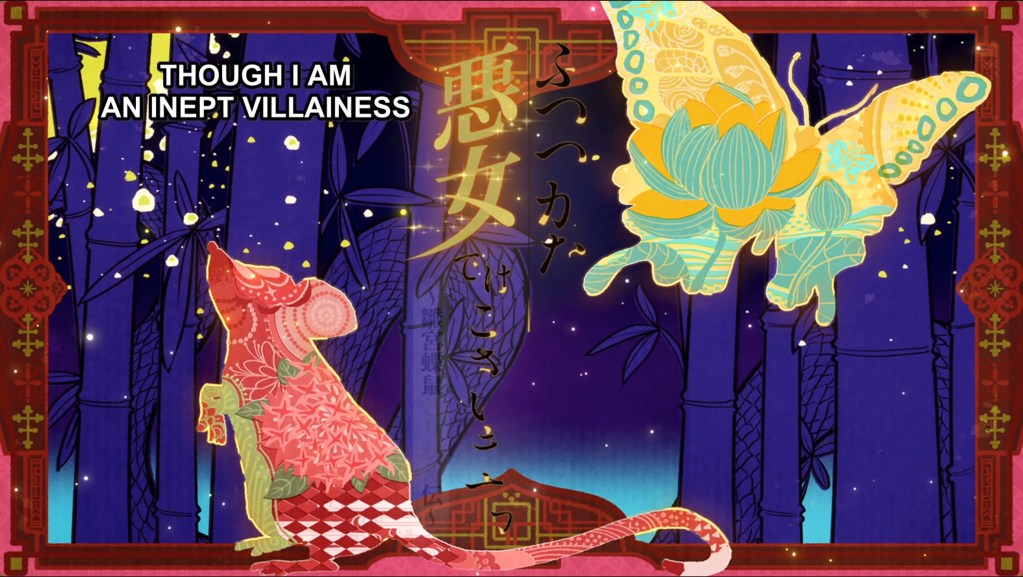
Shu Keigetsu is a villainous, low-ranking court lady with skill in the dark arts of fire who, in the first episode of the series, switches bodies by force with the darling of the Imperial palace, Kou Reirin. And no one is the wiser. Having been cursed with a weak constitution her entire life, Reirin embraces the chance to experience life in a healthy body, and doesn’t mind the fact that she is now treated as an outcast in Keigetsu’s place, even bearing quite cheerfully her enemy’s punishment for having attacked her, Reirin.
Keigetsu, too, revels in living the life of a beloved daughter of the ruling clan, doted upon by all and sundry—at least, until her new weak constitution gets the better of her and her health crashes…hard. Unlike Reirin, Keigetsu doesn’t have the patience, humility, or practical experience to navigate her illness, and soon after refusing Reirin’s help, Keigetsu slips into deathly unconsciousness.
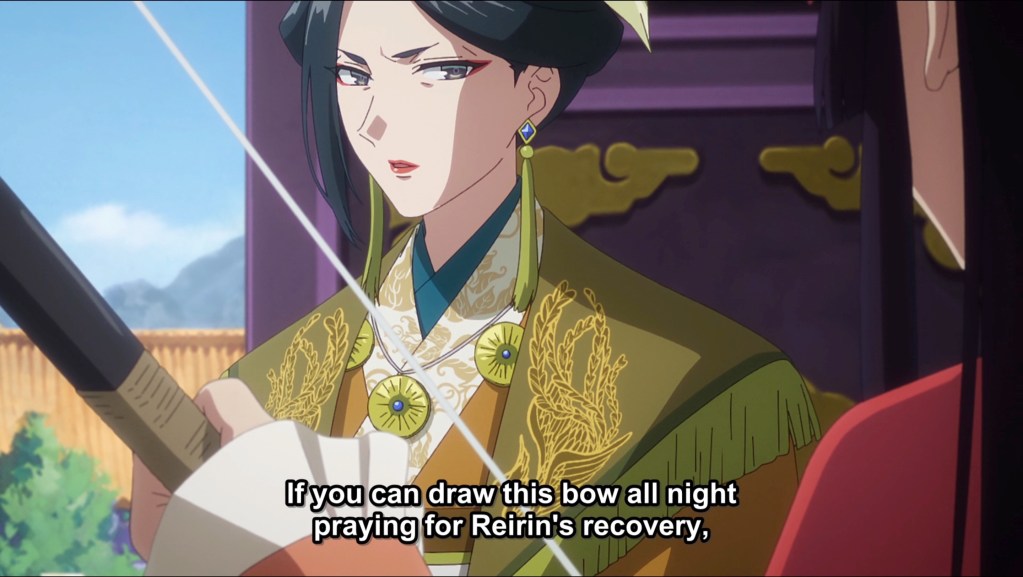
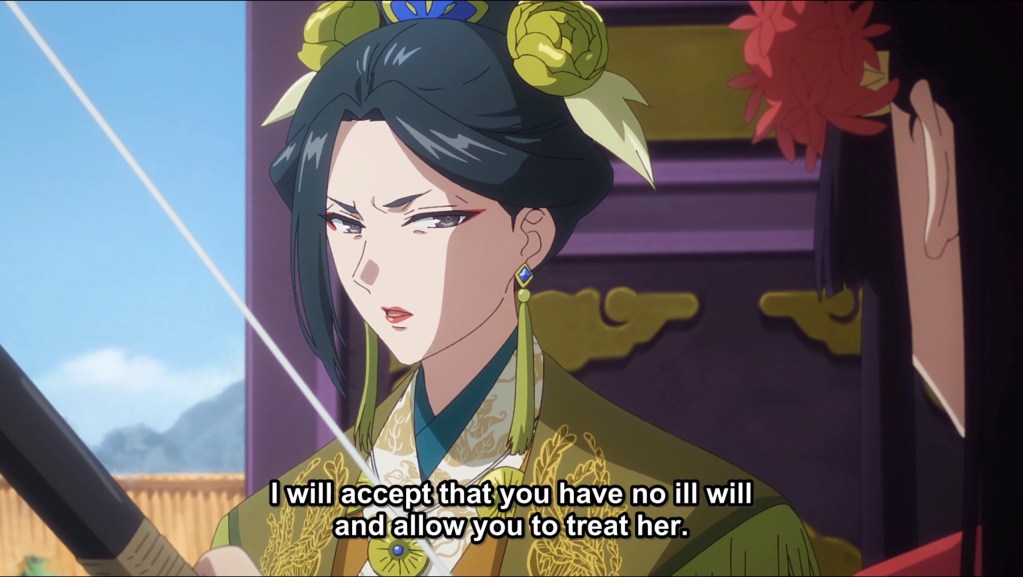
When Reirin learns what has happened, she immediately petitions the Empress and Prince for permission to treat Keigetsu, and is, of course, firmly rebuffed, since, by all appearances, she is the very villainess who assaulted the precious lady but a short while before. But the Empress is cunning and wise, and she offers Reirin-as-Keigetsu a chance to win the trust of the Kou clan: All she must do to prove her sincerity is to draw the supernatural, ceremonial Bow of Warding from the Gen clan all night while praying for the invalid’s recovery, in the ancient rite of the Archery Vigil. Now, this was actually an impossible task for someone from the Shu clan, since their supernatural powers (did I mention this is a historical fantasy?) clash with those of the Gen. But for Reirin’s spirit in the body of a Shu clan member? Maybe, just maybe, it’s a little less impossible.

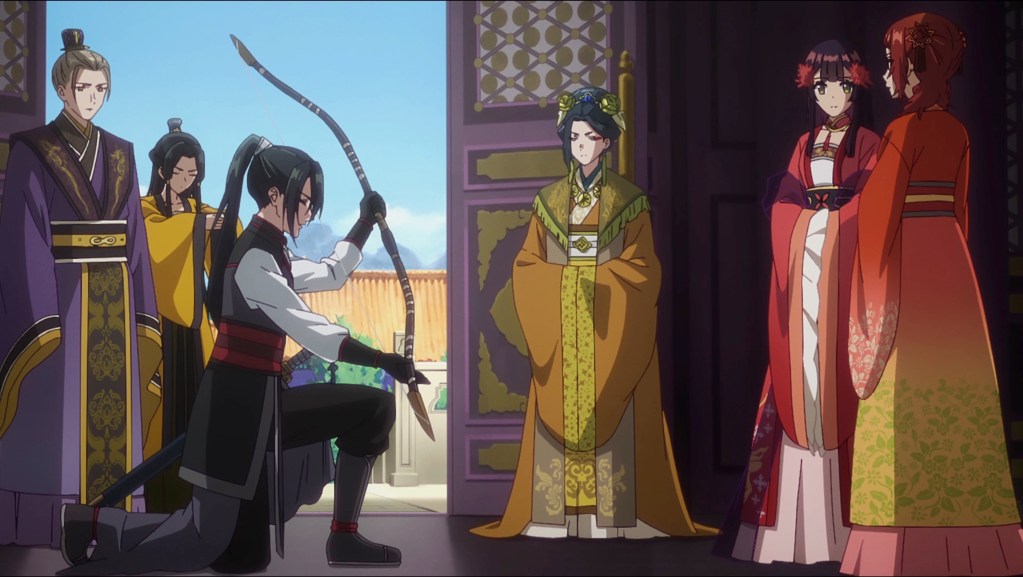
And so Reirin hefts the bow. It is heavy and outsized for her small frame. She lacks experience in archery, and it shows. As the sunny day fades into the chill of night, Reirin’s arrows fall short time and time again. She misses the mark. Her hand begins to bleed, but she wraps it and keeps drawing, her face set like flint toward the target. Her lady-in-waiting comes with food and drink—twice—but Reirin does not pause in her task. The crowd that had gathered to gape gradually melts away as the moon rises, reaches its zenith, and begins to wane. Still, Reirin persists.



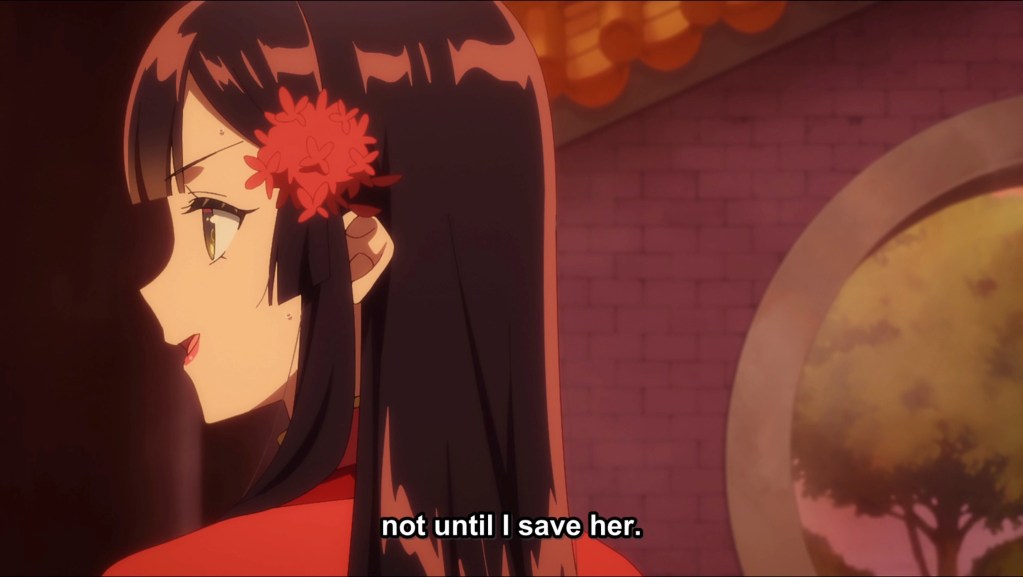

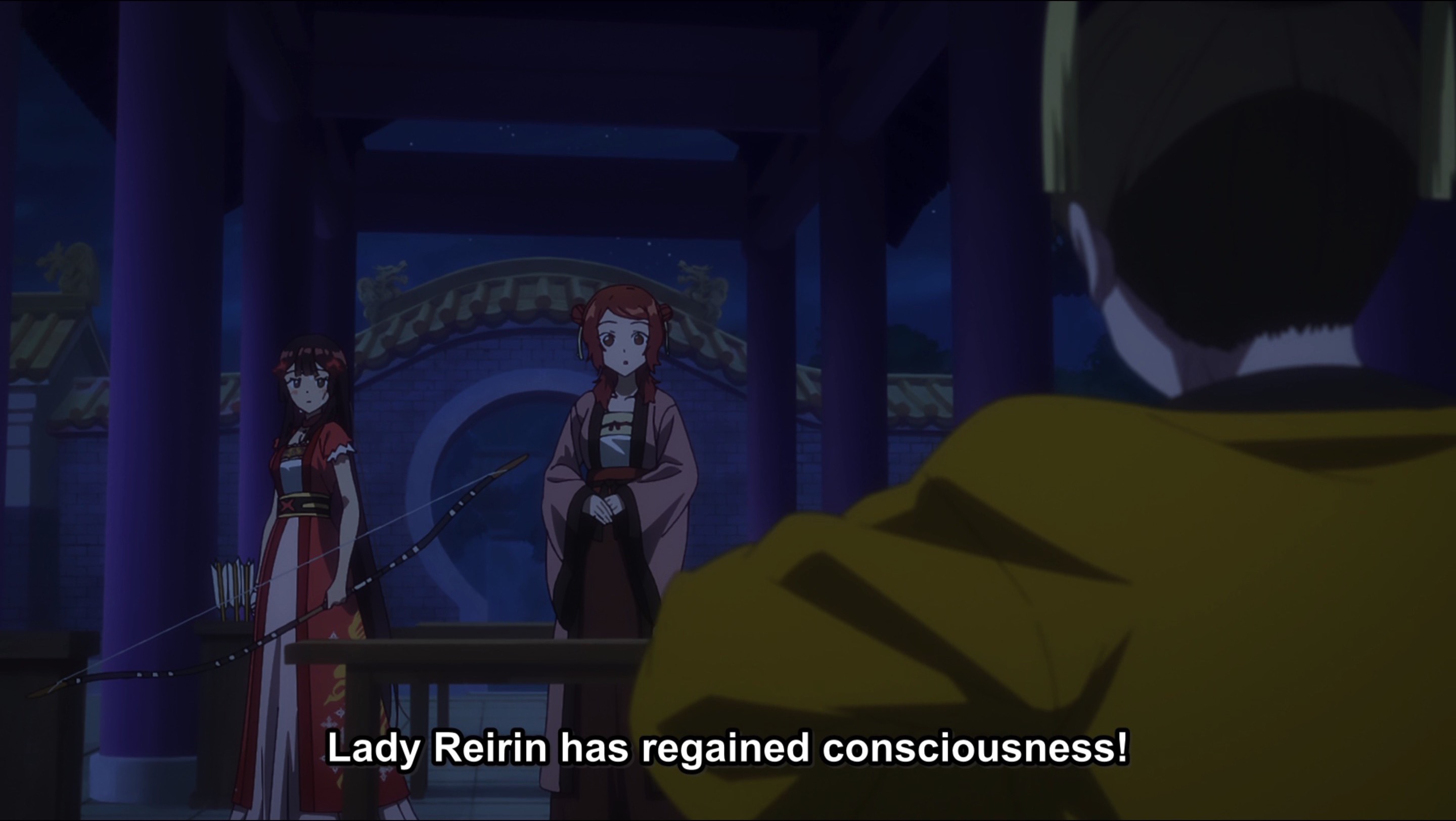
In the dead of night, the Captain of the Prince’s Guard himself arrives and, taking in the signs of Reirin’s weariness, tells her that she has done enough. She has proven her sincerity. In fact, there’s no point in continuing. Then, when a messenger interrupts to report that Lady Kou’s fever is beginning to go down, both the Captain and lady-in-waiting redouble their attempts to persuade Reirin that there’s no need for her to continue the Archery Vigil. They insist that she should tend to her own condition instead.
But again, Reirin persists. And I think this is where it becomes clear that the Vigil is not merely a test of sincerity or the performance of a ritual for Reirin, but that there’s something much greater at stake for her than simply winning the trust of the Kou clan. Because as she draws the bow and reflects upon her last conversation with Keigetsu, Reirin has an epiphany: There are some things that she has not been honest about, neither with Keigetsu nor herself. As she confesses and apologizes, she is filled with gratitude to Keigetsu, and a fresh determination to save her enemy.


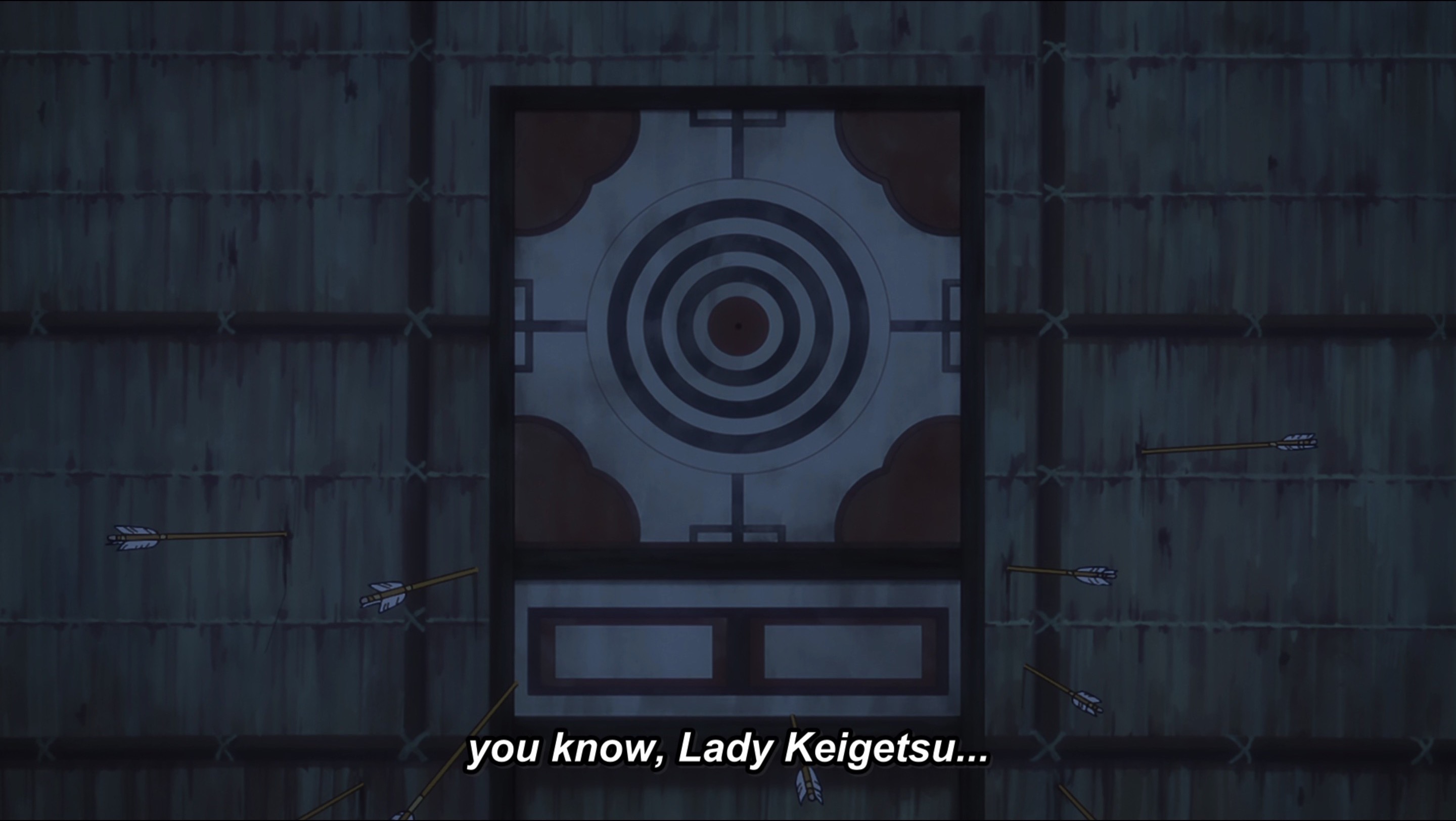

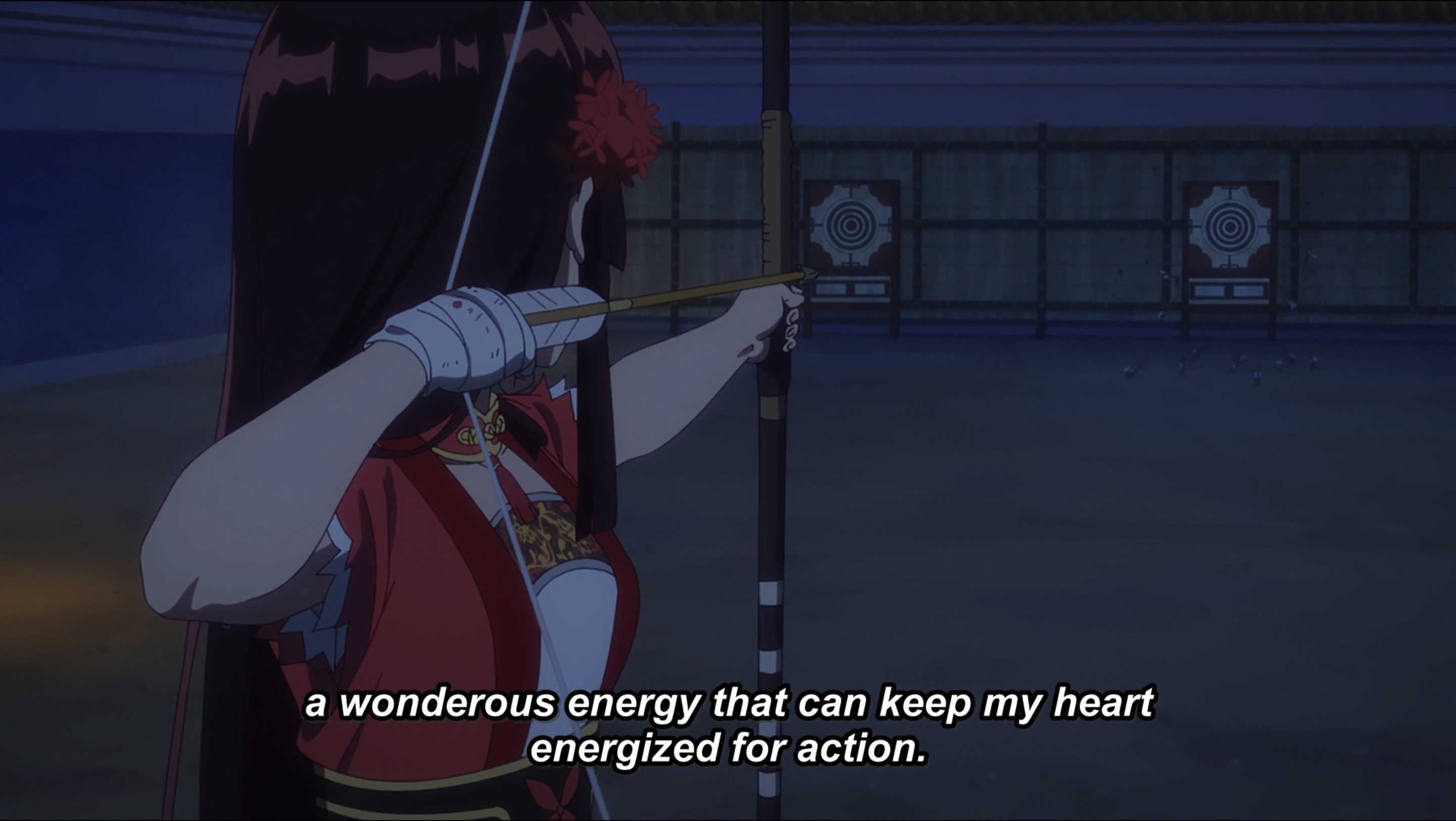
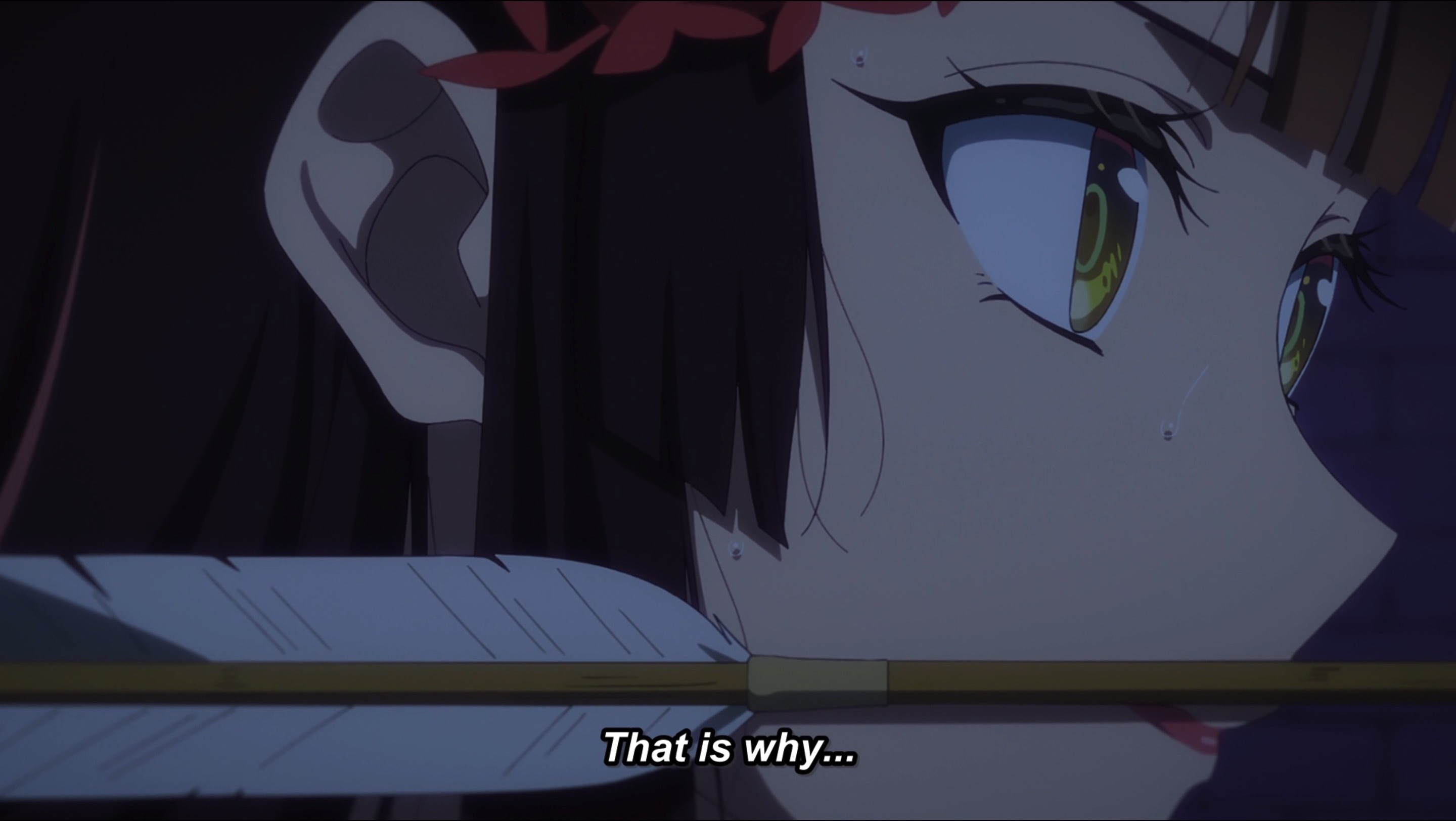

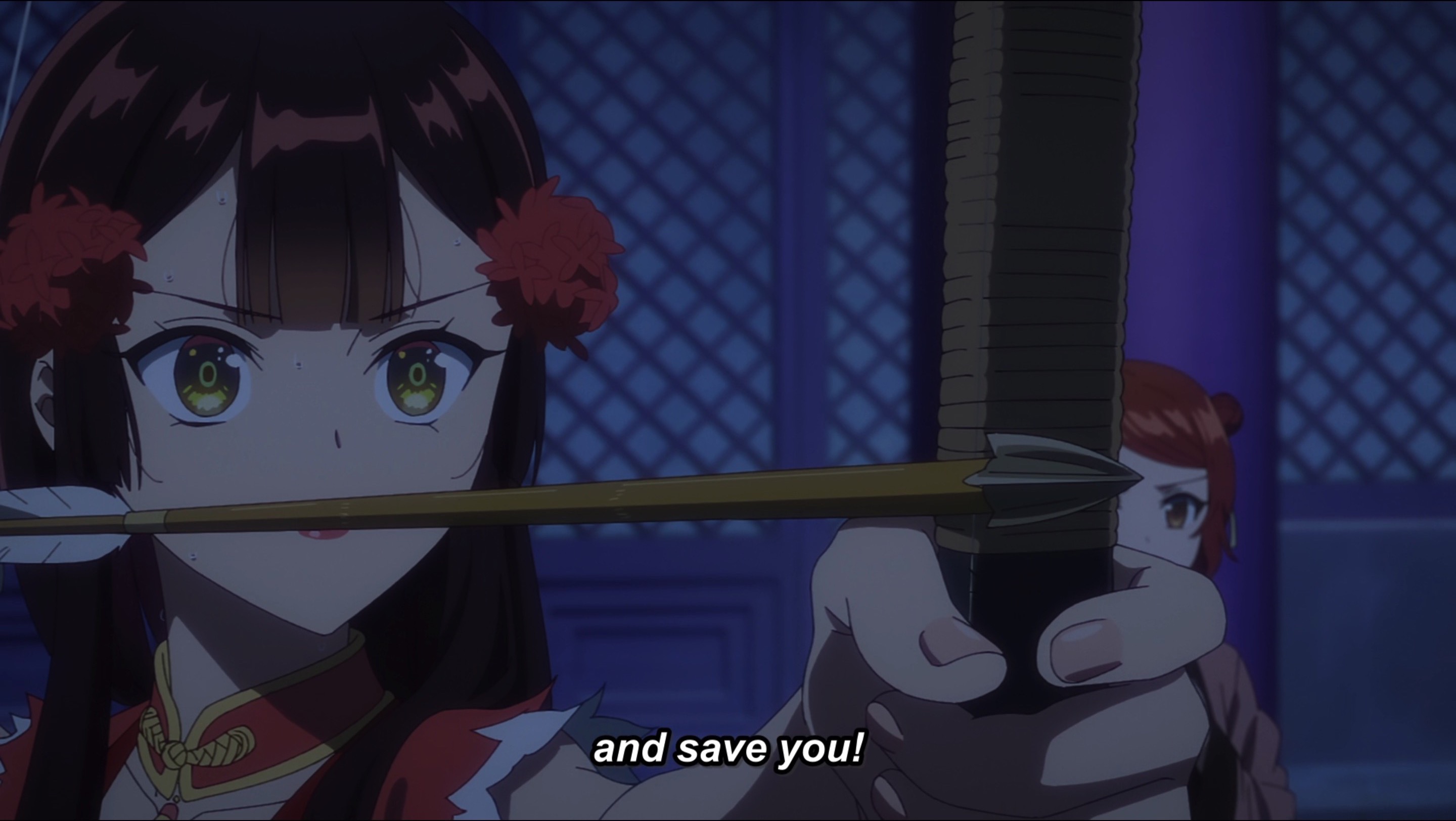
In other words, for Reirin, the Archery Vigil is intercession. She is praying for her enemy.
Jesus charged us to do exactly the same. In the Sermon on the Mount, he challenged the crowd: “‘You have heard that it was said, “Love your neighbor” and “hate your enemy.” But I say to you, love your enemy and pray for those who persecute you…’” (Matthew 5:43-44) and again later, in his Sermon on the Plain, he emphasized, “‘But I say to you who are listening: Love your enemies, do good to those who hate you, bless those who curse you, pray for those who mistreat you…Love your enemies, and do good…’” (Luke 6:27-28, 35).
The call to love our enemies is pretty shocking in itself, but there’s something equally incredible about these passages, namely, the reason that Jesus gives us for why we should do so counterintuitive and selfless a thing. We do it, first and foremost, for our own sakes:
“But love your enemies…Then your reward will be great, and you will be sons of the Most High, because he is kind to ungrateful and evil people. Be merciful just as your Father is merciful.” (Luke 6:35-36)
And also,
“…so that you may be like your Father in heaven, since he causes the sun to rise on the evil and the good, and sends rain on the righteous and the unrighteous. For if you love those who love you, what reward do you have?… So then, be perfect, as your heavenly Father is perfect.” (Matthew 5:45-46a, 48, italics added)
In other words, if we’re struggling with that age-old question of sanctification and how to become more Christ-like, Jesus is giving us here a really clear, straightforward starting point: We can begin by praying for our enemies—those who oppose us, offend us, pick arguments with us, mistreat us. Those who, like Keigetsu, steal from us, frame us for their own wrongdoing, or treat us with jealousy, selfishness, or entitlement. Praying for these ones is how we take a step along the way of becoming “perfect as [our] heavenly Father is perfect.”
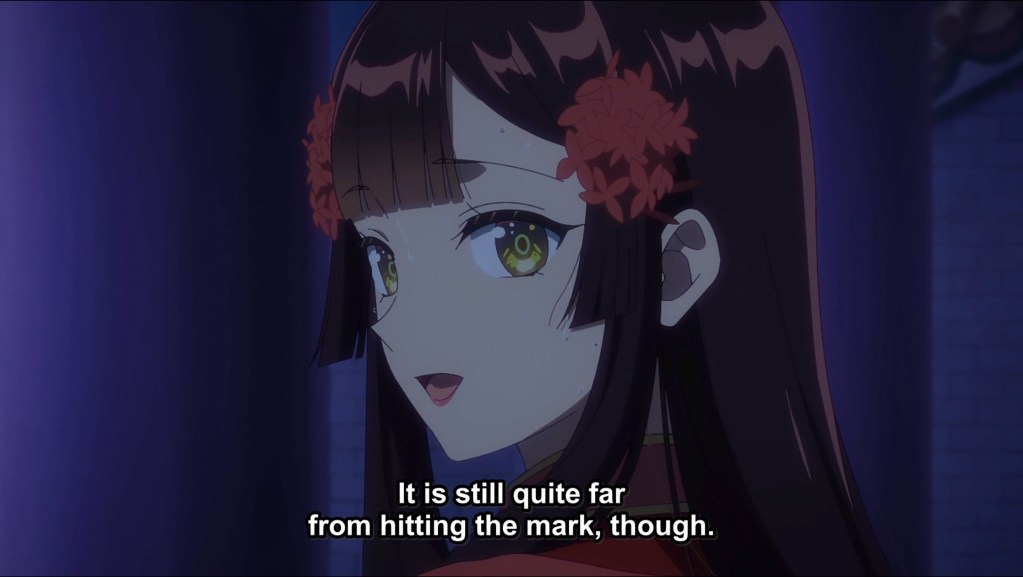

We see this happening with Reirin and the revelation she receives in the midst of her vigil. Prayer is not just speaking, after all, but listening, too. It is reflecting and being open to seeing the person or situation we are praying about with fresh eyes, with God’s eyes. That’s exactly what Reirin gains that night: fresh eyes to see herself, her life, and her enemy. And what she sees, or rather, realizes, brings her to a place of confession, which leads to deeper freedom and a sense of peace that she has longed for, which in turn energizes her and fills her with joyful perseverance to continue the task at hand. She is being transformed as she intercedes for her enemy.
This is reason enough in itself to follow Jesus’s challenging injunction, isn’t it? But Jesus also speaks about rewards, and ones that will be great! Now, this could be the precious reward of sanctification itself, of becoming more Christ-like, like sons (that is, heirs) of God, but it could also be something more—we’ll find out one day! For Reirin, I would speculate that there is a further reward beyond her own transformation, as I’m convinced by certain hints and details that this vigil is the turning point that will lead not only to her regaining her body from Keigetsu, but also to gaining full health in that body, for the first time in her life. Again, though, we’ll have to wait and see!
Reirin’s story gives us another clue, too, as to why Jesus gave us such a difficult assignment. And that’s because it shows us what happens, in spiritual terms, while Reirin intercedes. It turns out that Keigetsu has actually been suffering under a curse, and is being hunted in her feverish nightmares by hideous evil eyes that are poised to consume her. But in the critical moment, the evil eyes suddenly blink out, one by one, as light cuts through the darkness and a vision of Reirin reaches out to grab Keigetsu’s desperate, uplifted hand, drawing her into the light. In this very moment at the archery range, Reirin has loosed the arrow that at last flies true and strikes the bullseye, fulfilling her vigil.

















This is a picture of intercession as spiritual warfare. Although he doesn’t say so explicitly, I think Jesus may have had this in mind, too, when he called us to prayer. What’s more, the imagery in the animated sequence reminds me of the picture that Jude paints as he exhorts the faithful to “maintain yourselves in the love of God… [and] have mercy on those who waver; save others by snatching them out of the fire; have mercy on others, coupled with a fear of God, hating even the clothes stained by the flesh.” (Jude 21-23) Reirin’s merciful intercession for her enemy snatches Keigetsu, who has been playing with the dark arts of fire her whole life, back from the evil eyes into the light, even as the woman’s clothes and body are filthy. Jude’s description has stuck in my mind since childhood, but I could never imagine how exactly we were to snatch people from the pit of fire. But maybe this picture of Reirin’s vigil offers an answer, at least in part: Start with prayers of intercession.
There is one final insight for us in this episode, and it has to do with Reirin’s approach to the vigil. If we remember, the vigil wasn’t Reirin’s idea; it was the Empress—the greatest authority in her life—who challenged her, just as for us, it is Jesus who sets the challenge. But here’s the key: Reirin doesn’t respond with an attitude of long-suffering and determination to persevere, in a kind of “I’ll show them!” moment; nor is hers a demeanor of submission and obedience, a bowing to authority. Instead, as we can see from her expression and hear in the tone of her voice, she relishes the challenge! She is excited to try something so impossible that it would be a miracle if she succeeded.




See how her eyes twinkle in anticipation of the challenge! And then later that night, following her epiphany as she persists in pursuing mercy toward her enemy, Reirin’s sense of exuberance only intensifies!


What if we took the same approach to this impossible commission of Jesus’s? Instead of feeling overwhelmed and subdued by it, or gearing up to discipline ourselves into obedience; and most certainly instead of treating it like a ritual or performance to be completed; what if instead we saw here an opportunity to begin walking in impossibilities, just like Jesus promised us we would if we had faith? Because here’s the thing: it’s not that we pray for our enemies out of our own will and desire, and then we gain some ground towards becoming perfect like our Father in heaven. It’s that the only way to fulfil Jesus’s challenge is to do so by faith, which we can only receive from God himself. Only the mind renewed by the Word and Spirit of God himself can utter words of mercy, love, and blessing over those who have harmed us, just as God himself has spoken over us, even while we were still in opposition to him. In this sense, one of the most difficult tasks Jesus ever assigned us is actually an exciting adventure that, by its very nature, is guaranteed to draw us closer to God. Now, isn’t that something to relish?!
There’s actually a ton more to say about this series, and even about Reirin’s vigil in this episode, but I expect more will be revealed in coming episodes, so I will leave it at this for now. But hopefully this brief sequence has been enough to pique your interest in the inept villainess, who is, I would say, the standout Best Girl of the season, and a character guaranteed to inspire! (As a side note, this makes two fantastically rich series in a row for director Mitsue Yamazaki, who also directed and created one of our favorite series in recent years here at BtT, Zenshu! She’s one to watch, that’s for sure!)





Mercy blesses the merciful as well as the receiver of mercy!
