
“Pleasure” can have the feel of a dirty word sometimes in church culture, like it’s dangerously indulgent and carnal, or tainted with innuendo. But God himself takes pleasure, and he created us to do the same. In fact, he even designed it so that pleasure and delight would be a gateway to one of the most important blessings in life: relationship. Nothing demonstrates this better than the rather unusual anime, ’Tis Time for “Torture,” Princess. So let’s dive in!

The title may sound a tad risqué, but ’Tis Time for “Torture,” Princess is actually a pretty heartwarming series. The eponymous Princess, who goes simply by Hime, has been raised with single-minded purpose to excel as a knight and become the next leader of her kingdom. But then one day, her kingdom’s mortal enemy, the Hellhorde, outwits her and manages to take her prisoner. From that moment on, the Hellhorde seek to extract military and state secrets from our plucky battle princess, who suffers daily at the hands of the Grand Inquisitor, Torture Tortura, and her many minions, who make her life a living torment…or maybe not? As it turns out, the kinds of things the Hellhorde consider to be torture would actually be right at home on Maria Von Trapp’s list of favorite things:
Tearing fresh warm toast, and toe beans on big cats;
Gaming with new friends, and late-night soupy snacks;
Sports day, beach episodes, cakes made with care,
These are a few of the tortures she bears!
In short, they are “torturing” her with opportunities to find pleasure in simple things, making ’Tis Time for “Torture,” Princess fundamentally a gag series.
So, is it all just a joke then? Yes and no. For Hime, these things really are torture, at least at first. And when she “caves in” to them, enjoying these little pleasures, she is wracked with guilt and shame—aided in part by the condemnation of Ex, her self-righteous talking sword, at least until he starts to succumb too. In other words, for Hime, all these little delights are temptations. They beckon her into a way of experiencing life that she has been raised to believe is not right. She has been trained to be efficient, productive, and focused; to never indulge in anything—food, play, happy emotions—that does not directly serve to forge her into a strong leader and accomplish the goals she has been set since birth. She has been raised to despise pleasure as a base distraction from what is really important in life: to struggle, to sacrifice, to attain victory, and stay true to her calling as the kingdom’s shining knight and savior.

Does any of this strike a chord? Sadly, this way of thinking weaves throughout Christian history and culture, and before it, Jewish culture too: This idea that we can live righteous, worthy lives through self-discipline and strict adherence to rules. This was a key element of Judaism as it developed during the 400 years of silence between the time of Malachi and that of Matthew, as the legal scholars and teachers—the Sadducees and Pharisees—piled more and more laws and regulations onto the Levitical laws outlined by God to Moses. They did it to build a kind of protective wall around God’s law, creating extra layers of prohibitions with the aim of guarding against sin, with many believing that if just one scholar could live a single day without transgressing, the Messiah would be compelled to come.
Resurgences of this mindset have plagued Christianity, too. We know that grace saves us, but then, gradually, perniciously, we find ourselves behaving as if we now need to keep the rules in order to remain in God’s favor. We have our lists of things that we will not do, say, watch, read, engage in, or vote for, and we can be more passionate about these things—or rather, against them—than about God himself. We judge our brothers and sisters, leaders and followers, who do not hold to the same set of “dos and don’ts” and often condemn them in our hearts or even publicly. We decry “mainstream culture” as godless, corrupt, and dangerous, and withdraw into a Christian bubble. Now, don’t get me wrong, it’s important to have boundaries. But those boundaries in and of themselves are not righteousness—they do not draw us nearer to God. And when we trust in our rules and regulations first and foremost, it actually distances us from God, by placing pleasure and delight implicitly in opposition to self-discipline and righteousness.
Yet, pleasure is actually a key component of God’s will and design; in fact, there are a few places in both the OT and NT where the Hebrew and Greek words for pleasure are translated as God’s ”purpose“ or “will,” or as being “good.” (Here are a few examples.) Far from being a corrupt tool of the enemy, pleasure is something God himself both experiences and seeks, infusing it with godly purpose and potential. Pretty wild, right?
It gets better. Throughout scripture, God takes pleasure not only in his own will—showing us that he actually enjoys being Creator, Savior, Comforter, Redeemer, Defender, Healer, Provider, and everything else that he is to us—but in us too. He takes pleasure in his people. This is because pleasure is vital to relationship—to friendship and family. This is something that Hime’s story points to as well.

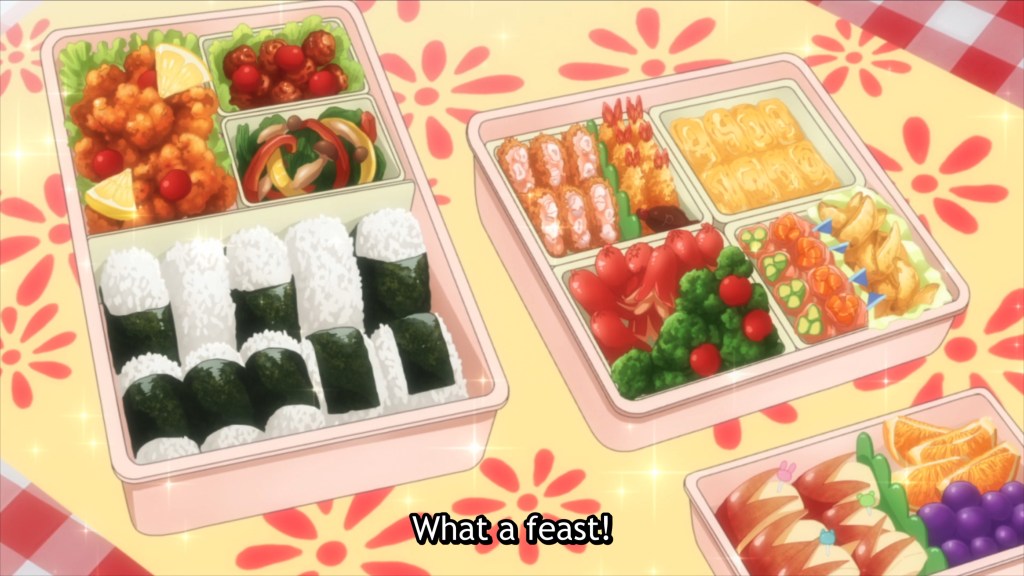


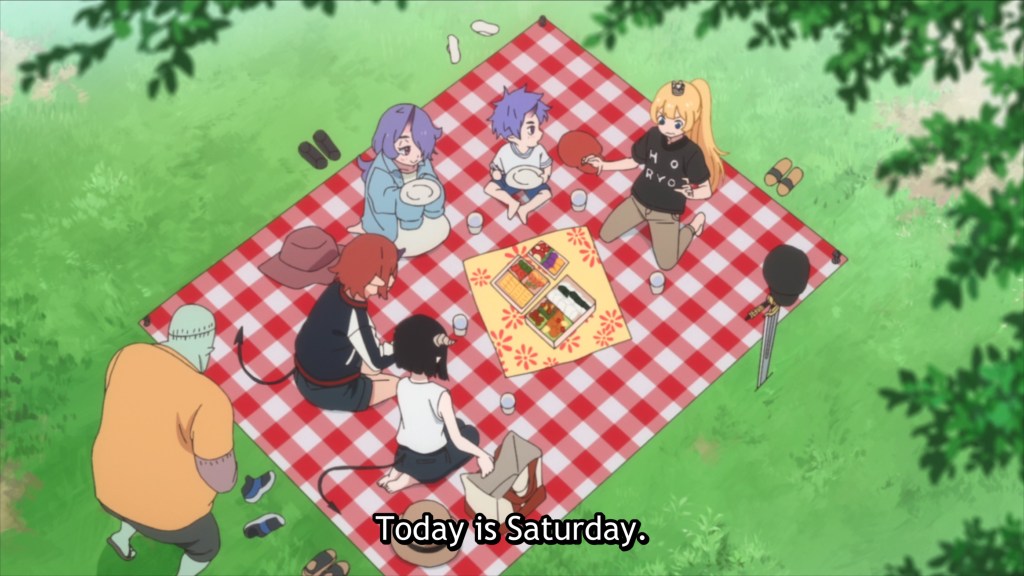



You see, Hime makes her first-ever friends through her various “tortures,” through the tiny pleasures of breaking bread together with Torture-san—literally tearing apart warm, buttered toast and slurping midnight udon and delectable xiao long bao—and playing video games with oni girls Inki and Youki. The giantess Master Mama lowers Hime’s defenses with hot spring pampering and a comforting embrace, and Krall the tiger-girl, through close encounters with cute bear cubs, paw pads, and sleeping cats. Meanwhile, the Hell-Lord’s daughter, Mao-Mao, is so intensely adorable that, well, who wouldn’t spill a few beans to play with and dote on her?! Each introduction to a new delight is also the first step into friendship for the previously solitary heroine. Pretty soon, there doesn’t need to be the divulging of state secrets any longer for Inki and Youki to play video games with Hime, while everyone enjoys the school sports day together, cheering for Mao-Mao and sharing a delicious picnic, without any thought of ”torture” because, well, it’s Saturday and who works on weekends? They are now doing life together. Forget trauma bonding. Learning to delight in things together is the true road to friendship!
But it goes even further. One day, after Hime’s usual “torture” of relaxing at the onsen with Mama, the matronly giant invites her for a walk beneath the clear night sky, luring Hime with the promise of ice cream. This walk is crucial because, for the first time, Hime herself becomes the object of delight. Yes, Mama talks about the thrill of going for a walk at night, when everything looks so different, but this is not really what motivates her invitation. Instead, Mama simply wants to spend more time with Hime, and even suggests a detour so that they might wander together a little longer. For Mama, Hime has become the object of affection, and spending time with her, the source of pleasure.









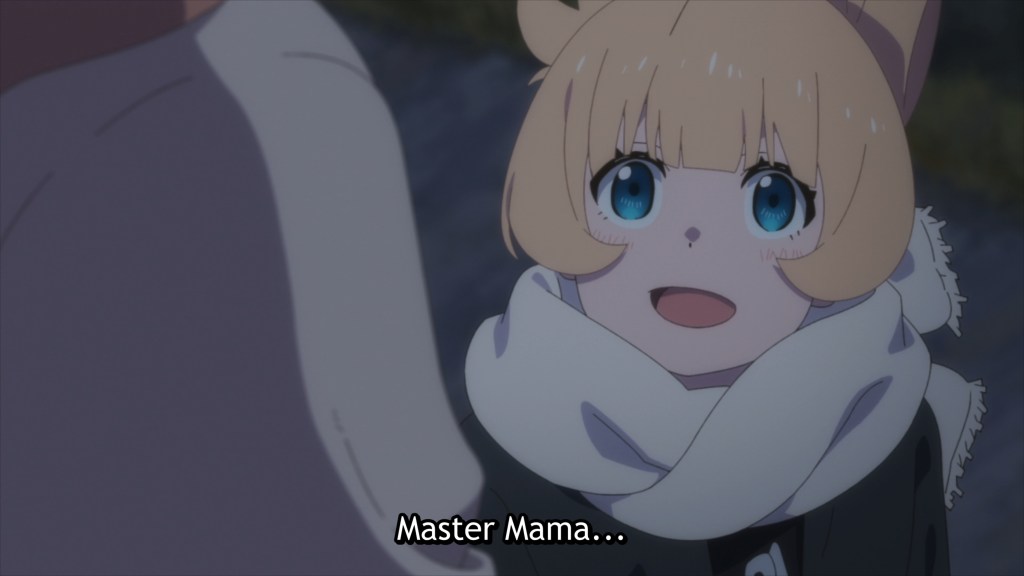
And here’s the key: Mama delights in Hime because something magical has happened—they’ve become family. As the two gaze up at the Winter Triangle, a constellation of two large stars and a small one, Mama and Hime give them new names to complement their official Latin titles: The big stars are Mama and Torture, and the little one is Hime. Under their care, Hime at last gets to be a child—something she has been denied her entire young life. And what’s more, she gets to enjoy her childhood, starting with this moment, wandering peacefully with Mama and wishing on a star. Hime’s introduction to the art of taking delight in everyday things is the key to unlocking friendship and family for her—and it is for us too.
It’s all right there in the way that scripture uses the terms most commonly translated as “take pleasure in” or “delight in”—chaphets and eudokeo—words that, time and again, are used to describe God’s attitude toward relationship with humanity. For instance, in the Old Testament, the Hebrew word chaphets is used in a number of Psalms to convey God’s pleasure in his people (149:4), in seeing them prosper, and in blessing them (35:27), and his delight in those who trust him, placing their hope in his mercy and love (147:11). All these things are hallmarks of friendship, right? We love to see our friends happy, and to know that they recognize our care for them.
It gets even better in the New Testament. Four times in the gospels, God is quoted using the Greek word eudokeo about his Son, Jesus: “This is my Son, in whom I am well pleased/delighted.” Just think about this for a moment. We can probably count on two hands the number of times in scripture where the voice of God the Father is audible to a crowd, and half of these are describing his pleasure in his Son! Repetition in scripture is a form of emphasis, telling us to pay attention and seek out what treasure may be found. The treasure here is certainly the beautiful truth of God’s love for his Son, his approval of Jesus’s mandate on Earth; but could it also be that our Heavenly Father is teaching us something about the importance of delighting in one another, and about the joy that is seeing and knowing another person for who they are, and telling them what a pleasure it is to know them?



Could there also be something here specifically about family relationships, and the pleasure that God intends for family to unlock—not just natural family, but found family too? Paul talks about the eudokia—or “satisfaction, delight, good pleasure”—of God in adopting us as children into his family through Jesus (Ephesians 1:5). This is significant, because it extends the pleasure of God for his own Son—his natural family, if you will—to us, his “found family,” the ones for whom he rewrote the laws of life and death so that he might make our adoption legal, and for whom he bore the pain of temporary separation from his actual Son, to pay the cost of bringing us into his household. How beautiful, then, that Jesus himself tells us that it is his Father’s good pleasure to welcome us into his family and give us his own Kingdom as an inheritance, protecting us against anything we might fear (Luke 12:32). God has chosen to make us family, and it gives him pleasure to do so. Like Mama with Hime, he whispers to us, “Let’s walk together a little further tonight; the stars are so bright!”
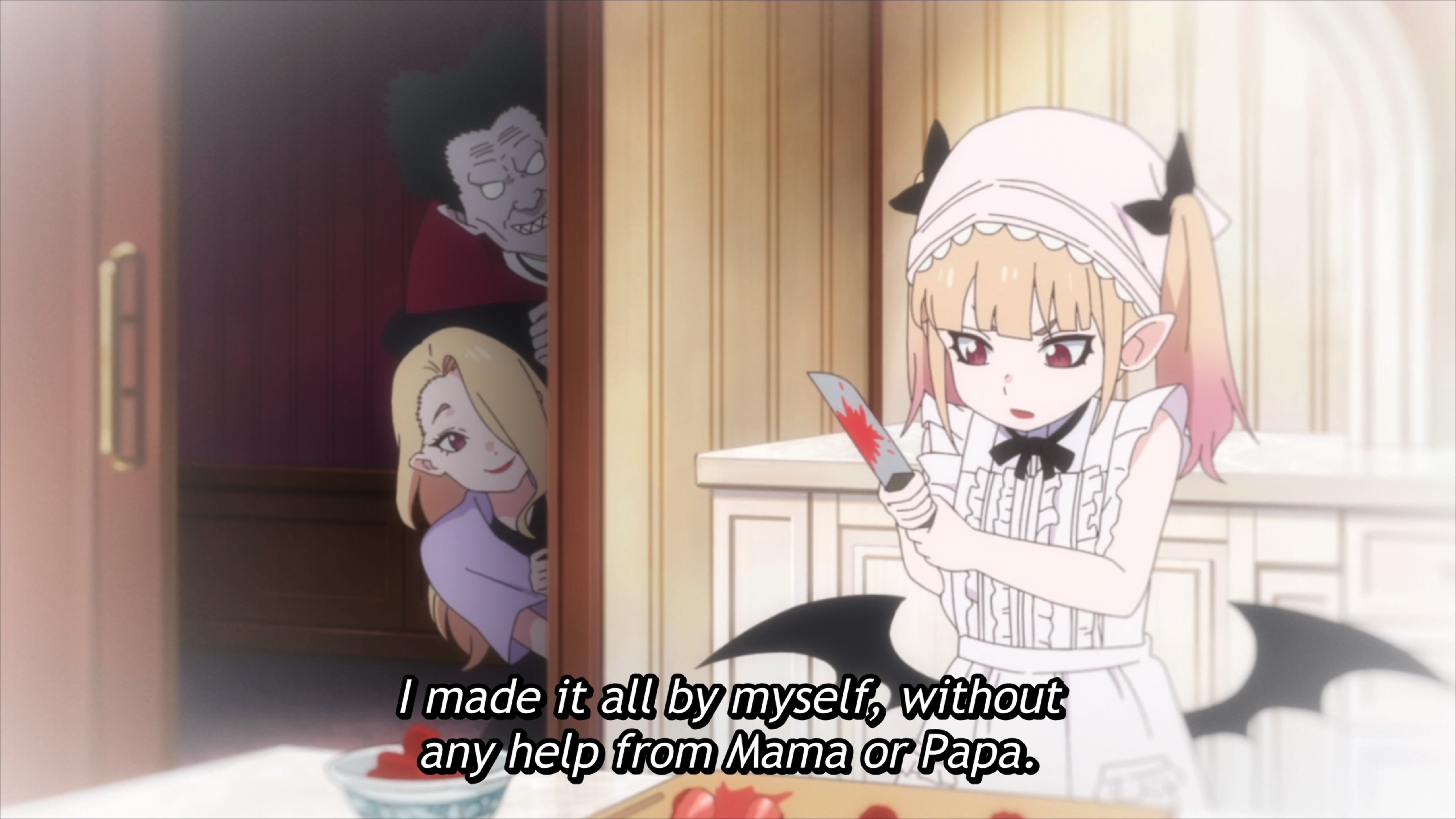
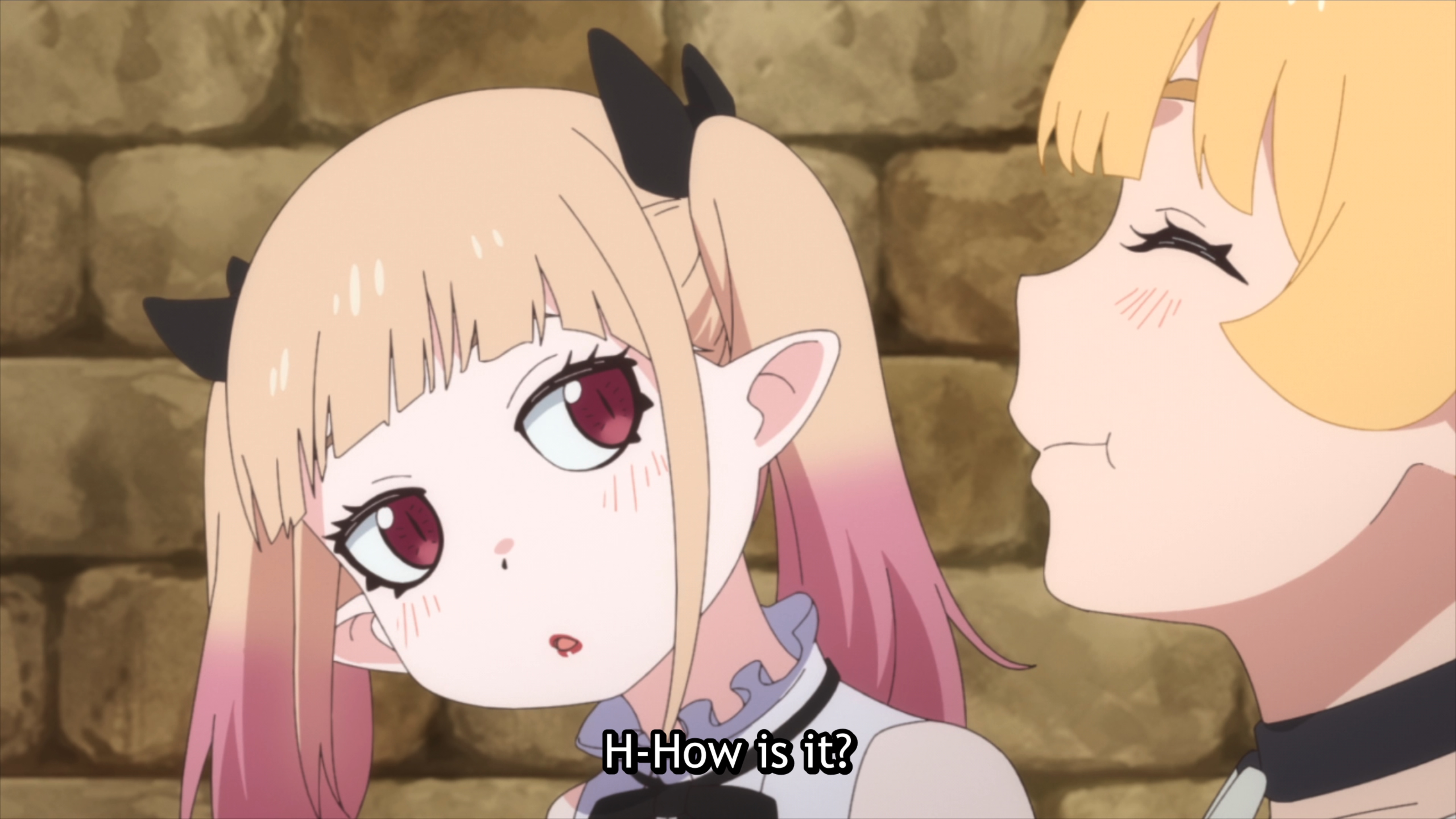
There’s still one final revelation to explore here—both in scripture and in Hime’s journey with discovering delight. You see, Hime is transformed by delight, not simply through gaining friends and found family, but because it changes how she sees the world and others in it. The change in her is made clear in the episode immediately after the starry walk with Mama, when we see that Hime has become someone who can extend this same gift of being delighted in, as Mama delights in her, to someone else. That is to say, if in episode 8 Hime is the little star, the child in the family, by episode 9, she’s become a big sister, welcoming a younger, but equally stressed-out, child into the warmth of family. This kid just so happens to be the daughter of the most malicious noble house among the Hellhorde, Vanilla Peschutz.
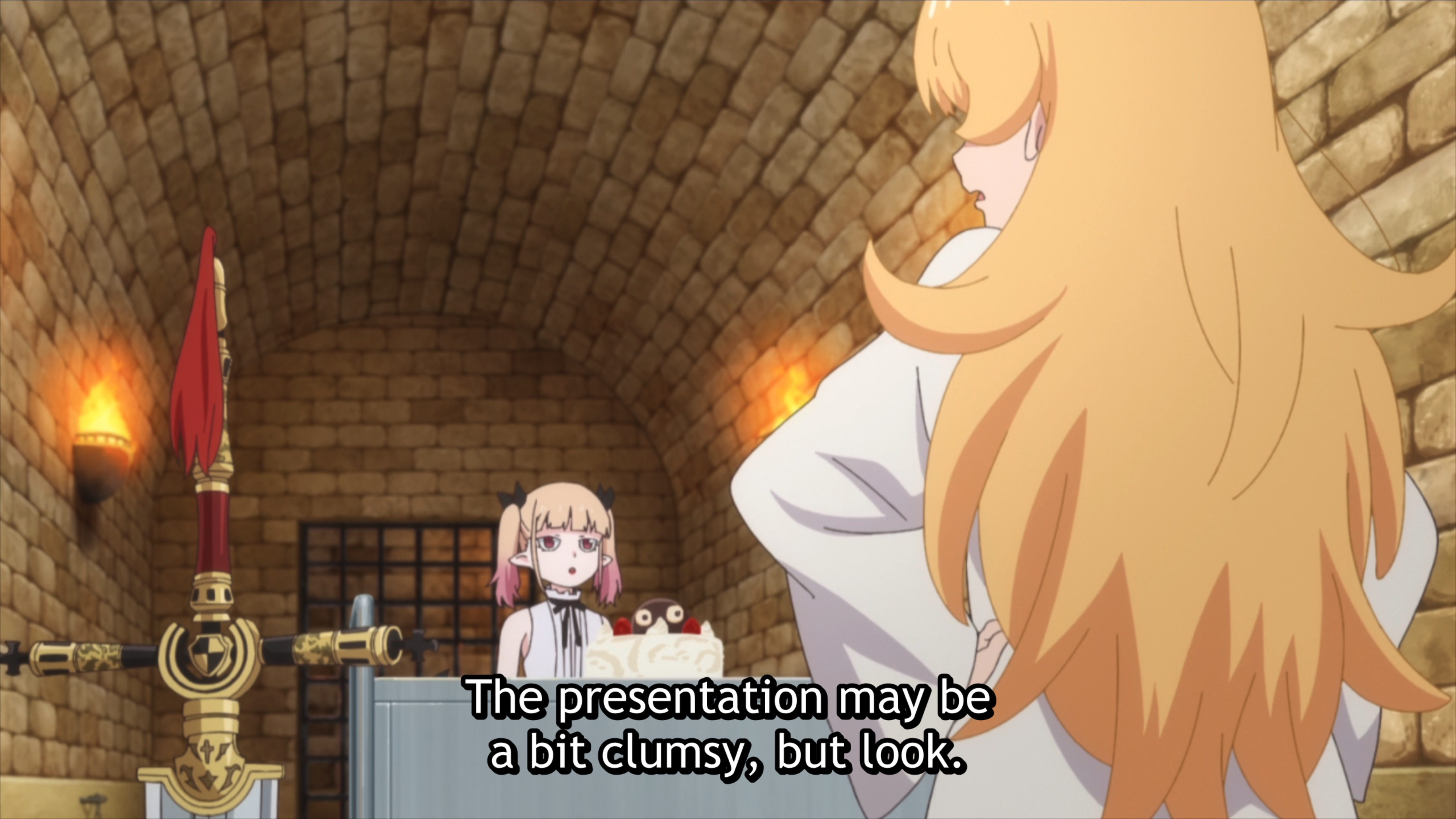
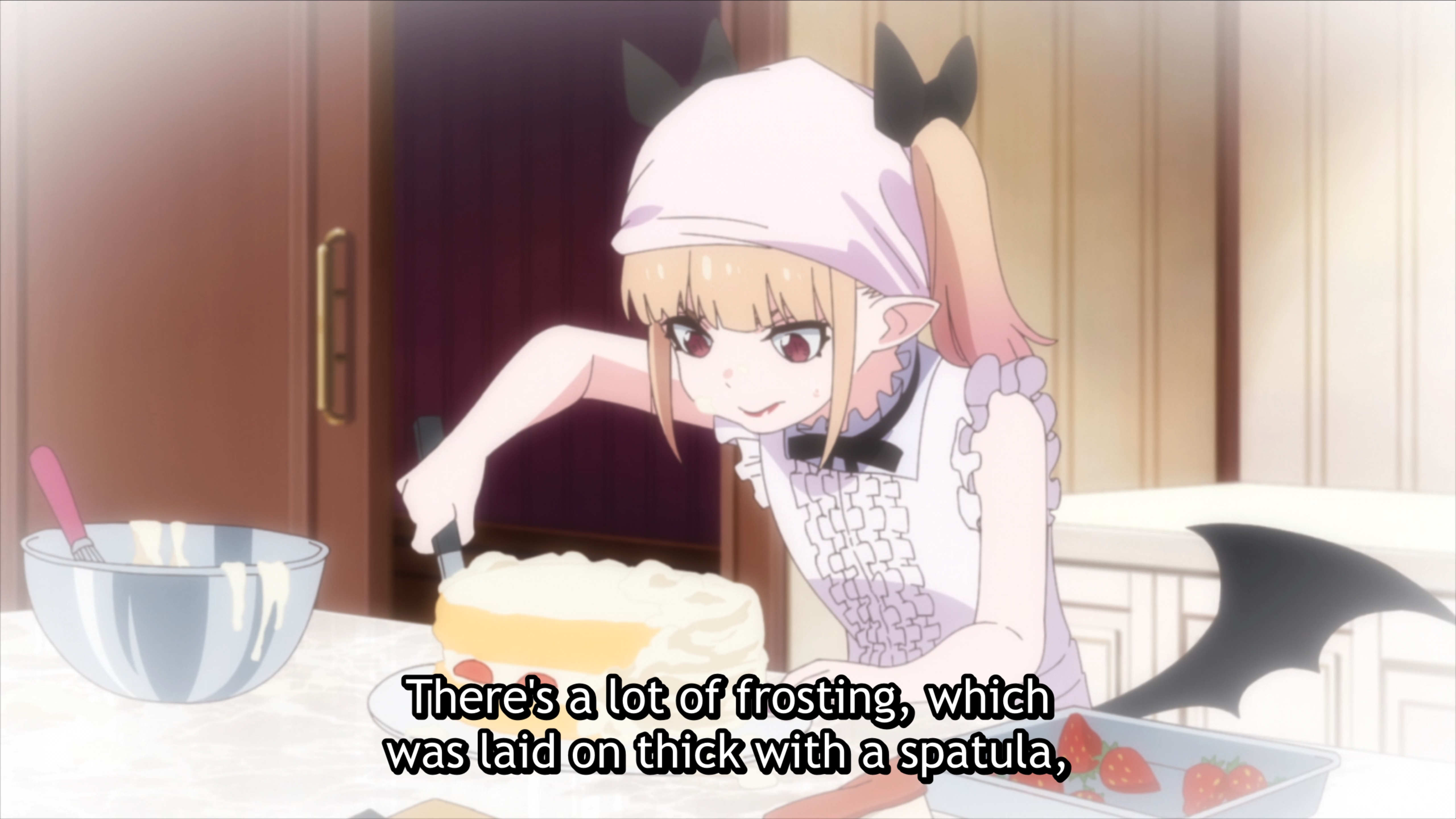
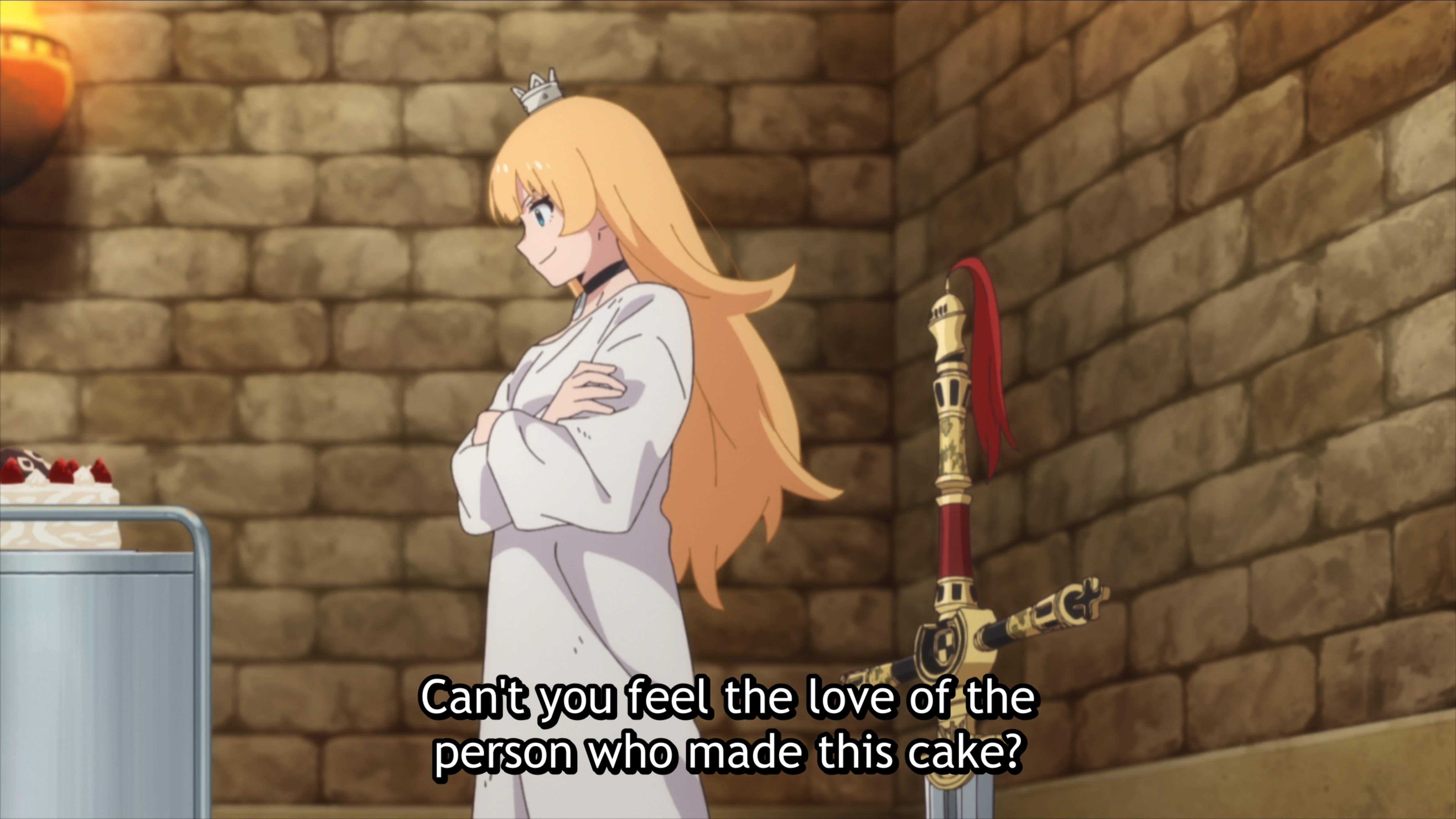
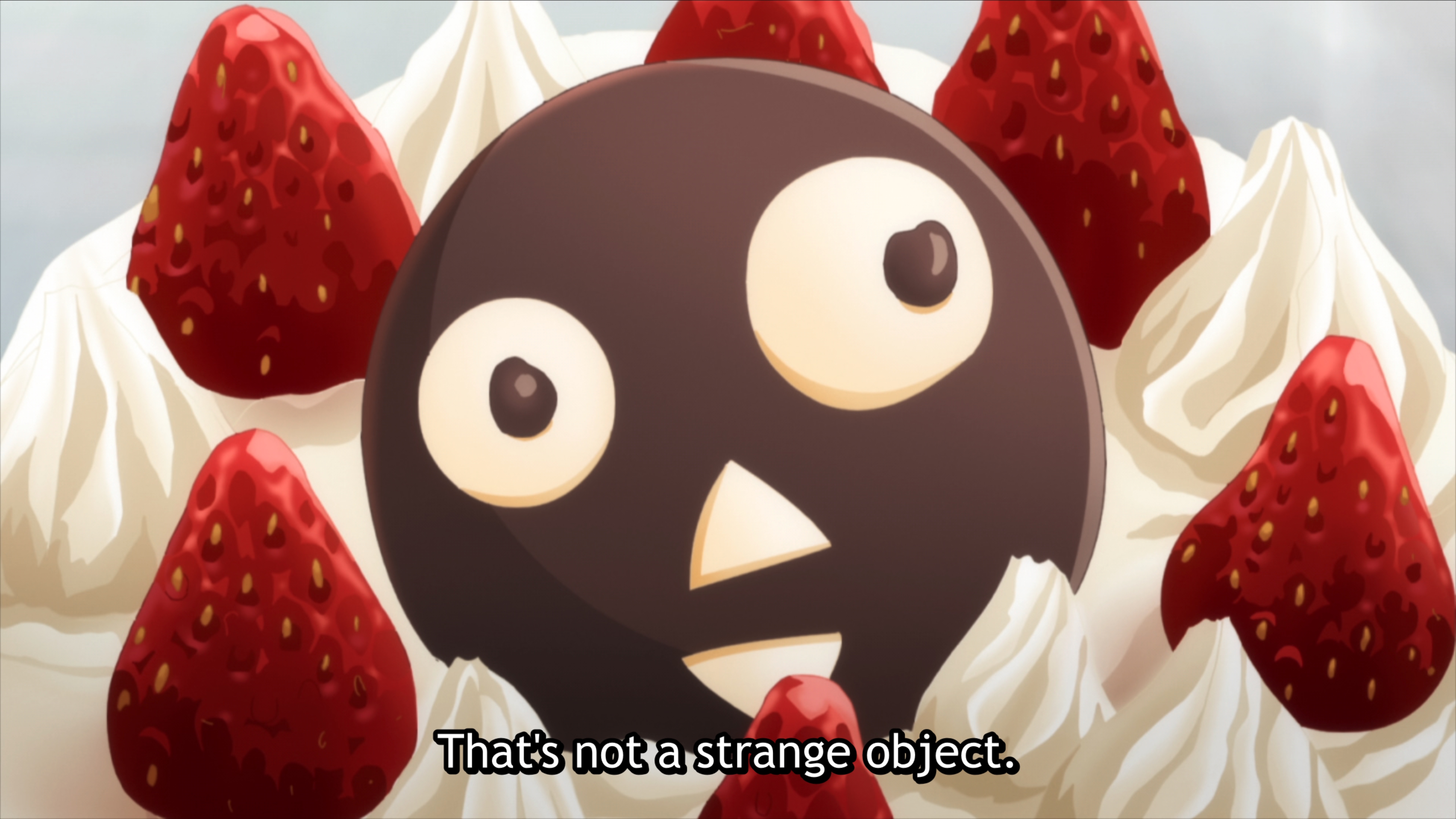
It’s young Vanilla’s first go at torture, and her strategy is to bake a cake so mouth-watering that it will make Hime cave. The problem is, Vanilla doesn’t know the first thing about baking, and the cake turns out like something you’d see on that Netflix series Nailed It, that is, a frightful mess! Hime’s talking sword gloats over the baking disaster: Finally, an easy win for Hime, right? She’s not going to spill any secrets this time…right?


But here’s the thing: After these few months of “torture” and learning to really savor seemingly mundane things, Hime looks at that cake with a completely different set of eyes than what she may have done when she was still the battle princess. Instead of a sloppy lump that is completely unappetizing, Hime sees the effort and admiration—even love—that Vanilla has poured into her baking. There is no way Hime would have been able to see these things had she not been essentially training to celebrate the little things. But now, she can’t help but see that this cake was made with the intention that it be enjoyed. And so Hime can’t resist it, because Vanilla made it for her. She can’t resist celebrating the girl’s efforts, and she’s on the verge of caving yet again, when Vanilla, moved by how seen she feels by Hime, lets her off the hook. Even so, it turns out that Vanilla nailed it after all with her sloppy cake, because Hime has changed.
This is why pleasure is so important.
God’s pleasure in adopting us into his family transforms us so that we too delight in extending his family and in demonstrating his love—the love that causes him to delight in us. We start joining him in delighting in his people too, and it becomes our good pleasure also that he would adopt even the most wayward of children into his family, even if they can’t bake a cake to save their life!



















As we learn to take delight in our daily lives, and as we discover what it means that he delights in us, we become more like him; we learn to take pleasure in what pleases him too: in uprightness, faithfulness, and trust—absolutely; but also in friendship, in family, and in the little delights he has woven into the fabric of creation. We see the world and the people in it differently through the lens of God’s pleasure.
’Tis Time for “Torture,” Princess models a first step in redeeming pleasure for us. Let’s pick up this challenge and reclaim it for the Kingdom of God. Following God, drawing near to him, growing in faith and in relationship with his family—these are all things that are intended to be pleasurable, because they are so for God himself, and he invites us to join in this with him. After all, the joy of the Lord is our strength, right? So let’s seek out what “tortures” he has for us, what little pleasures and what greater ones he has for us to discover, like Hime, as we join in fellowship together with his family.

Mama and Hime wish upon a star…

- Film Review: All You Need Is Kill - 01.15.2026
- First Impression: Kaya-chan isn’t Scary - 01.11.2026
- First Impression: Dead Account - 01.10.2026

[…] Redeeming Pleasure in ‘Tis Time for “Torture,” Princess […]