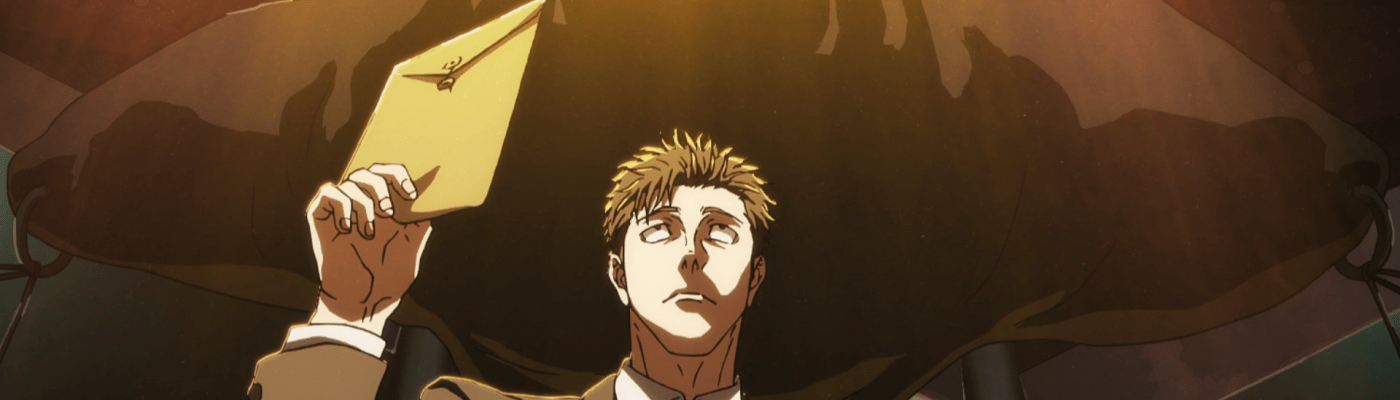
In the latest episode of Jujutsu Kaisen, Itadori squares off against Hiromi Higuruma, a brilliant defense lawyer who has awakened as a Jujutsu Sorcerer—and quite a powerful one at that. His cursed technique, “Judgeman,” effectively turns his domain into a courtroom where his opponent is the accused and must make his case for innocence against Higuruma’s shikigami, who is a harsh (and perhaps evil) judge.
But despite the creepy shikigami hovering over him, and the fact that we know he’s killed sorcerers in the Culling Game already, I can’t help but like Higuruma. Before the Culling Game, he’d been a hardworking and brilliant defender, in one case pulling off the impossible and convincing the court that his client was indeed innocent. Higuruma has a good heart—or had one before being pulled down a dark path.
That path toward darkness started with the very man he’d successfully defended against all odds. Though successful at first, they lost on the court’s appeal, and in the process, Higuruma’s client changed from feeling grateful toward his defender to feeling hateful. Since that time, Higuruma has been more and more impacted by the resentment shown toward him by clients and by a justice system that too readily convicts the wrongfully accused.
By the time the Culling Game started (spoilers ahead), Higuruma had already become so frustrated that he snapped, murdering a judge and a prosecutor.
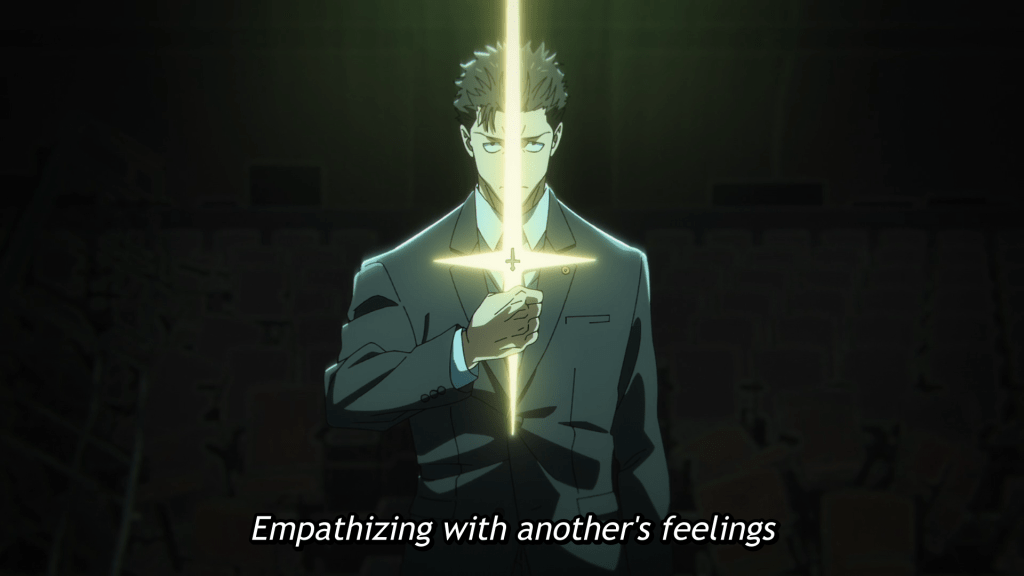
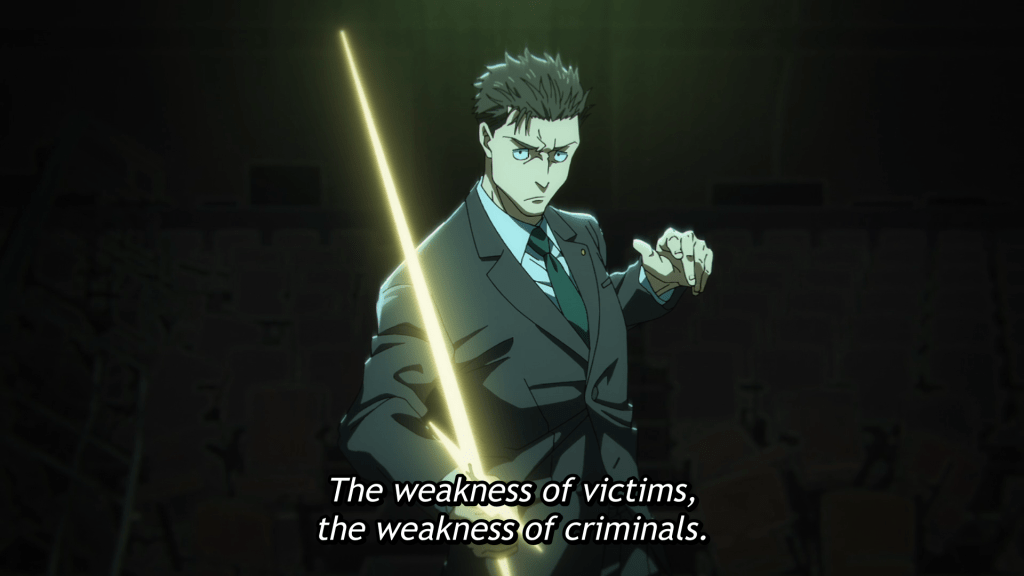
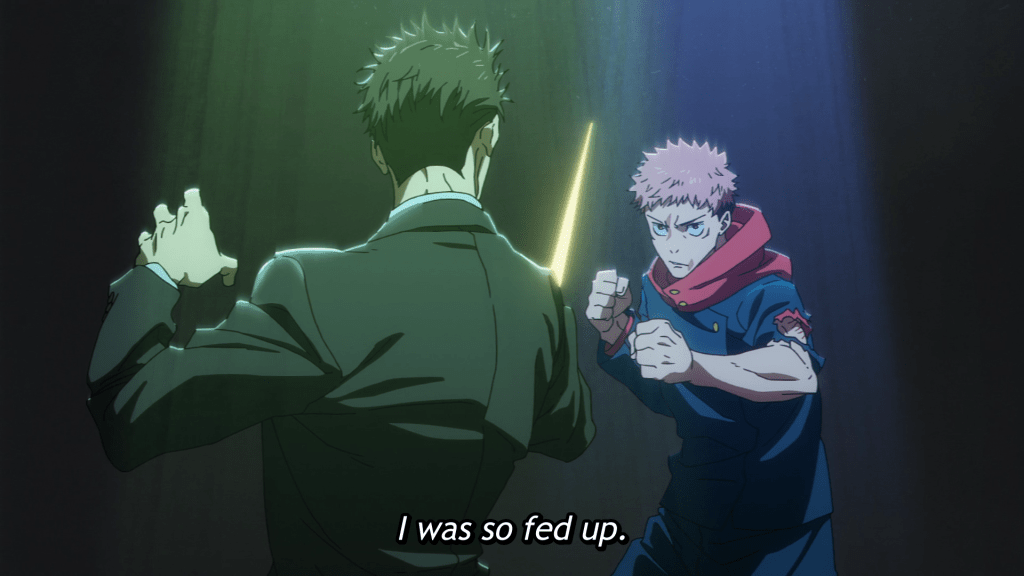
Now “Judgeman” is almost an outward expression of Higurama’s heart, a demonic representation of a man having given in to his mentor’s request to become a judge and to his own descent into madness and pride, carrying out justice and ruling a court system in the way he feels is right and proper; the courts didn’t carry out justice, so he and his shikigami will.
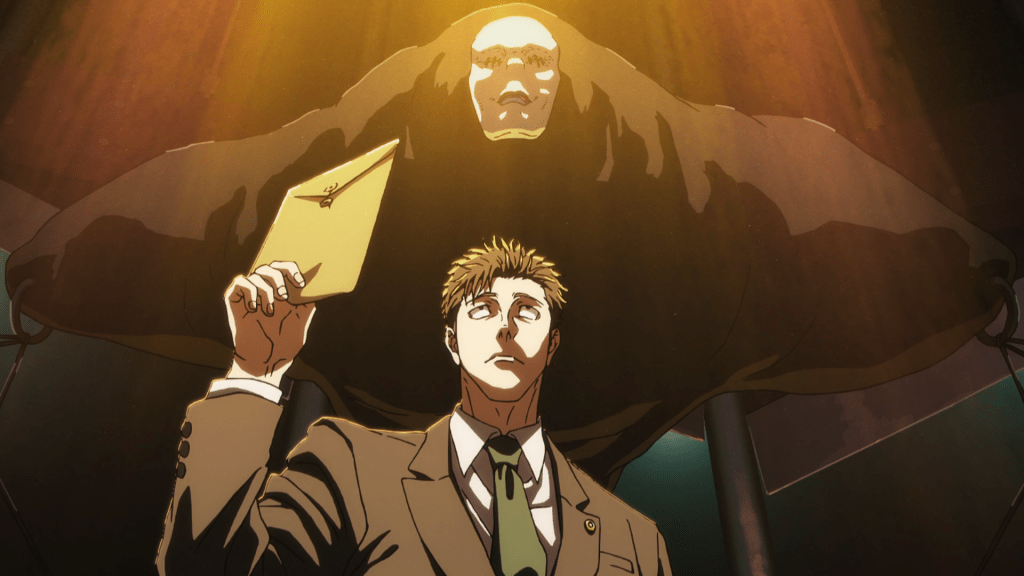
Watching Higurami’s story unfold made me think of several people in my own life—both some very close to me and others whom I see post their thoughts frequently online. People who’ve shown their kindness in the past, but who now post and say things that are anything but, who dehumanize and coldly pronounce “just” sentences over entire groups of people and individuals whom they don’t know, except through what the media (surely always accurate and complete!) reports.
Not that the law isn’t correct or shouldn’t be enforced—that’s a different topic—it’s the heart of the matter I’m speaking of. The quickness of these people I care for to see other people in a certain light—and I don’t mean in the light we all shine as image bearers of God.
Sometimes I become angry at the way my loved ones are treating people. And sometimes, I worry for them. I want better for them. I hope they won’t stay as the Higurumas who judge in their domain, but remember who they once were and how they saw others with more merciful eyes.
In the show, Higuruma is confronted with the darkness that’s overtaken him when, through his cursed technique, he comes to understand Itadori’s character. Itadori pleads guilty to mass murder, even though Higuruma knows fully well that Sukuna was in control of him at the time. Still, Judgeman doesn’t care and pronounces Itadori guilty, giving him the death penalty. But Higuruma, struck by Itadori’s admission and sense of responsibility, isn’t able to execute him; he instead puts his weapon away, lets Itadori defeat him, and pronounces the younger man “innocent.”

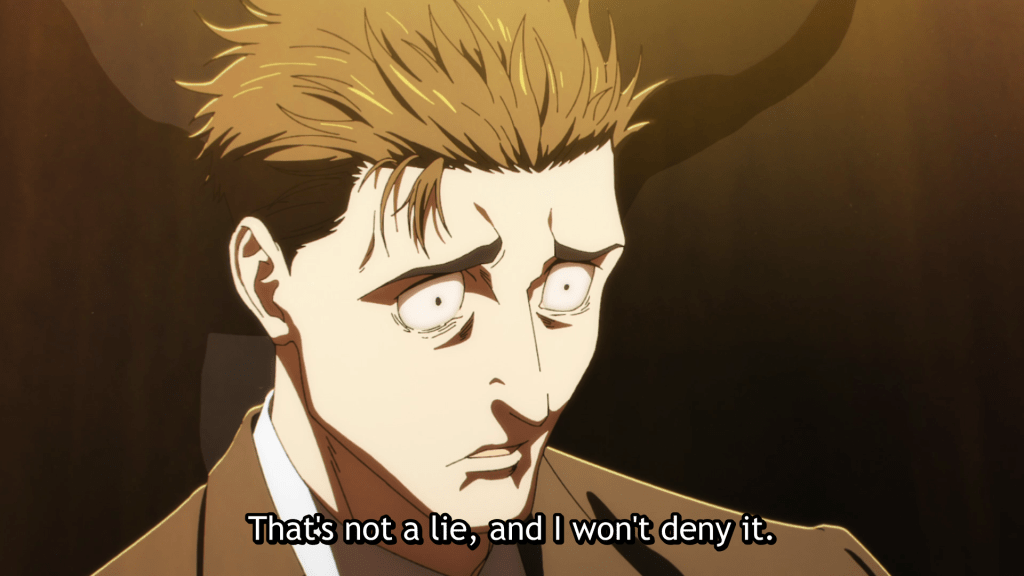
But this sudden change of heart is not the end of the story—nor should it be. Higuruma pulls back during the battle because he sees Itadori as “innocent,” as someone worth defending—a unicorn, unlike most others he’d previously defended. He’s “different.”
But Higurama’s thought process is still jumbled up. He still sees himself as judge and most others as trash to be judged. But the remainder of the episode (there’s a post-credits scene!) starts to set him straight as he has to throw the pretty little story of Itadori’s purity in the trash when asking him if he’s ever killed someone while not under Sukuna’s control. Itadori admits he has.
He’s not perfect after all.
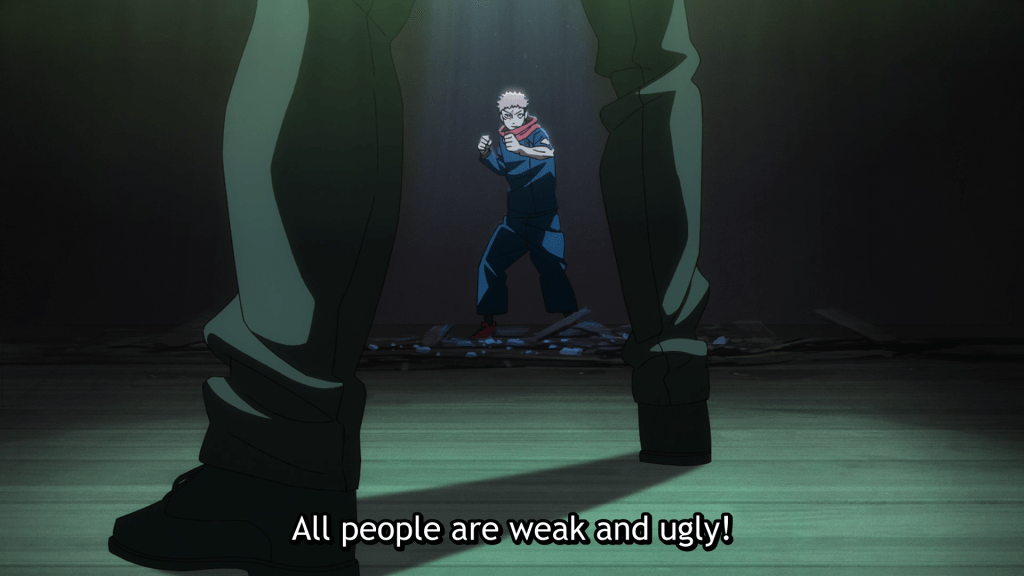
So…what now? No longer venerating Itadori as some innocent, holy youth, will Higuruma return to the cruel judge he’s become?
That could happen. But instead, Higuruma makes a connection; it’s at this point that he reveals to Itadori that he, too, has committed murder with his own hands and own will. In a few short minutes, his whole view of himself and humanity has flipped—he sees the fullness of humanity in Itadori, that people are capable of great goodness and evil both, and also comes to understand that he, too, is culpable. He, too, is guilty.

There is no talk of God in the world of Jujutsu Kaisen. But thankfully for us, we live in a world that God Himself—one who is perfect, who is worthy, who is innocent—has stepped into.
Having Christ in our lives allows us to go further than Higuruma has. He recognizes not only that justice on Earth is limited because of the complexity of sin and the price that must be paid for it, and not only that people are imbued with a goodness worth recognizing even if they’ve committed crimes, but that he is the very same as they are. He deserves the “death penalty.”
And there’s the recognition. Higuruma thought he needed a better courtroom. A better system of justice. And a better judge—himself. What he discovers instead is something far more unsettling: the problem wasn’t just the system—it was him. And that realization is where real change begins. Because the moment we recognize our own guilt, we stop seeing others merely as criminals and start seeing them as fellow sinners whom we should see as image bearers. As those we should love.
Thankfully, our story doesn’t end in Higuruma’s courtroom (or our own court of justice). It ends at the cross, where greater Itadori—the only innocent one—willingly took the verdict we deserved, and paid the price once and for all time.
The questions many of us need to face right now, though, are—do we really believe in the justice of God, who sees us all as equals and our sins as equally deserving of the “death penalty” as our neighbor’s? Or will we continue to lift ourselves up as the judges over sinners?

- First Impression: The Food Diary of Miss Maid - 03.31.2026
- FINLANDS at SXSW: Fuyuko Shiori’s Relentless Vision - 03.30.2026
- First Impression: Agents of the Four Seasons: Dance of Spring - 03.28.2026

[…] episode of Jujutsu Kaisen featuring Higuruma was sick. But it was also thoughtful. Check out our new post on Higuruma and the courts we […]
Love your thoughts on Higuruma’s courtroom! When I read this in the manga it made me think so much of the limits of human mercy and compassion, and how Jesus can take us so much farther with his supernatural mercy and love. Haven’t seen the episode yet, can’t wait to watch!
Thanks for sharing! For sure, there’s such a distance between God’s mercy and our own—and these scenes are such an artful depiction of that idea!